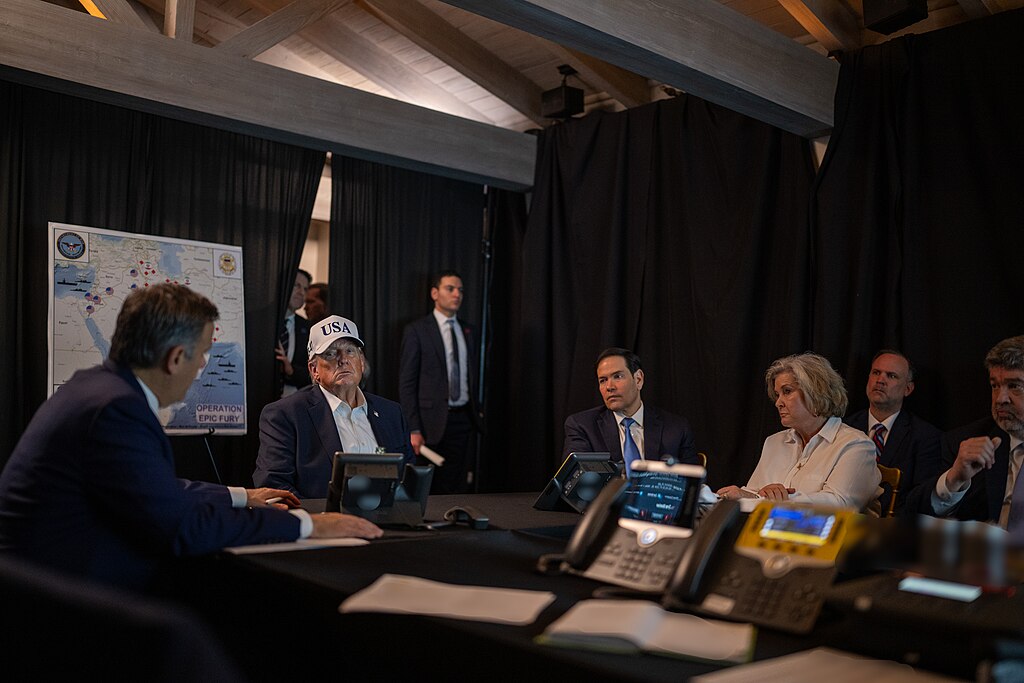
America Wins Again!
In a dramatic development that could reshape the Middle East, President Donald J. Trump announced Saturday on Truth Social that Iran’s Supreme Leader, Ayatollah Ali Khamenei, is dead following coordinated U.S.–Israeli military operations.
The statement immediately drew global attention and marked one of the most significant moments in modern U.S.–Iran relations.
Trump Announces Major Blow to Iranian Leadership
President Trump described Khamenei as a long-standing adversary of both the United States and its allies. In his message, he credited advanced American intelligence systems and close cooperation with Israel for what he characterized as a decisive operation targeting Iran’s leadership structure.
According to Israeli political analyst Amit Segal of N12 News, reports indicate that Khamenei’s body was recovered following precision strikes on regime-controlled facilities. Official confirmation from Tehran remains limited, and the situation continues to develop.
The president framed the operation as a turning point not just for U.S. national security, but for the Iranian people themselves.
A Turning Point for Iran?
Trump suggested that elements within Iran’s Revolutionary Guard Corps (IRGC), military forces, and internal security units may now be reassessing their positions.
He characterized this moment as what he called the Iranian people’s “greatest opportunity” to reclaim their country from hardline control.
For decades, tensions between Washington and Tehran have shaped global energy markets, regional security policy, and American military strategy. Many Americans over 50 will recall the 1979 hostage crisis, years of sanctions, and ongoing proxy conflicts throughout the Middle East.
This development, if fully confirmed, could represent the most significant shift in U.S.–Iran relations in a generation.
U.S.–Israel Coordination Highlighted
President Trump emphasized that the operation was carried out in close coordination with Israel. Israeli Prime Minister Benjamin Netanyahu has also publicly encouraged the Iranian people to pursue a new political direction.
The alliance between the United States and Israel has long been a cornerstone of American foreign policy in the region, particularly under Trump’s administration.
Supporters argue that strong, coordinated action reinforces deterrence and protects American interests abroad.
“Peace Through Strength” Strategy
In later remarks to NBC News, Trump stated that key decision-makers within Iran’s leadership are “mostly gone,” suggesting that the strikes significantly weakened the country’s command structure.
The president reiterated his long-standing principle of “peace through strength,” emphasizing that the goal remains long-term stability and security throughout the Middle East.
While military operations may continue as needed, Trump framed the broader objective as regional peace and protection of American lives.
What Happens Next?
Global leaders are watching closely for Iran’s response. Questions remain about:
- Internal power shifts within Tehran
- Potential diplomatic consequences
- Regional stability
- Energy market reactions
- The role of international allies
As more verified information becomes available, the geopolitical landscape could shift rapidly.
For many Americans concerned about national security and global stability, this announcement signals a decisive moment in modern history.