Here’s what actually happened before the mainstream media twists it.
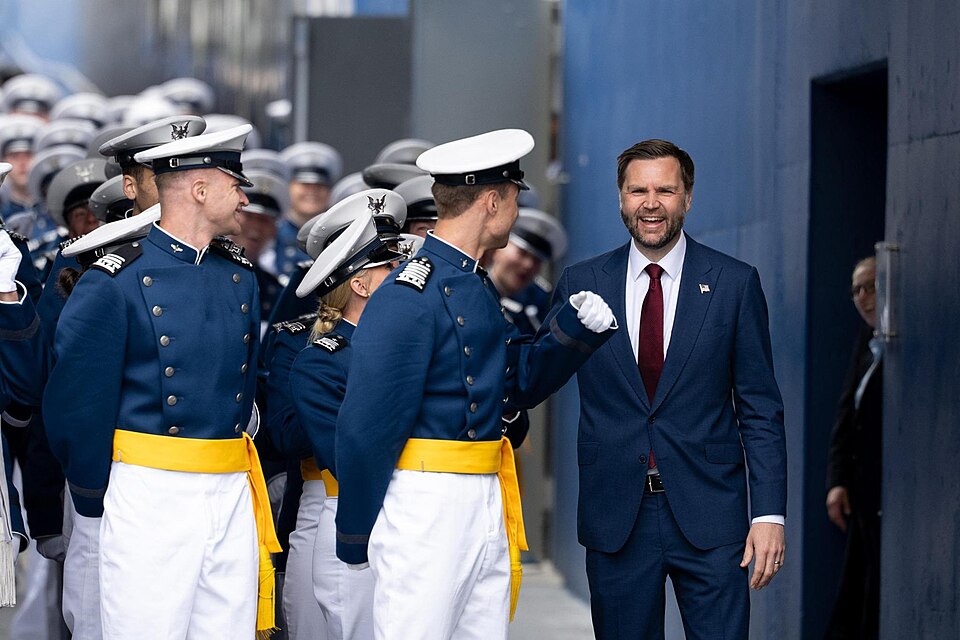
President Donald Trump had reporters laughing Wednesday after joking that Vice President JD Vance would be the one taking the blame if the administration’s developing agreement with Iran falls apart.
Speaking during a press conference at the Group of Seven summit in France, Trump was asked whether Vance would be held responsible if the proposed deal ultimately fails.
Trump laughed and said he was fully on board with the idea. He joked that if it succeeds, he’ll happily take the credit, but if it falls short, the blame will land on Vice President JD Vance.
The president continued the joke by warning that Vance might want to be careful.
“You better be careful, JD,” Trump said. “He’s going to turn his plane around and get the hell out of here.”
While the exchange drew laughs, it came as the administration faces growing questions about its negotiations with Iran and the terms of a preliminary agreement that could have major implications for U.S. foreign policy.
Trump Sends Warning As Questions Swirl Around Iran Deal
Despite optimism from some officials involved in the negotiations, Trump appeared determined to keep expectations in check.
When asked whether he planned to attend the signing ceremony for the memorandum of understanding expected later this week, Trump suggested he had not made a final decision.
“I might,” he said, adding that he was not sure the agreement was the kind of document that required his personal signature.
Throughout the press conference, Trump repeatedly stressed that the arrangement remains preliminary and warned that military action could return if Iran fails to honor its commitments.
The president suggested that some understandings between Washington and Tehran may not even be formally included in the written agreement.
“If they don’t honor the agreement, or some things aren’t even mentioned in the agreement, it’s a memorandum of understanding, but we have an understanding of certain things without writing it,” Trump said.
He then delivered a stark warning.
“If they don’t honor that, we’ll probably go back to bombing them until they honor it.”
Trump added, “It’s amazing what bombs can do.”
The comments echoed remarks he made earlier Wednesday when he warned that Iran could once again face military consequences if its leaders fail to follow through on their promises.
Critics Say Iran May Be Getting Too Much In Return
According to reports, the proposed framework contains 14 points outlining commitments by both sides.
One provision that has generated significant attention involves a reported development fund that could provide Iran access to as much as $300 billion if it complies with the agreement’s terms.
Under the reported framework, Iran would once again affirm that it does not intend to pursue nuclear weapons.
However, critics have pointed out that reports indicate the agreement does not explicitly require Tehran to permanently end uranium enrichment or immediately surrender existing stockpiles of highly enriched uranium.
Those details have sparked concern among many conservatives, national security experts, and supporters of Israel who argue that any agreement with Iran must include strict safeguards and strong enforcement mechanisms.
Supporters of the negotiations counter that diplomacy remains preferable to another prolonged military conflict in the Middle East and that the agreement could help reduce regional tensions if properly enforced.
Trump Distances Himself From Funding Reports
Reports surrounding the potential $300 billion development fund have created controversy among some of Trump’s supporters.
In response, the president has attempted to distance himself from suggestions that American taxpayers would directly finance investment projects inside Iran.
Trump has stated that the United States does not currently plan to invest its own money into Iran under the proposed agreement.
At the same time, he has not ruled out the possibility that other countries, organizations, or private entities could participate in future development efforts if the agreement moves forward.
That distinction has done little to silence critics who are demanding greater transparency before any final deal is signed.
Many conservatives have argued that the administration should release the full details of the agreement so Americans can evaluate exactly what Iran is receiving in exchange for its commitments.
Why This Matters
The stakes surrounding these negotiations extend far beyond the current headlines.
For decades, Iran’s nuclear ambitions have been one of the most significant foreign policy challenges facing the United States and its allies.
Multiple administrations have attempted different strategies, ranging from economic sanctions and diplomatic negotiations to military pressure.
Supporters of Trump’s approach argue that maintaining the threat of force while pursuing diplomacy gives the United States maximum leverage.
Critics worry that Iran could receive economic benefits while retaining key elements of its nuclear infrastructure.
The outcome of the negotiations could shape the balance of power in the Middle East for years to come and influence America’s relationships with allies throughout the region.
Supporters And Critics Divided
The emerging agreement has sparked intense debate across the political spectrum.
Supporters argue that avoiding another major conflict in the Middle East would benefit both the United States and its allies. They believe a negotiated settlement could provide stability while preventing Iran from moving closer to developing nuclear weapons.
Critics remain unconvinced.
Many point to Iran’s long history of tensions with Western nations and question whether the regime can be trusted to honor its commitments over the long term.
Others argue that any agreement must include strict verification measures, meaningful penalties for violations, and complete transparency regarding economic incentives.
Those concerns have become increasingly visible among some of Trump’s most loyal supporters, who have called for more details before any final agreement is implemented.
The Next Few Days Could Be Critical
The memorandum of understanding is expected to be finalized in the coming days, but major questions remain unanswered.
Will Iran fully comply with the agreement?
Will additional details about the reported development fund become public?
And will the agreement reduce tensions in the Middle East—or simply postpone a larger confrontation down the road?
Those questions are likely to dominate political discussions as negotiations enter their final stage.
For now, Trump appears focused on maintaining pressure on Tehran while keeping expectations realistic.
And if the agreement ultimately succeeds, the president has already made it clear who plans to take the credit.
If it fails, however, Trump jokingly suggested that Vice President JD Vance may find himself carrying the blame.