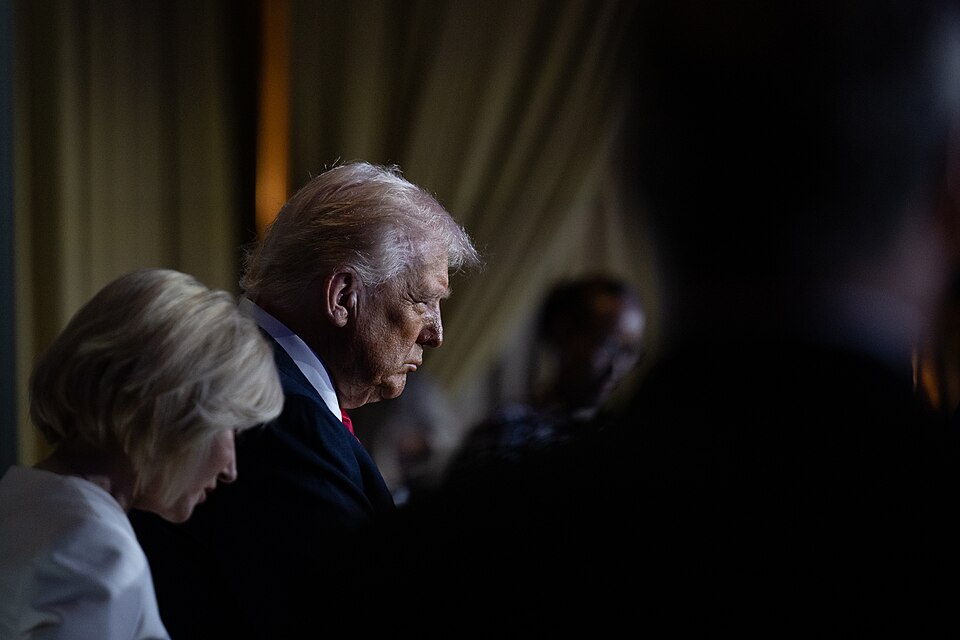
For nearly a decade, evangelical Christians have been one of President Donald Trump’s most reliable sources of support.
But a new national poll is raising questions about whether that loyalty is beginning to soften at a crucial moment for Republicans.
With the 2026 midterm elections fast approaching, even a small decline in enthusiasm among evangelical voters could create challenges for GOP candidates in key battleground states.
And that’s exactly why political strategists are paying close attention to the latest numbers.
New Poll Shows Decline Among Evangelical Voters
A recent Reuters/Ipsos survey found Trump’s approval rating among evangelical Christians has fallen to 52 percent.
While that remains a majority, it represents a noticeable drop from previous surveys and has sparked debate about whether some members of Trump’s core coalition are becoming uneasy about recent events.
The findings stand out because evangelical voters have consistently been one of Trump’s strongest political assets.
During the 2024 election, white evangelical and born-again Christians overwhelmingly backed Trump, helping fuel his return to the White House.
For years, the group has provided Republicans with dependable support and strong voter turnout.
Now, some analysts are asking whether cracks may be forming.
Iran Conflict Appears To Be A Major Concern
One issue drawing attention is the ongoing conflict involving Iran.
According to the survey, many evangelical respondents questioned whether America’s military actions align with their personal understanding of Christian values.
The results suggest that foreign policy may be creating concerns among some religious voters who traditionally support Republican candidates.
However, experts caution that the numbers do not necessarily indicate opposition to Trump’s overall agenda.
Some evangelical voters may actually favor a stronger response and believe the administration should take a tougher approach toward America’s enemies abroad.
That means dissatisfaction could be coming from different perspectives within the same voting bloc.
Immigration Creates Another Point Of Debate
The poll also revealed mixed reactions to the administration’s immigration policies.
A slight majority of evangelical respondents said they do not believe the current approach fully reflects their religious values.
At the same time, border security remains one of Trump’s strongest political issues nationally.
Many conservative voters continue to support tougher enforcement measures, arguing that secure borders are essential to public safety, national security, and economic stability.
The differing views highlight the challenge of balancing policy priorities with religious convictions.
White House Defends Trump’s Record On Faith
The administration quickly pushed back against suggestions that Trump is losing Christian support.
White House officials pointed to a long list of accomplishments that have earned praise from many faith-based organizations and conservative Christians.
Supporters note that Trump has expanded religious liberty protections, defended faith-based institutions, supported pro-life causes, protected parental rights, and worked to reduce government interference in matters of faith.
Many evangelical leaders continue to view those accomplishments as significant victories.
Why Evangelicals Still Matter More Than Ever
No voting bloc has been more important to Trump’s political success than evangelical Christians.
Their support helped power his victories and remains critical to Republican hopes in future elections.
Many voters in this group point to the Supreme Court as one of Trump’s most lasting achievements.
His judicial appointments played a major role in overturning Roe v. Wade, a decision that many pro-life Christians had sought for decades.
That accomplishment continues to generate goodwill among conservative religious voters.
The Bigger Question Facing Republicans
Political analysts do not expect evangelical Christians to suddenly switch parties.
The greater concern is turnout.
Midterm elections are often decided by enthusiasm rather than persuasion.
If even a small percentage of evangelical voters decide to stay home instead of voting, Republicans could face difficult races in competitive districts and states.
History shows that the party controlling the White House often struggles during midterm elections, making voter motivation especially important.
Trump’s National Approval Ratings Remain Under Pressure
The survey arrives as Trump faces broader approval challenges nationwide.
Recent polls show many Americans remain concerned about inflation, energy costs, foreign policy developments, and the overall direction of the economy.
Those concerns have contributed to lower national approval ratings compared to earlier periods of his presidency.
Still, Trump remains the dominant figure in Republican politics, and his ability to energize conservative voters will likely play a major role in determining the outcome of the 2026 elections.
What Happens Next Could Shape The Midterms
The key question is not whether evangelical Christians will abandon Trump.
Most experts believe they will not.
The real question is whether they remain motivated enough to turn out in the same numbers that helped deliver Republican victories in the past.
If enthusiasm rebounds, Republicans could remain in a strong position heading into November.
If it continues to slip, Democrats may find new opportunities in races that once appeared safely in the GOP column.
As the midterms draw closer, all eyes will be on one of the most influential voting groups in American politics—and whether Trump’s bond with evangelical voters remains as strong as it once was.