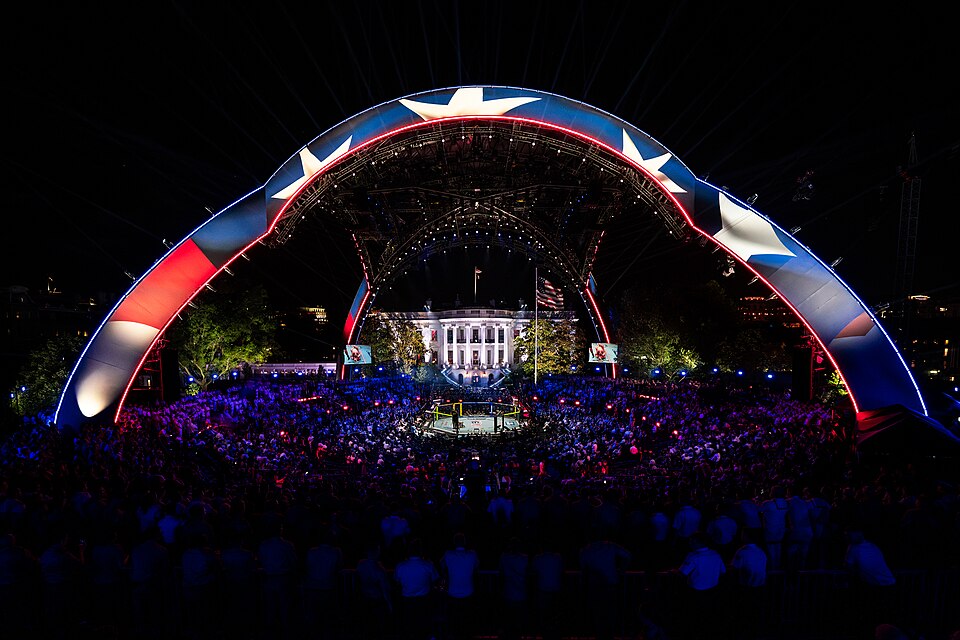
A historic UFC event hosted at the White House generated worldwide attention for President Donald Trump and the Ultimate Fighting Championship, but it also came with a surprisingly high price tag.
Executives at TKO Group Holdings, the parent company of the UFC, revealed during the company’s latest earnings call that UFC Freedom 250 resulted in an estimated $30 million financial loss. While the event became one of the most widely discussed sports spectacles of the year, company leaders acknowledged that staging a fight card at the White House required extraordinary spending.
Even so, executives made it clear they expected the financial outcome well before the first punch was thrown and believe the event delivered enormous long-term value through global publicity and new business partnerships.
White House UFC Event Came With Record Costs
During the earnings call, TKO Chief Financial Officer Andrew Schleimer told investors that UFC Freedom 250 carried significantly higher production costs than a traditional UFC event.
According to the company, approximately $60 million was spent producing the White House fight card. Sponsorship agreements and global marketing partnerships helped recover part of those expenses, but the event still finished well below the profitability of a normal UFC pay-per-view.
Schleimer noted that management anticipated the financial impact before moving forward with the historic event.
Trump Takes Center Stage At Historic Fight Night
Held on June 14, President Trump’s birthday, UFC Freedom 250 featured seven professional fights inside an octagon built on the South Lawn of the White House.
President Trump attended alongside longtime friend and UFC CEO Dana White, whose relationship with the president stretches back years. White has frequently praised Trump and famously introduced him during the 2024 Republican National Convention.
Rather than offering tickets to the public, the UFC welcomed approximately 4,000 invited guests, including Trump administration officials, members of Congress, military personnel, business executives, and other invited attendees.
The invitation-only format created a unique atmosphere but also eliminated one of the UFC’s biggest revenue sources—ticket sales.
No Public Tickets Reduced Event Revenue
TKO’s quarterly earnings report showed that revenue from live events and hospitality declined from $58.5 million during the second quarter of 2025 to $47.8 million during the same period this year.
Company officials attributed much of that decline to UFC Freedom 250.
Because admission was limited to invited guests, the UFC generated virtually no ticket revenue from one of its most expensive productions ever. The company also held one fewer numbered pay-per-view event during the quarter, further affecting overall event revenue.
While lower ticket sales weighed on quarterly results, executives emphasized that the White House event was never designed to maximize gate revenue.
Higher Production Expenses Impacted Profit Margins
Beyond the lack of ticket sales, UFC Freedom 250 required substantially greater operational spending.
TKO reported higher athlete compensation, increased production expenses, and additional logistical costs associated with transforming the White House grounds into a world-class fight venue.
Those expenses contributed to the company’s adjusted EBITDA margin declining from 59 percent during the second quarter of 2025 to 52 percent in the latest quarter.
Despite the temporary hit to margins, executives stressed that the event accomplished exactly what it was intended to achieve.
TKO Says The Event Delivered Massive Exposure
Although UFC Freedom 250 lost money on paper, company leadership argued that its marketing impact far outweighed the financial loss.
TKO President and Chief Operating Officer Mark Shapiro said the event generated more than $1 billion in earned media value, giving the UFC and its sponsors worldwide exposure that few sporting events can match.
According to Shapiro, the White House showcase also strengthened the company’s commercial business by bringing 25 new marketing partners into the UFC family, with many agreeing to multi-year or multi-event sponsorship agreements.
Executives described the event as a strategic investment designed to expand the UFC’s global brand rather than simply generate immediate profits.
Dana White Suggests Another White House Event Is Unlikely
Despite praising the success of UFC Freedom 250, Dana White has acknowledged that the enormous cost makes another White House event unlikely.
White previously described the experience as unforgettable but admitted the financial commitment required to produce such a unique venue would be difficult to justify on a regular basis.
While fans embraced the historic setting, company leaders appear focused on balancing memorable events with long-term financial performance.
TKO Still Reports Strong Financial Results
Even with the added costs associated with UFC Freedom 250, TKO posted another profitable quarter.
The company reported $303.9 million in net income, representing an increase of $30.8 million compared to the same quarter one year earlier.
Those results suggest that while the White House event temporarily affected margins, the company’s overall business remains strong across its sports and entertainment portfolio.
The Bottom Line
UFC Freedom 250 may have been one of the most expensive events in UFC history, but TKO executives do not appear to view it as a failure.
Instead, company leadership says the event delivered extraordinary worldwide exposure, attracted major new sponsors, strengthened business relationships, and showcased the UFC on one of the world’s most recognizable stages.
Although another White House fight card appears unlikely because of the enormous production costs, UFC Freedom 250 demonstrated how a single event can generate global attention far beyond the revenue produced on fight night. For President Trump, the event highlighted his close ties with one of America’s biggest sports organizations. For the UFC, it served as a high-profile marketing investment that executives believe will continue paying dividends long after the final bell.