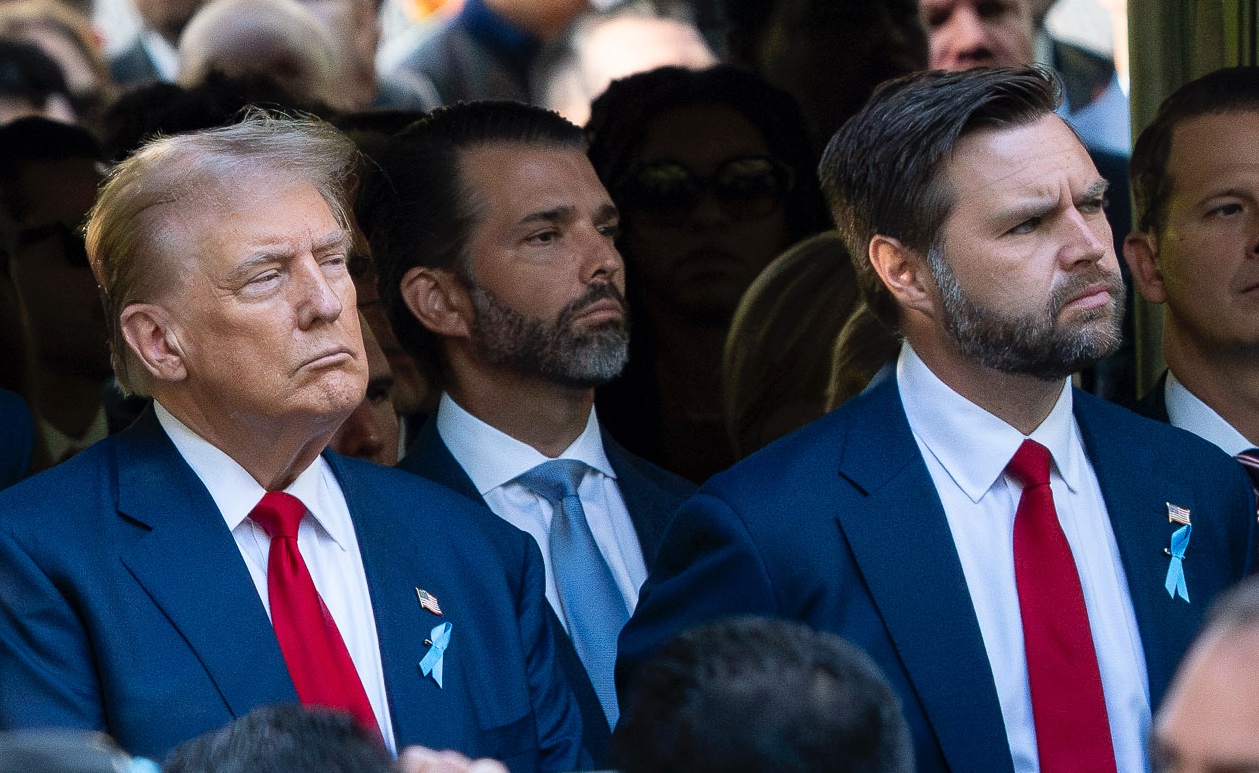
Here’s what Trump is dealing with now.
In a move sending shockwaves through financial markets, Moody’s Investors Service has officially downgraded the United States’ credit rating—a dramatic warning about the nation’s growing debt and broken leadership in Washington. For the first time in over a century, America no longer holds a top-tier credit rating from any major agency.
The downgrade, from Aaa to Aa1, marks the final strike by the third and final major credit agency, following Standard & Poor’s in 2011 and Fitch Ratings in 2023. According to Moody’s analysts, the decision reflects “a significant weakening of fiscal strength” as national deficits spiral and political gridlock blocks meaningful reform.
📉 Moody’s now predicts the U.S. federal deficit will surge to nearly 9% of GDP by 2035, up from 6.4% in 2024.
While the American economy remains globally dominant and the U.S. dollar is still king, the agency flagged skyrocketing interest payments, runaway entitlement spending, and an unsustainable fiscal path as serious threats to long-term stability.
Trump’s Tax Cuts Targeted—But Are They Really the Problem?
At the center of the debate is the Republican push to extend President Trump’s 2017 tax cuts, a policy credited with reviving the economy, spurring job growth, and boosting middle-class income. Moody’s claims the extension could add $4 trillion to the deficit over the next decade—but many conservatives argue that problem isn’t tax relief—it’s reckless federal spending.
✅ Lower taxes. Stronger economy. More freedom. That’s the formula President Trump brought back to Washington—and it worked.
Washington Dysfunction Driving Economic Uncertainty
The real crisis, experts warn, is the complete breakdown of fiscal responsibility in Congress. Republicans stand firm against tax hikes, while Democrats continue to block spending cuts, favoring expensive entitlement programs and climate handouts instead.
With both sides at odds, no serious action is being taken to address the exploding national debt—leaving America’s credit rating and economic future hanging in the balance.
Credit Downgrade Has Consequences
Credit rating agencies like Moody’s, S&P, and Fitch wield enormous power. A downgrade affects:
- Interest rates on U.S. Treasury bonds
- Investor confidence
- Global perception of U.S. financial strength
A downgraded credit rating can lead to higher borrowing costs, inflation pressure, and less investor trust—especially if America continues down the same irresponsible path.
Democrats Cheer the Downgrade—Trump Allies Fight Back
Democrat operatives wasted no time politicizing the downgrade. Left-wing strategist Chris Jackson sarcastically celebrated on social media, blaming Trump’s economic leadership—even though the downgrade reflects years of failed policy under Biden and Obama.
President Trump’s team quickly responded. Steven Cheung, White House Communications Director, slammed Moody’s lead economist Mark Zandi as a partisan Democrat, noting Zandi’s ties to Barack Obama and Hillary Clinton and his long record of anti-Trump bias.
“Nobody takes Mark Zandi’s analysis seriously,” said Cheung. “He’s been wrong for years. This downgrade is a direct result of failed Democrat spending and weak leadership.”
The Bottom Line: Time for a Return to Fiscal Sanity
This historic downgrade is a wake-up call for every American. Washington cannot keep printing money and expanding the welfare state without consequences. It’s time to return to common-sense, conservative economic policies that put America first—policies like balanced budgets, lower taxes, and reduced federal overreach.
🇺🇸 President Trump proved it can be done. Now it’s time to do it again.