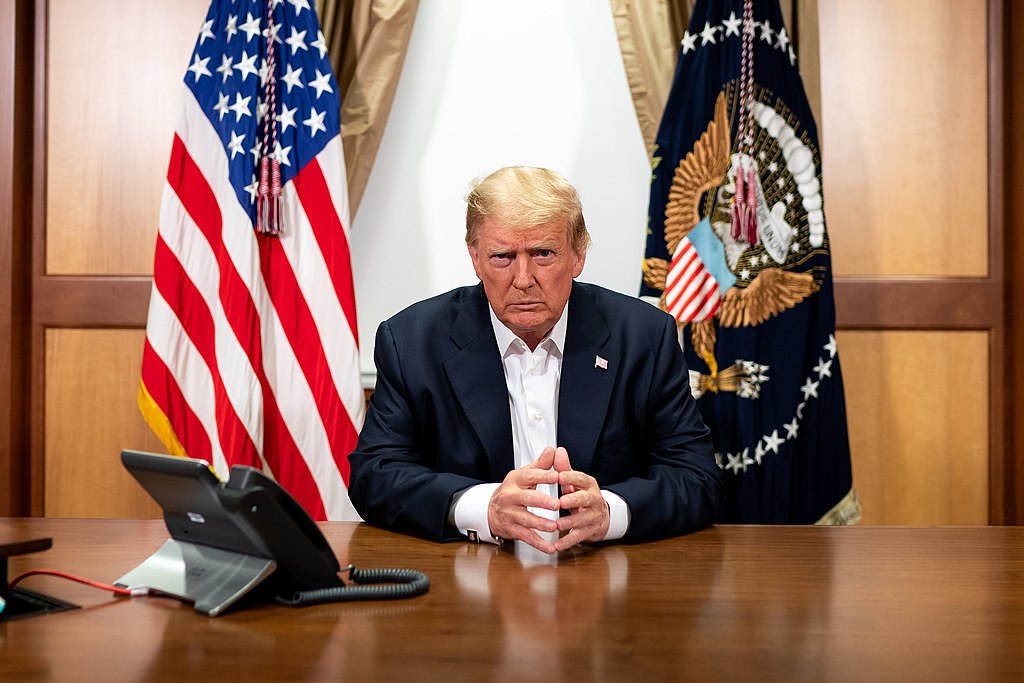
What does Trump know?
President Donald Trump ignited a new national debate on Wednesday after announcing plans for a dramatically expanded U.S. defense budget, proposing $1.5 trillion in military spending for fiscal year 2027.
The proposal marks a sharp increase from Trump’s earlier $1 trillion outline and underscores his long-standing position that national security must remain America’s top priority during an increasingly unstable global climate.
Trump: Dangerous Times Require Strength
In a statement posted on Truth Social, Trump said discussions with lawmakers and administration officials led him to reassess the scale of military funding needed to protect the country.
“In these very troubled and dangerous times,” Trump wrote, “our Military Budget for the year 2027 should not be $1 Trillion Dollars, but rather $1.5 Trillion Dollars.”
Trump emphasized that a stronger military is essential to deterring conflict, protecting U.S. allies, and maintaining global stability—arguments that have defined his defense policy since his first term.
Tariff Revenue Touted as Funding Source
The president said the expanded defense budget would be supported primarily through tariff revenue, rather than new domestic taxes. Trump has consistently argued that tariffs protect American industry while generating substantial income for the federal government.
According to Trump, the funding would help build what he described as a “Dream Military,” modernizing equipment, strengthening readiness, and ensuring the United States remains prepared against any foreign adversary.
Supporters say the approach reflects a broader economic strategy aimed at protecting American workers while strengthening national defense.
Budget Analysts Raise Fiscal Warnings
Not everyone agrees with the plan. The nonpartisan Committee for a Responsible Federal Budget (CRFB) warned that the proposal could significantly increase long-term federal debt.
The group estimates that an additional $500 billion per year in military spending could add approximately $5.8 trillion to the national debt over the next decade, depending on revenue outcomes and economic conditions.
CRFB analysts argue that projected tariff revenue may not fully cover the proposed increase, particularly if economic shifts reduce import activity over time.
Legal Questions Could Affect Tariff Revenue
Adding to the uncertainty, some tariffs referenced by the administration were enacted under emergency economic authorities and are currently facing legal scrutiny. A future court ruling could impact how much revenue those tariffs ultimately generate.
Budget analysts warn that if those tariffs are invalidated, the funding gap for expanded defense spending could grow wider.
Congress Braces for Budget Battles
The defense proposal arrives as Congress continues navigating the federal appropriations process. Lawmakers frequently rely on temporary funding measures to avoid government shutdowns, and defense spending remains one of the most closely watched components of the budget.
While some fiscal year 2026 funding bills have already been approved, military funding is currently operating under a short-term extension set to expire later this winter—setting the stage for another high-stakes negotiation.
A Defining Policy Contrast
For supporters, Trump’s proposal reflects a clear belief that military strength prevents war, not invites it. Critics, meanwhile, continue to focus on long-term deficit projections and fiscal restraint.
As the debate unfolds, the issue is likely to become a defining contrast in Washington—between those calling for caution and those who believe now is the time to invest heavily in America’s security and global leadership.