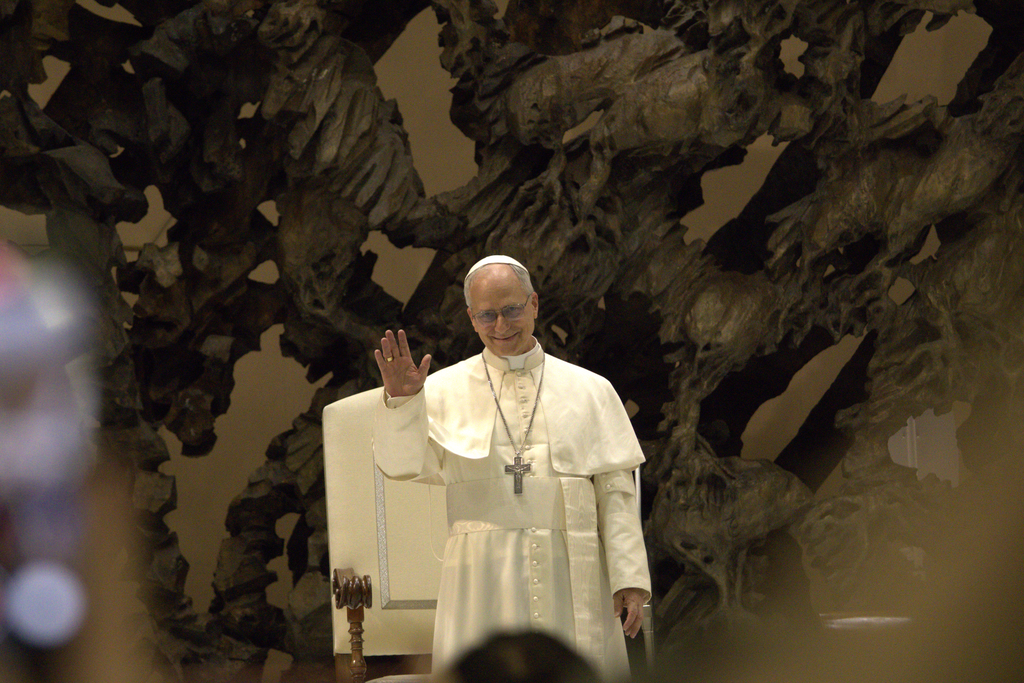
Here’s what the Pope decided to do.
In a move that is already stirring debate across Washington and Rome, Pope Leo XIV has declined President Donald Trump’s invitation to join the newly formed “Board of Peace,” a U.S.-led initiative aimed at rebuilding the war-torn Gaza Strip.
The Vatican’s decision highlights growing tensions over how the international community should handle Middle East reconstruction and global crisis management.
Vatican Pushes Back on Trump’s Board of Peace
Officials at the Holy See made it clear that their hesitation centers on the role of the United Nations in managing international conflicts.
Cardinal Pietro Parolin, the Vatican’s secretary of state and chief diplomat, told reporters that certain aspects of the proposal left Vatican officials “somewhat perplexed.” He emphasized that crisis situations at the international level should primarily be handled by the United Nations — not by alternative multinational bodies.
For longtime observers of global diplomacy, this signals the Vatican’s preference for traditional UN-led frameworks rather than independent U.S.-led coalitions.
Trump Administration Defends the Peace Initiative
The Trump White House responded quickly.
A senior administration official stated that the Vatican remains welcome to participate and emphasized that many other nations have already committed to the effort. The official declined to disclose details of private diplomatic discussions but stressed that the door remains open.
White House press secretary Karoline Leavitt described the Vatican’s decision as “deeply unfortunate,” arguing that peace efforts should not become political.
“This president has a bold and ambitious vision to rebuild and reconstruct Gaza,” she said. “The plan is already underway.”
For many supporters of President Trump, the Board of Peace represents a decisive alternative to what they see as slow-moving UN bureaucracy.
What Is Trump’s Gaza Board of Peace?
President Trump first unveiled the Board of Peace last fall as part of a broader Middle East stabilization strategy.
The board was formally established last month, with invitations extended to nations around the world — including Russia and Turkey, two countries whose inclusion has sparked debate.
Key details of the initiative:
- The president serves as chairman of the board
- He holds veto power over decisions
- He has authority to invite additional nations
- There is no fixed term limit tied to the chairmanship
The board is expected to meet in Washington, D.C., this week, where officials plan to announce $5 billion in pledged commitments from participating members to fund Gaza reconstruction.
Its administrative center is located at the newly renamed Donald J. Trump Institute of Peace.
Beyond rebuilding infrastructure, the board is also pushing Hamas to disarm — a condition that the terror organization has repeatedly rejected.
U.S. Allies Express Skepticism
Several traditional U.S. allies — including France, Germany, Greece, New Zealand, and the United Kingdom — have either declined invitations or expressed reservations about the initiative.
The hesitation from European nations mirrors the Vatican’s concerns: Should the United Nations remain the central authority in global crisis management?
For many Americans, especially older voters who remember decades of UN-led diplomacy with mixed results, the question is whether a more direct, American-led approach could deliver faster results.
Bigger Picture: A Shift in Global Leadership?
The Vatican’s refusal may not derail the Board of Peace, but it underscores a broader debate about America’s role in shaping international policy.
Supporters argue that President Trump’s approach prioritizes results over process. Critics warn that bypassing traditional institutions could create long-term diplomatic friction.
Either way, the decision marks another chapter in an ongoing realignment of global power structures — and it may signal how future conflicts are addressed in a rapidly changing world.
Why This Matters for American Voters
For readers concerned about national security, foreign policy, and America’s leadership role abroad, this development is more than symbolic.
It raises fundamental questions:
- Should the U.S. lead reconstruction efforts directly?
- Should the United Nations remain the primary authority?
- And can peace initiatives succeed without unanimous global support?
As the Board of Peace prepares to meet in Washington, all eyes will be on who ultimately chooses to participate — and who stays on the sidelines.