Here’s what happened.
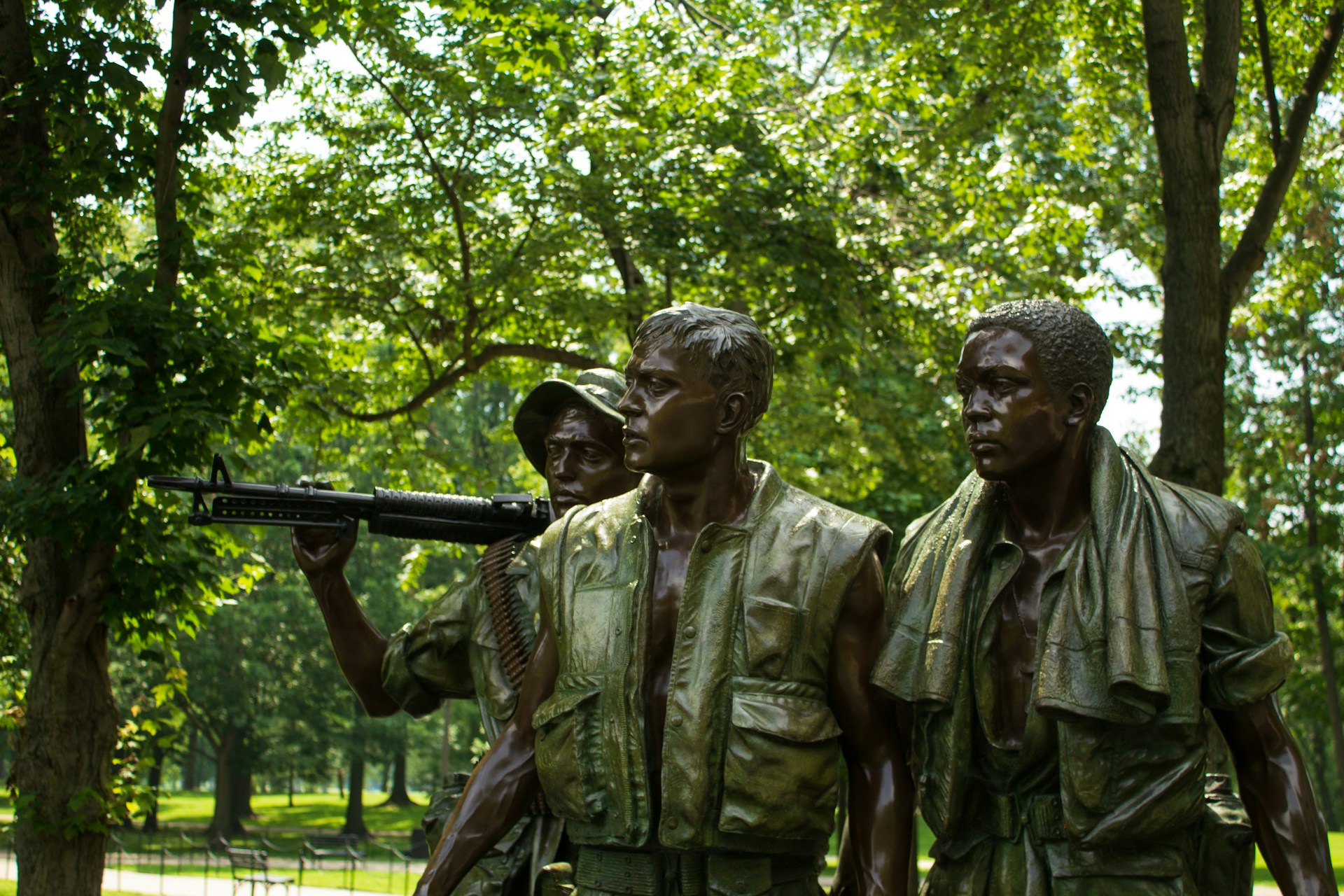
A group of Vietnam War veterans has filed a federal lawsuit challenging President Donald Trump’s plan to build a massive “Independence Arch” near Arlington National Cemetery, arguing the project cannot legally move forward without congressional approval.
The proposed monument — standing 250 feet tall — is intended to commemorate America’s 250th anniversary in 2026. If built, it would become one of the tallest and most visible landmarks in Washington, D.C.
The legal challenge now places the patriotic project at the center of a broader debate about executive authority, historic preservation, and how best to honor America’s veterans.
What Is the Independence Arch?
The Independence Arch is envisioned as a towering triumphal structure near Memorial Circle, serving as a bold symbol of America’s founding and military sacrifice.
President Trump has linked the monument’s height and grandeur to the nation’s upcoming 250th anniversary celebration — framing it as a powerful tribute to 250 years of American freedom.
Supporters argue the arch would:
- Enhance the visitor experience at Arlington
- Provide a new patriotic landmark in the nation’s capital
- Honor generations of service members
- Commemorate America’s founding in historic fashion
Why Are Vietnam Veterans Suing?
Three Vietnam veterans — Michael Lemmon, Shaun Byrnes, and Jon Gundersen — along with retired architectural historian Calder Loth, filed the lawsuit in U.S. District Court for the District of Columbia.
Their legal argument centers on the Commemorative Works Act of 1986, which requires congressional authorization before major monuments can be built on federal land in the Washington area.
According to the complaint:
- Congress has not specifically authorized the arch.
- No environmental review has been completed.
- Plans have not been submitted to the National Capital Planning Commission.
- The Commission of Fine Arts has not reviewed the design.
- No filing appears to have been made with the Federal Aviation Administration regarding potential air navigation concerns.
The lawsuit was filed by Public Citizen, a consumer advocacy group founded in 1971 by Ralph Nader.
Concerns About Historic Sightlines
Plaintiffs also argue that the structure could interfere with the historic visual alignment between the Lincoln Memorial and Arlington House.
They claim the arch’s placement may obstruct portions of that long-recognized reciprocal view — something preservationists consider historically significant.
White House Responds
The administration strongly defended the project.
A White House spokesman described the arch as a future global landmark that would honor American heroes and elevate the experience for families visiting Arlington.
Officials say President Trump remains committed to recognizing the sacrifices of veterans and ensuring America’s 250th anniversary is marked with appropriate national pride.
Executive Authority at the Center of the Case
At the core of the lawsuit is a constitutional question: Can the executive branch proceed with construction without Congress explicitly authorizing the monument?
The plaintiffs argue that moving forward without legislative approval exceeds delegated authority and violates federal statutory requirements.
They are asking the court to:
- Declare the project unlawful without congressional authorization
- Issue preliminary and permanent injunctions
- Prevent the National Park Service and other federal officials from taking further steps toward construction
Why This Matters for America’s 250th Anniversary
With the United States preparing to celebrate 250 years of independence, the Independence Arch proposal reflects a broader national conversation:
How should America commemorate its founding?
Who decides how our capital evolves?
And how do we balance tradition, patriotism, and federal law?
For many Americans — particularly veterans and their families — the debate carries deep emotional weight.
Frequently Asked Questions
What is the Independence Arch?
It is a proposed 250-foot triumphal arch near Arlington National Cemetery designed to commemorate America’s 250th anniversary.
Why is it being challenged in court?
Plaintiffs argue that Congress must authorize the monument before construction can begin under federal law.
Has Congress approved the arch?
According to the lawsuit, no specific congressional authorization has been granted.
When would the monument be built?
The arch is tied to the nation’s 2026 semiquincentennial celebration, though construction timelines remain uncertain pending the court’s decision.
The Bottom Line
As America approaches its historic 250th anniversary, the Independence Arch has become more than a construction proposal — it is now a legal and cultural flashpoint.
The federal courts will ultimately determine whether the administration can move forward with its vision for a new patriotic landmark near Arlington National Cemetery.
Regardless of the outcome, the case underscores the enduring importance of honoring veterans, preserving history, and upholding the rule of law.