Supreme Court Blocks Trump Tariffs, Exposing GOP Divide
The U.S. Supreme Court has dealt a significant blow to President Donald Trump’s trade agenda, blocking most of the administration’s sweeping tariffs imposed under emergency authority.
The ruling immediately sparked mixed reactions inside the Republican Party — with some lawmakers expressing relief, while others warned the decision undermines President Trump’s America First economic strategy.
For many conservative voters, especially those over 50 who have witnessed decades of factory closures and outsourcing, the debate over tariffs is not theoretical. It is about jobs, national security, and America’s economic independence.
What the Supreme Court Ruling Means
The Court ruled that President Trump did not have authority under the International Emergency Economic Powers Act (IEEPA) to impose the tariffs in question.
Chief Justice John Roberts wrote that the president must demonstrate “clear congressional authorization” when asserting extraordinary powers such as imposing tariffs. According to the majority opinion, that standard was not met.
The decision centers on constitutional authority — specifically Article I, which grants Congress power over taxation and trade regulation.
For constitutional conservatives, the ruling reinforces separation of powers. For America First advocates, however, it represents a major obstacle to aggressive trade reform.
Some Republicans Express Relief
Several Republican lawmakers quietly welcomed the ruling.
One conservative House member, speaking anonymously, said they were “relieved” and viewed the outcome as the correct constitutional result. The lawmaker emphasized that tariff authority belongs to Congress and that maintaining separation of powers protects long-term constitutional stability.
Another House Republican aligned with President Trump acknowledged that while tariffs can be useful as negotiation tools, they may function as a tax on consumers if used broadly or indefinitely.
This reflects a longstanding divide within conservative economic philosophy:
- Free-market traditionalists tend to oppose broad tariffs.
- America First populists argue tariffs are necessary leverage against unfair trade practices.
GOP Critics Warn of Economic Consequences
Not all Republicans were pleased.
Some GOP sources argued that celebrating the ruling sends the wrong message, especially when the administration was using tariffs to pressure trading partners and bring manufacturing back to the United States.
Sen. Roger Marshall (R-Kan.) expressed disappointment with the decision, pointing to what he described as measurable progress under President Trump’s trade strategy — including renewed negotiations and strengthened supply chains.
Supporters of the tariff strategy argue it helped:
- Push foreign governments to renegotiate trade deals
- Protect American manufacturing jobs
- Strengthen national security by reducing foreign dependence
For many older voters who remember the rise of American industry, those goals resonate strongly.
Rand Paul and Constitutional Conservatives Weigh In
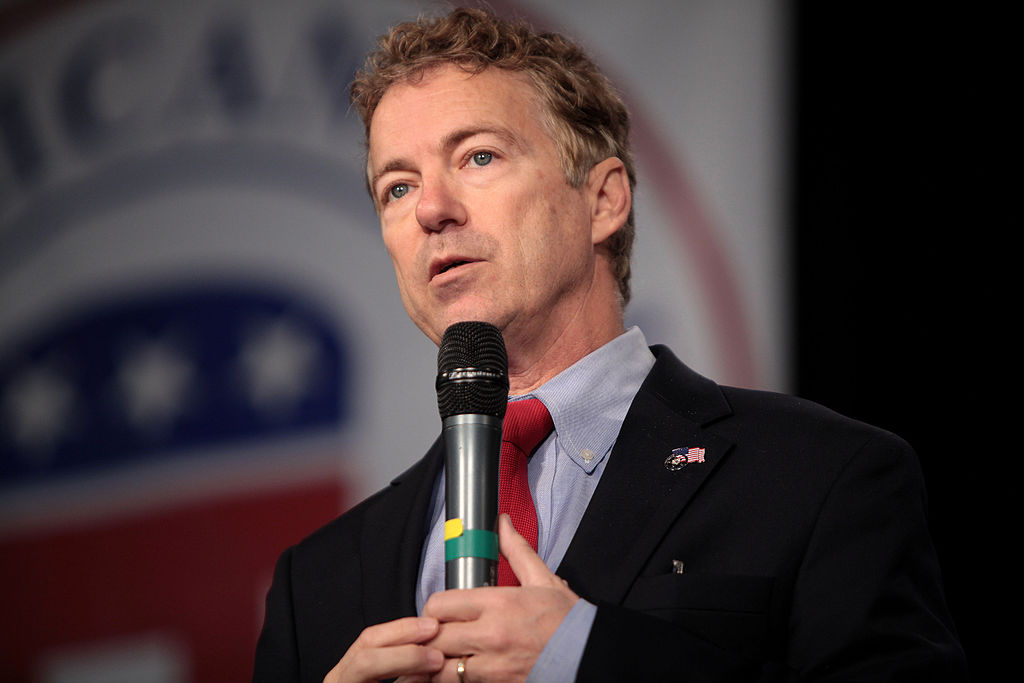
Sen. Rand Paul, a longtime advocate of limiting executive power, praised the ruling as a safeguard against future administrations using emergency authority to impose taxes without congressional approval.
He argued that the decision prevents any future president — Republican or Democrat — from bypassing Congress to enact sweeping trade measures under the banner of emergency powers.
This highlights a deeper philosophical debate:
Should economic nationalism override strict constitutional boundaries? Or should separation of powers remain the guiding principle, even when pursuing aggressive trade reform?
A 50/50 Split Inside the Republican Party
Sources describe the internal Republican reaction as roughly divided.
On one side:
- Lawmakers prioritizing constitutional limits and free-market economics.
On the other:
- Lawmakers focused on protecting American industry through assertive trade policies.
The ruling underscores an ongoing identity struggle within the GOP — between traditional fiscal conservatism and the populist America First movement that reshaped the party under President Trump.
What Happens Next?
The Trump administration is expected to explore alternative legal avenues to advance its trade agenda. Congress may also face pressure to clarify or expand presidential trade authority.
For conservative voters over 50, this debate touches on core issues:
- Protecting American workers
- Securing domestic supply chains
- Upholding the Constitution
- Preventing executive overreach
The outcome could influence future trade negotiations, economic policy, and even the direction of the Republican Party itself.
Final Takeaway
The Supreme Court’s decision blocking most of President Trump’s tariffs is more than a legal ruling — it is a defining moment in the debate over executive power, constitutional authority, and America’s economic future.
Whether viewed as a constitutional safeguard or a setback to economic nationalism, one thing is certain: the battle over trade policy and presidential authority is far from over.
And the Republican Party must now decide which path it wants to follow.