Here’s what happened.
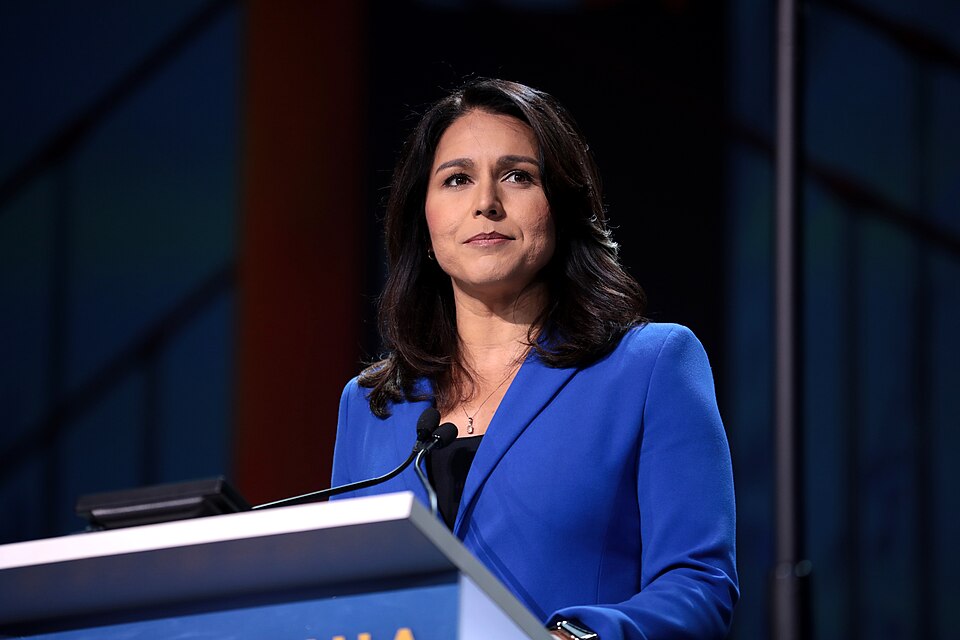
Former Director of National Intelligence Tulsi Gabbard officially stepped down from President Donald Trump’s administration on Friday, triggering immediate reactions across conservative media and sparking renewed debate over foreign policy inside Republican circles.
Among the loudest voices responding to the resignation was conservative commentator Laura Loomer, a longtime Trump ally who has frequently criticized Gabbard’s positions on Iran and national security issues.
Loomer celebrated the announcement on social media, arguing that Gabbard’s foreign policy views often conflicted with the tougher stance many conservatives believe is necessary when dealing with hostile regimes overseas.
Gabbard explained in her resignation letter that her decision was driven by personal family matters. According to reports, she is leaving public service to care for her husband after he was diagnosed with a rare form of bone cancer.
“At this time I must step away from public service to be by his side and fully support him through this battle,” Gabbard reportedly wrote.
The announcement quickly gained international attention after Iran’s embassy in Armenia posted supportive remarks online regarding Gabbard’s departure. The diplomatic message referenced comments Gabbard had previously made about Iran and criticized President Trump’s policies in the region.
That reaction immediately fueled additional criticism from Loomer and other conservative figures who questioned why foreign adversaries appeared supportive of Gabbard’s positions.
Loomer argued the situation reinforced concerns among some Trump supporters that portions of the intelligence community had not fully aligned with the administration’s America First foreign policy agenda.
The disagreement reflects a broader divide within conservative politics over how aggressively the United States should confront Iran and other geopolitical threats.
Throughout her time in office, Gabbard often advocated a more cautious approach to foreign intervention, warning against prolonged overseas conflicts and emphasizing the risks of military escalation.
Some Republicans praised that position as measured and restrained. Others believed it projected weakness at a time when America needed stronger deterrence against adversaries like Iran, China, and Russia.
The internal debate intensified earlier this year after Joe Kent, Gabbard’s deputy, resigned in protest over U.S. military operations tied to Iran. Kent argued in his resignation letter that Iran did not pose the immediate danger described by administration officials.
Gabbard later stated that President Trump acted based on intelligence assessments indicating the Iranian regime represented a serious threat to regional stability and American interests.
However, she continued to express caution about broader military involvement overseas, maintaining a position that occasionally put her at odds with more hawkish voices inside the administration.
President Trump previously acknowledged that he and Gabbard viewed Iran differently but defended her service despite those disagreements.
“She’s a little bit different in her thought process than me, but that doesn’t make somebody unable to serve,” Trump told reporters during a previous press appearance.
Now, with Gabbard officially stepping away from her role, attention is turning toward who could replace her and what direction the administration’s intelligence strategy may take moving forward.
The resignation also comes during a critical moment for global stability, as tensions across the Middle East continue to dominate foreign policy discussions ahead of the next election cycle.
For many conservatives, the situation highlights the growing battle inside Washington between advocates of a tougher America First security doctrine and officials pushing for a more restrained foreign policy approach.