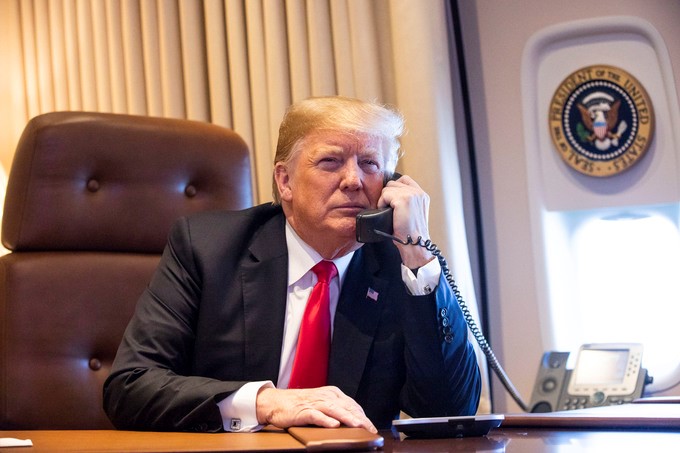
Trump made things crystal clear.
President Donald Trump’s administration is sending a powerful warning to America’s allies as Washington prepares to unleash a new economic campaign against Iran.
Treasury Secretary Scott Bessent said Thursday that countries and companies continuing to do business with Tehran could soon find themselves facing the financial power of the United States.
His message was unmistakable.
“You are either with us or against us,” Bessent said during an appearance on CNBC’s “Squawk on the Street.”
The warning comes as the Trump administration prepares to announce a major new round of sanctions against Iran, escalating its effort to pressure Tehran without immediately resorting to another large-scale military operation.
For American allies, the decision could be consequential: continue certain business dealings with Iran and risk penalties from Washington, or cooperate with the Trump administration’s campaign to financially isolate the Iranian government.
Trump Administration Prepares Tough New Iran Sanctions
Bessent said the Treasury Department intends to use secondary sanctions, an economic tool that allows Washington to target foreign businesses and financial institutions that conduct certain transactions with sanctioned countries or entities.
That means the administration’s pressure campaign could reach well beyond Iran.
Foreign companies involved in Iranian oil purchases, financial transfers or maritime transactions could potentially face consequences from the United States.
Bessent warned that companies or countries that continue financial dealings with Iran — including sending funds, purchasing Iranian oil or participating in ship-to-ship transfers — could face the full weight of U.S. government and Treasury enforcement.
The Treasury secretary said America’s allies and other governments now face a decision about whether they will cooperate with Washington.
Bessent said the moment had come for America’s allies and other nations around the world to choose where they stand.
The administration is expected to reveal additional details about the sanctions during a press conference Monday.
Bessent Says Economic Pressure Could Prevent Wider War
The strategy appears designed to accomplish two objectives at once.
First, the administration wants to cut off revenue that Iran can use to finance its government, military and regional allies.
Second, Trump officials hope overwhelming economic pressure can reduce the need for another major military escalation.
Bessent argued that cutting Iran off from additional sources of revenue would make it increasingly difficult for Tehran to finance military operations.
He also pointed to Iran’s domestic economic problems, including food inflation and broader price increases, as evidence that additional sanctions could place even greater pressure on the country’s leadership.
The ultimate objective is to force Tehran to reconsider its position while limiting the need for American military action.
Could Trump’s Strategy Avoid Another Major Conflict?
That may be the biggest question facing Washington.
Trump has long presented himself as a president willing to use American military strength while also seeking to avoid prolonged overseas conflicts.
Bessent suggested the administration believes economic power can become its most important weapon against Tehran.
He described the combination of existing restrictions and tougher sanctions as a “one-two punch.”
Bessent said the administration plans to impose sanctions of unprecedented severity.
He also pointed to U.S. pressure campaigns involving Venezuela and Cuba as examples of Washington using economic leverage against hostile governments.
Whether the same strategy produces the desired result in Iran remains to be seen.
Strait of Hormuz Raises Stakes for Americans
The confrontation matters to Americans thousands of miles away from the Middle East because Iran sits alongside one of the most important energy corridors in the world.
The Strait of Hormuz connects the Persian Gulf with international shipping routes and plays a major role in the global energy market.
Disruptions involving the waterway can quickly raise concerns about crude oil supplies and transportation costs.
That can eventually matter for American households.
Changes in global oil prices can affect gasoline, diesel fuel, airline expenses, shipping costs and the price businesses pay to move products across the country.
For Americans already concerned about the cost of living, preventing a prolonged disruption to Middle Eastern energy supplies could therefore have significant economic consequences.
Trump and Iran Have Been Locked in a Months-Long Standoff
The latest sanctions push follows months of confrontation involving the United States, Israel and Iran.
Trump and Israeli Prime Minister Benjamin Netanyahu launched military operations against Iran on Feb. 28, beginning a conflict that has repeatedly shifted between military confrontation and diplomatic negotiations.
A ceasefire that began April 7 offered an opportunity to reduce hostilities.
Trump later signed a preliminary peace framework on June 17, raising hopes that negotiations could produce a more lasting settlement.
Those hopes suffered another setback after attacks on commercial vessels traveling through the Strait of Hormuz.
Trump subsequently authorized additional strikes against Iran last month.
The renewed fighting complicated negotiations and again raised the possibility of a larger Middle Eastern conflict.
Iran’s Nuclear Program Remains at Center of Dispute
Another major issue is Iran’s nuclear program.
Trump has sought an agreement that would prevent Tehran from developing a nuclear weapon while limiting Iran’s ability to threaten American interests and U.S. allies in the region.
Negotiations have struggled to produce a lasting breakthrough.
The administration is now betting that Iran’s economic vulnerabilities can provide leverage that diplomacy alone has failed to deliver.
If Washington can substantially reduce Iran’s oil revenue and restrict its access to international financial networks, administration officials believe Tehran could eventually face enormous pressure to negotiate.
But the policy also creates challenges for other countries.
Governments that depend on Iranian energy or maintain commercial relationships with Tehran may now have to weigh those economic interests against the possibility of American sanctions.
That is what makes Bessent’s warning to U.S. allies particularly significant.
What Trump’s Iran Ultimatum Means for U.S. Allies
The United States remains home to the world’s dominant financial system, giving Washington considerable influence over international banking and commerce.
Secondary sanctions attempt to capitalize on that advantage.
A foreign company may technically operate outside the United States, but losing access to American markets or financial institutions can still carry enormous consequences.
That gives Washington leverage without necessarily deploying additional troops or launching another military campaign.
The Trump administration appears prepared to use that leverage aggressively.
For U.S. allies, the calculation may increasingly become whether maintaining economic ties with Iran is worth risking access to American financial markets.
Americans Will Be Watching Oil and Gas Prices
The economic consequences will also be closely watched at home.
Any escalation involving Iran and the Strait of Hormuz has the potential to influence global energy markets.
Higher energy costs can spread throughout the economy because nearly every major industry depends on transportation and fuel.
Farmers need diesel.
Truckers move consumer products.
Airlines depend on jet fuel.
Manufacturers pay transportation expenses.
Families see the most visible effect when they pull into a gas station.
That means Trump’s Iran strategy is not simply a foreign-policy issue. Its success or failure could eventually affect household budgets across America.
What Happens Next?
Attention now turns to Monday, when Bessent is expected to provide additional details about the administration’s new sanctions.
The central question is whether America’s allies will cooperate — and whether Iran will ultimately respond to economic pressure.
Bessent believes maximum financial pressure could reduce the chances of another major military confrontation.
“If we are doing the maximum economic pressure,” he said, “then that means that likely there will not be a large-scale kinetic restart.”
Trump’s strategy represents a significant gamble: squeeze Iran economically, pressure other countries to choose between Tehran and Washington, and attempt to force a settlement without another prolonged war.
If the administration succeeds, Trump could gain significant leverage over one of America’s most persistent adversaries.
If it fails, tensions surrounding Iran, the Strait of Hormuz and global energy markets could remain a serious challenge for the United States and its allies.