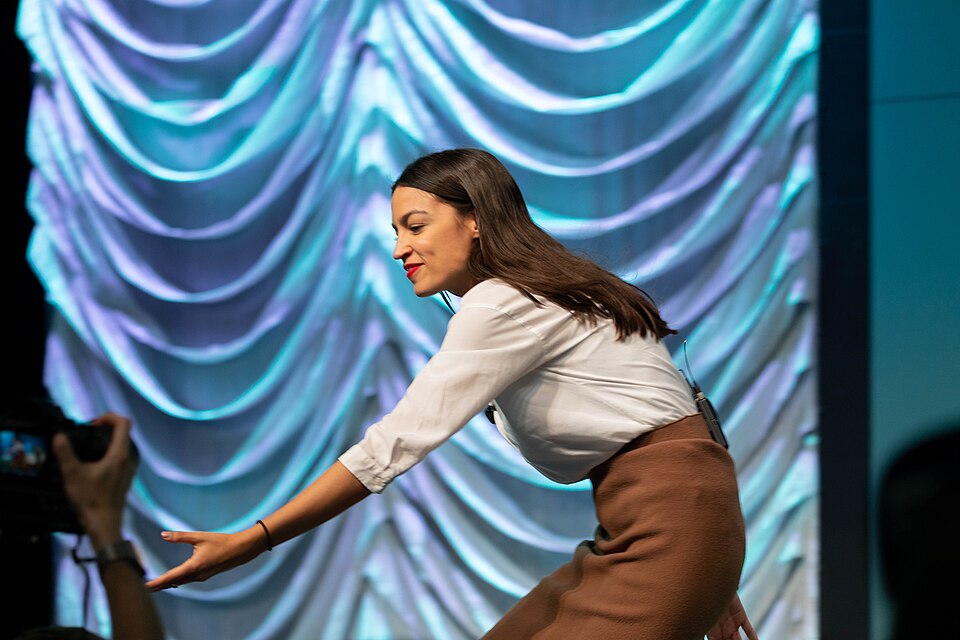
Here’s what AOC is thinking.
Rep. Alexandria Ocasio-Cortez is keeping the door open to a major political move in 2028 — but she says voters will have to wait until after the midterm elections to learn what comes next.
The New York Democrat said she will not make decisions about a possible presidential campaign or future U.S. Senate run until the 2026 midterms are over.
“I will be making any of those considerations after the midterms,” Ocasio-Cortez said in comments reported by the New York Post.
Her answer immediately drew attention because speculation surrounding her political future has been growing as Democrats begin looking beyond the 2026 elections and toward the next presidential contest.
For now, Ocasio-Cortez says her priority is helping Democratic candidates compete in House and Senate races across the country.
“I think we’ll learn a lot in November,” she said.
That statement could prove important. The 2026 midterms will give both parties a clearer picture of what voters want heading into the final two years before the 2028 presidential election.
AOC Keeps Her 2028 Options Open
Ocasio-Cortez has not announced a campaign for president or the Senate, and there is still considerable uncertainty about what she will ultimately decide.
However, she has become one of the most recognizable figures in the Democratic Party.
Her supporters point to her national following, fundraising ability and aggressive economic message. Her critics argue that her progressive policy positions remain far outside the political mainstream in many parts of the country.
That divide is one reason any future campaign by Ocasio-Cortez would likely receive enormous national attention.
A presidential bid would put her political philosophy before voters nationwide.
A Senate campaign, meanwhile, could keep her focus on New York while potentially setting up a future battle for one of the state’s two Senate seats.
For now, she appears determined to keep both possibilities open.
Early Polling Shows Voters Are Watching
Ocasio-Cortez is already appearing in early polling of possible Democratic presidential candidates.
A September Bowling Green State University/YouGov survey found former Vice President Kamala Harris receiving support from 17% of Democratic respondents, followed by former Transportation Secretary Pete Buttigieg at 16%.
Ocasio-Cortez and California Gov. Gavin Newsom each received 14%, while Arizona Sen. Mark Kelly received 10%.
The poll surveyed 1,200 likely voters and reported a margin of error of plus or minus 3.3 percentage points.
Because the 2028 presidential election remains more than two years away, such polling should be viewed as an early snapshot rather than evidence of how the eventual Democratic primary will unfold.
Still, the numbers show that Ocasio-Cortez has developed substantial national name recognition.
Democrats Face a Major Test in November
The upcoming midterm elections could help determine which direction Democratic voters want their party to take.
A number of progressive candidates are competing in congressional races, giving party leaders an opportunity to measure how left-leaning messages perform in different parts of the country.
Ocasio-Cortez is expected to spend time campaigning for Democratic candidates ahead of Election Day.
Success by progressive candidates could strengthen arguments from Democrats who believe the party should move further toward populist economic policies.
Poor results could strengthen Democrats who favor a more moderate strategy.
Either way, November will give Ocasio-Cortez additional information before she makes decisions about her own future.
Her Economic Message Is Becoming Central
Ocasio-Cortez has increasingly emphasized economic populism, particularly criticism of billionaire influence, large corporations and concentrated economic power.
Alongside Vermont Sen. Bernie Sanders, she has appeared at events connected to their “Fighting Oligarchy” campaign.
Their message focuses heavily on wealth inequality, corporate influence and what they describe as an economy that gives too much power to the wealthy.
That agenda has helped Ocasio-Cortez build a loyal progressive following.
Conservatives and many Republicans strongly disagree with her approach, arguing that higher taxes, larger government programs and greater federal involvement in the economy could hurt growth and private investment.
Those competing economic visions could become an important part of the 2028 political debate if Ocasio-Cortez ultimately runs.
Republicans Are Already Talking About AOC
Ocasio-Cortez’s growing national profile has also made her a frequent target for Republicans.
Vice President JD Vance mentioned her during a September campaign appearance in Iowa while criticizing political communication styles.
“Some politicians are very good at it: AOC,” Vance said while arguing that some elected officials speak at length without offering clear answers.
Republican candidates have regularly used Ocasio-Cortez as an example of the Democratic Party’s progressive wing.
That strategy reflects her unusual level of national recognition for a House member.
Whether the attention ultimately helps or hurts her remains a question for voters.
Outside Support Is Beginning to Surface
Ocasio-Cortez could also have access to significant political and financial support if she eventually enters a national race.
Political commentator Hasan Piker has publicly said he would campaign for her if asked.
Piker is a controversial figure whose past statements have drawn criticism from conservatives and other political groups.
Meanwhile, major Democratic donor and LinkedIn co-founder Reid Hoffman has also discussed the possibility of supporting Ocasio-Cortez.
Hoffman said he believes she is “much more pragmatic than people give her credit for.”
Support from wealthy donors and high-profile activists would not guarantee political success, but it could provide an important fundraising and organizing network during a competitive primary.
The Democratic Primary Calendar Could Be Important
The Democratic Party’s 2028 presidential primary schedule could also shape the race.
South Carolina is scheduled to begin the official Democratic primary calendar, followed by states including Nevada, New Hampshire, New Mexico, Michigan and Virginia.
That calendar means presidential candidates could face a diverse group of Democratic voters early in the nomination process.
Candidates would need to compete for support among Black voters, Latino voters, union households, suburban voters and other important Democratic constituencies.
For Ocasio-Cortez, that would require expanding beyond the progressive coalition that first helped launch her political career.
Could She Challenge Chuck Schumer?
Another possibility receiving attention is a future New York Senate campaign.
Sen. Chuck Schumer has represented New York in the Senate since 1999 and remains one of the most powerful Democrats in Washington.
Ocasio-Cortez has not announced a challenge against Schumer.
However, speculation has persisted because a Senate race could offer her another path to higher office without immediately launching a nationwide presidential campaign.
Her expected work helping Democrats across New York during the 2026 election season could also strengthen relationships with activists, donors and local party organizations.
Whether that activity eventually develops into a statewide campaign remains unknown.
The Midterms May Provide the Answer
Ocasio-Cortez is giving herself time.
Rather than committing to a 2028 campaign now, she appears prepared to watch what voters do in November and evaluate the political landscape afterward.
That approach gives her several advantages.
She can campaign for other Democrats, expand her national network, test political messages and avoid becoming an official presidential candidate years before the election.
It also keeps attention focused on one unanswered question:
What will Alexandria Ocasio-Cortez do after the midterms?
For voters watching the future of the Democratic Party, her answer could become one of the biggest political stories heading into 2027 and the opening stages of the 2028 presidential race.