Here’s what was said.
Some of America’s most decorated military veterans are weighing in on President Donald Trump’s search for the next Secretary of the Army, turning what might normally be an internal Pentagon decision into a closely watched leadership battle.
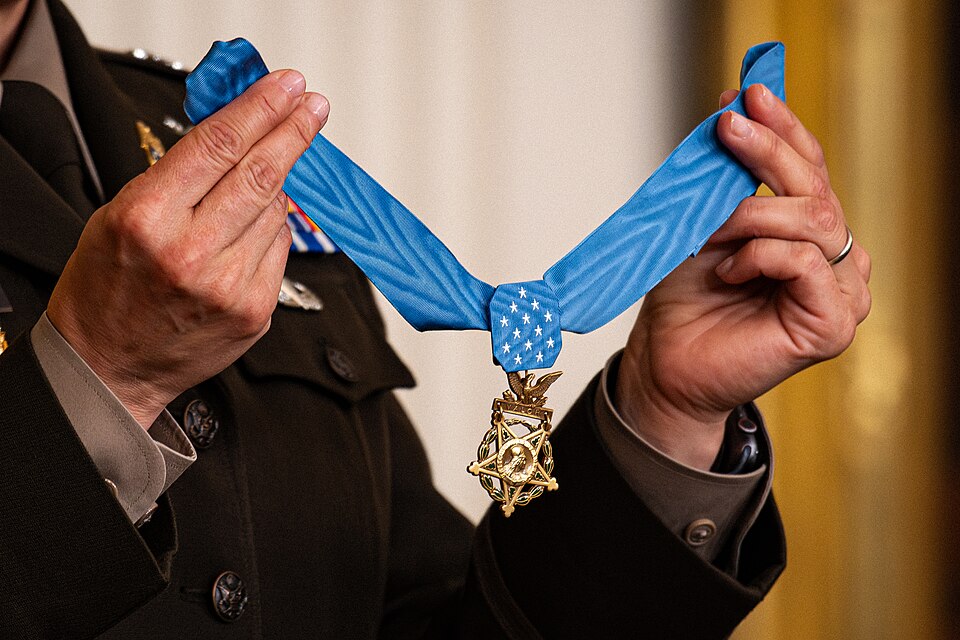
Several Medal of Honor recipients have publicly backed candidates they believe could strengthen Army readiness, improve accountability and prepare the service for future military challenges.
The competition reportedly centers on several figures, including Army financial chief Marc Andersen, Pentagon spokesman Sean Parnell and legislative affairs official Dane Hughes.
Trump has not yet announced his choice.
Medal of Honor Recipients Make Their Case
The involvement of Medal of Honor recipients is notable because the nation’s highest military decoration is reserved for extraordinary acts of valor.
Several recipients are supporting Andersen, who serves as Assistant Secretary of the Army for Financial Management and Comptroller.
In that position, Andersen helps oversee the Army’s massive budget and financial operations at a time when military leaders are trying to modernize weapons, technology and battlefield capabilities.
Supporters argue that his financial background could make him particularly valuable as the Army balances military preparedness with growing pressure to spend taxpayer dollars efficiently.
Medal of Honor recipient Britt Slabinski is among those encouraging Trump to seriously consider Andersen.
Slabinski argued that the next Army secretary should be someone capable of producing results rather than simply maintaining the status quo.
He said the president should choose a leader focused on building an Army capable of succeeding against future threats.
Slabinski received the Medal of Honor in 2018 for his actions during a dangerous combat mission in Afghanistan.
Supporters Praise Andersen’s Approach
Medal of Honor recipient Leroy Petry has also expressed support for Andersen.
Petry emphasized Andersen’s character, leadership and concern for soldiers and military families.
Petry understands those sacrifices firsthand.
He received the Medal of Honor after a 2008 firefight in Afghanistan in which he grabbed an enemy grenade and attempted to throw it away from fellow soldiers.
The grenade exploded as Petry released it, costing him his right hand.
Petry has said that qualities such as character, performance and commitment to service should weigh heavily when choosing the Army’s next civilian leader.
Retired Navy SEAL and Medal of Honor recipient Edward Byers has also supported Andersen.
Byers argued that military leaders in Washington must remember that their decisions ultimately affect the men and women carrying out missions around the world.
His support reflects a broader concern among veterans that Pentagon leadership remain closely connected to troops serving on the ground.
Why Army Leadership Matters
The Secretary of the Army is the service’s highest-ranking civilian official.
The position carries enormous responsibility.
The secretary helps oversee Army personnel, budgets, equipment, modernization programs, military installations and long-term strategic priorities.
That role has become even more important as the United States military invests in emerging technologies such as artificial intelligence, drones, advanced missile systems, electronic warfare and next-generation communications.
The next Army secretary could therefore have significant influence over how quickly those technologies move from development into actual military use.
Taxpayer spending is another major concern.
The Army manages an annual budget worth well over $100 billion, meaning decisions made by senior officials can involve enormous amounts of public money.
For older Americans concerned about both national security and government spending, the selection could have consequences far beyond Pentagon politics.
Sean Parnell Draws Strong Support
Andersen is not the only candidate attracting support from decorated veterans.
Medal of Honor recipient Earl Plumlee has backed Sean Parnell.
Plumlee cited Parnell’s experience and his understanding of the relationship between the military, private industry and emerging technology.
He argued that artificial intelligence, data infrastructure and access to reliable energy could become increasingly important elements of American national security.
Plumlee also warned against internal Pentagon conflicts distracting military leaders from larger threats facing the country.
Dakota Meyer, another Medal of Honor recipient, has also voiced strong support for Parnell.
Meyer pointed to Parnell’s combat experience and his familiarity with Pentagon operations.
According to Meyer, that combination gives Parnell an understanding of both the troops serving in dangerous environments and the senior officials making decisions in Washington.
Republican Senators Weigh In
Parnell has also received support from Republican lawmakers, including Sens. Dave McCormick of Pennsylvania and Tim Sheehy of Montana.
Their backing could become significant because any Army secretary nominee must ultimately receive Senate confirmation.
Republicans currently control the Senate, but confirmation battles can still become complicated when members of the president’s own party raise concerns.
Sen. Kevin Cramer of North Dakota has publicly discussed past allegations involving Parnell and suggested those matters could become an obstacle during the confirmation process.
Parnell has disputed allegations made against him in the past.
If Trump selects him, senators would have an opportunity to examine his record during the formal confirmation process.
A Battle Over the Army’s Future
The disagreement among Medal of Honor recipients illustrates a larger debate over what kind of leader the Army needs.
Supporters of Andersen point to his experience managing finances, modernization programs and large government budgets.
Supporters of Parnell emphasize combat leadership, military experience and an understanding of emerging threats.
Hughes has also reportedly been discussed as a possible candidate.
The White House has not publicly indicated that any candidate has secured the nomination.
That means Trump still has the final decision.
Military Readiness Remains the Central Issue
Regardless of who is selected, the next Army secretary will inherit significant challenges.
The Army must recruit and retain qualified soldiers, modernize equipment, prepare for new forms of warfare and ensure that billions of taxpayer dollars are spent effectively.
Future conflicts could increasingly involve drones, artificial intelligence, cyber operations, satellites and long-range precision weapons alongside traditional forces.
Those changes are forcing military leaders to rethink how soldiers train, fight and communicate.
The next secretary will have an important role in determining how quickly the Army adapts.
Trump’s Decision Still Ahead
For now, the competition remains unsettled.
Some Medal of Honor recipients want Trump to choose Andersen, believing his management experience and focus on soldiers would serve the Army well.
Others believe Parnell’s combat record and Pentagon experience make him a strong candidate.
Trump has not announced which direction he intends to take.
A White House official has said the president will reveal his nominee on his own timetable and that several qualified candidates are interested in serving.
Until then, the public campaign by some of America’s most decorated veterans ensures that the decision will receive considerably more attention than the typical Pentagon personnel change.
And whoever receives the nomination could play a major role in shaping the U.S. Army, military readiness and defense spending for years to come.