Here’s what happened.
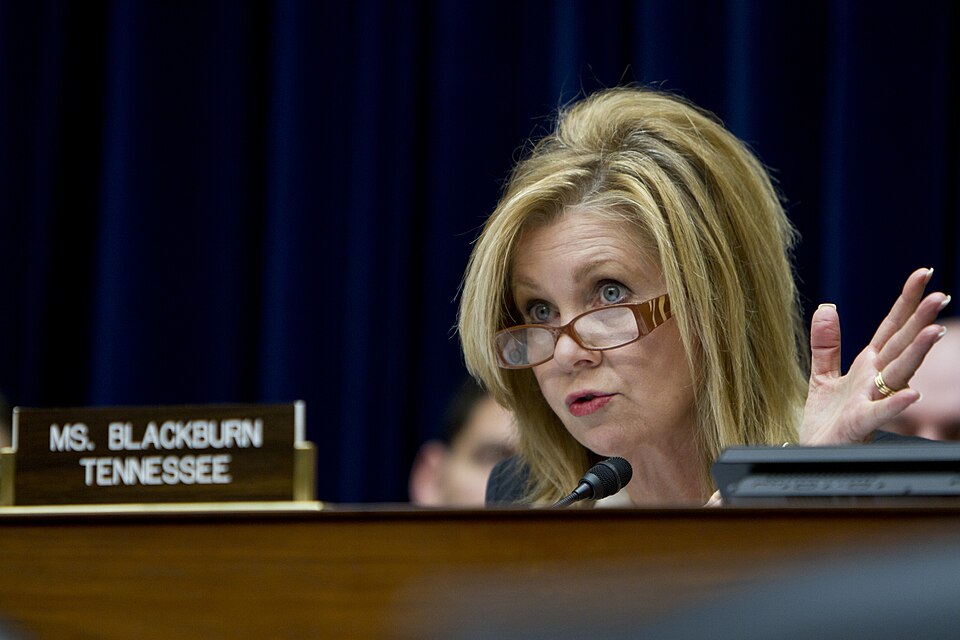
Republican Sen. Marsha Blackburn of Tennessee has filed a federal lawsuit against former Special Counsel Jack Smith, opening a new legal battle over the controversial Arctic Frost investigation and the government’s collection of congressional phone records.
The lawsuit challenges Smith’s authority as special counsel and raises broader questions about government surveillance, constitutional protections for lawmakers, and the limits of federal prosecutorial power.
Blackburn is asking a federal court to declare Smith’s appointment unconstitutional, require the return or destruction of phone records obtained during the investigation, and award her $1 in nominal damages.
Although the financial demand is symbolic, the constitutional issues raised by the lawsuit could carry much larger implications.
Blackburn Takes Jack Smith to Court
Blackburn’s lawsuit argues that Smith was never lawfully authorized to exercise the powers he used as special counsel.
Then-Attorney General Merrick Garland appointed Smith in November 2022 to oversee federal investigations involving Donald Trump.
Blackburn’s attorneys argue that Smith’s appointment violated the Constitution’s Appointments Clause because he was not nominated by the president and confirmed by the Senate for the position.
That argument remains a legal claim that the federal courts will now have an opportunity to consider.
The New Civil Liberties Alliance, which is representing Blackburn, contends that federal law did not give the attorney general sufficient authority to grant Smith the powers he exercised.
The lawsuit also seeks to hold Smith personally responsible for alleged violations connected to the acquisition of Blackburn’s telephone records.
Secret Phone Records at Center of Dispute
A major part of the case concerns telephone records obtained during the Arctic Frost investigation.
According to Blackburn’s complaint, Smith’s office issued a grand-jury subpoena to Verizon in May 2023 seeking toll records associated with her phone.
Those records did not reveal the actual contents of Blackburn’s conversations.
However, telephone metadata can reveal whom a person contacted, when communications occurred, and how long calls lasted.
Blackburn’s attorneys argue that obtaining this information created serious constitutional concerns because she was serving as a United States senator at the time.
The complaint further alleges that investigators obtained a nondisclosure order preventing Verizon from alerting Blackburn that her records had been requested.
That secrecy is now a central issue in the lawsuit.
Speech or Debate Clause Becomes Key Issue
Blackburn argues that the nondisclosure order prevented her from challenging the subpoena under the Constitution’s Speech or Debate Clause.
The clause provides important protections for members of Congress when carrying out legitimate legislative duties.
Her attorneys contend that investigators should have taken those protections into account before obtaining records connected to a sitting senator.
Whether the subpoena violated those protections will ultimately be a question for the courts.
The dispute could therefore have implications well beyond Blackburn personally, particularly when it comes to how federal investigators handle records involving members of Congress.
Arctic Frost Investigation Faces New Scrutiny
Arctic Frost was the FBI investigation focused on efforts surrounding the aftermath of the presidential election.
The investigation was later placed under Smith’s authority after he became special counsel.
Since then, congressional Republicans have released records detailing the broad scope of subpoenas issued during the investigation.
According to Senate Judiciary Committee materials, Smith’s investigative team issued 197 subpoenas involving 34 individuals and 163 businesses while seeking information connected to hundreds of Republican individuals and organizations.
Those disclosures have fueled Republican concerns about the reach of the investigation.
Critics argue that federal investigators cast an excessively wide net.
Smith and his defenders have rejected accusations that his work amounted to politically motivated prosecution and maintain that investigative decisions were based on evidence and legitimate law-enforcement objectives.
Republican Lawmakers Demand Answers
The controversy intensified after congressional investigators revealed that telephone records connected to multiple Republican lawmakers had been sought during the probe.
For Republicans, the revelations raised questions about whether investigators properly respected constitutional protections surrounding Congress.
Senate Judiciary Committee Chairman Chuck Grassley of Iowa has been among the lawmakers leading oversight of Arctic Frost.
The committee has examined subpoenas, communications records and other investigative materials in an effort to determine how broadly Smith’s team collected information.
Those inquiries have expanded the debate from Trump’s prosecution itself to the investigative techniques used behind the scenes.
Blackburn Says Lawsuit Is About Accountability
Blackburn says her case is intended to establish limits on government power.
She has accused Smith’s investigation of overstepping constitutional boundaries and says the lawsuit is designed to prevent similar conduct in the future.
Her request for just $1 in damages highlights the symbolic nature of the case.
Rather than seeking a large financial settlement, Blackburn is asking the court to make a legal determination about whether Smith had legitimate authority and whether her rights were violated.
Her attorneys are also asking for the phone records obtained through the subpoena to be returned or destroyed.
That could make the case an important test of how courts balance federal investigative authority against the constitutional protections afforded to elected lawmakers.
Smith Rejects Claims of Political Prosecution
Smith has strongly defended the investigations he conducted involving Trump.
During congressional testimony, he rejected Republican accusations that his work was driven by partisan motives.
Smith has maintained that his team followed the evidence and developed what prosecutors believed was sufficient proof to support criminal charges.
Republican lawmakers have sharply disputed that characterization and have continued investigating how Smith’s office conducted its work.
That disagreement now extends beyond congressional hearings.
Blackburn’s lawsuit gives a federal judge the opportunity to examine some of the constitutional arguments that critics of Smith have raised for years.
Smith’s Appointment Could Become Major Legal Question
One of the most consequential parts of Blackburn’s lawsuit is her challenge to Smith’s original appointment.
Her legal team argues that the attorney general could not lawfully give Smith the authority of a federal officer without presidential nomination and Senate confirmation.
Supporters of the special counsel framework dispute that interpretation and point to longstanding Justice Department practices concerning the appointment of special prosecutors.
The court will have to determine whether Blackburn has standing to pursue those claims and whether her interpretation of the Constitution and federal law is correct.
A ruling on that issue could potentially affect future disputes over how special counsels are selected and what powers they may exercise.
Why the $1 Lawsuit Matters
At first glance, a lawsuit seeking only $1 in damages may appear insignificant.
But nominal damages are sometimes requested when a plaintiff is primarily seeking recognition that a constitutional right was violated rather than financial compensation.
Blackburn’s lawsuit is therefore focused heavily on legal accountability.
She wants the court to determine whether Smith had lawful authority, whether investigators improperly obtained her records, and whether safeguards for members of Congress were respected.
The answers could influence future investigations involving lawmakers and other government officials.
A New Chapter in the Jack Smith Controversy
Smith’s investigations of Trump became some of the most politically consequential federal cases in recent American history.
Now, even after his work as special counsel has ended, the methods used during those investigations continue to generate legal and congressional disputes.
Blackburn’s lawsuit ensures that Arctic Frost will remain part of that debate.
For conservatives who have long questioned the Justice Department’s handling of Trump-related investigations, the case represents another opportunity for the courts to examine whether federal prosecutors stayed within constitutional limits.
At the same time, Smith continues to maintain that his investigation was legitimate, evidence-based and conducted according to federal law.
A federal judge will now decide which of Blackburn’s claims can move forward.
Whatever the outcome, the lawsuit puts questions involving prosecutorial authority, congressional protections and government accountability back at the center of a major national political controversy.