This was a major decision.
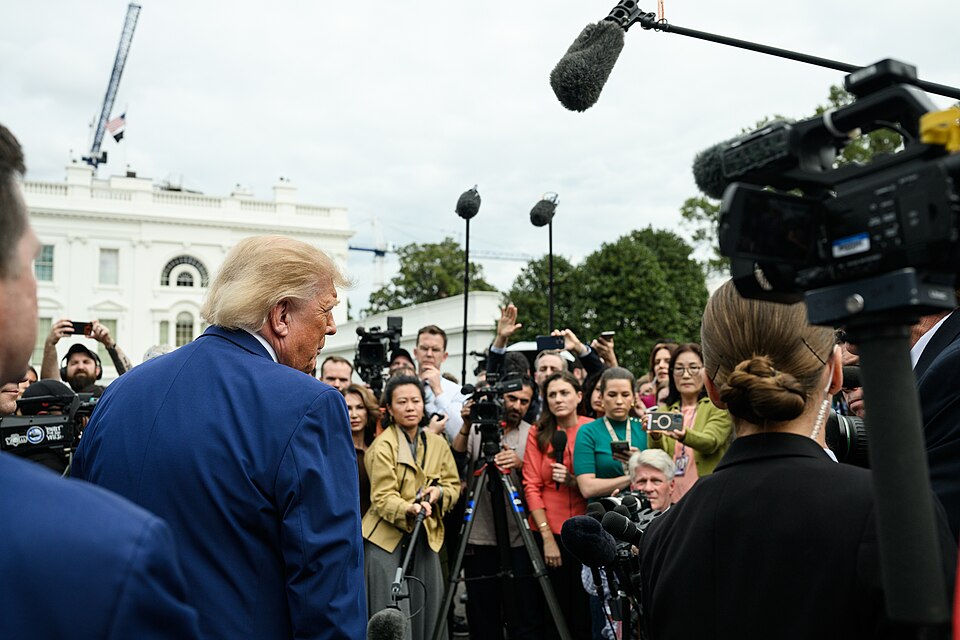
President Donald Trump celebrated the final withdrawal of U.S. troops from Iraq on Wednesday, calling the moment the end of a costly military chapter that stretched across more than two decades.
Speaking at the White House, Trump said the United States was finally leaving a conflict he has long argued America should never have entered.
“We’re getting the hell out of there,” Trump said, describing Iraq as “a place where we probably shouldn’t have gone.”
The withdrawal marks another major turning point in America’s long involvement in Iraq, which began with the 2003 invasion that removed Saddam Hussein from power.
Trump Marks End Of Long U.S. Mission In Iraq
Trump described the Iraq conflict as a “quagmire” and said the conclusion of the American military mission represented a victory for both countries.
“This day is a victory for the United States. It’s a victory for Iraq and a decisive victory over ISIS,” Trump said.
He also praised Iraqi Prime Minister Ali al-Zaidi as Baghdad assumes greater responsibility for the country’s security.
The final departure of coalition forces from Erbil Air Base brings an end to the latest phase of a U.S. military presence that has continued in various forms for years.
For many Americans, the withdrawal closes a chapter defined by repeated deployments, enormous financial costs and the deaths of thousands of U.S. service members.
America’s Long History In Iraq
The United States invaded Iraq in March 2003 under President George W. Bush.
Although Saddam Hussein’s government was quickly toppled, the military campaign that followed became far longer and more complicated than initially expected.
American troops battled insurgent groups, terrorist organizations and sectarian violence for years.
Roughly 4,500 U.S. service members were killed during the Iraq War and related operations.
U.S. combat forces withdrew from Iraq in 2011 during the Obama administration, but American troops returned in 2014 after ISIS seized large sections of Iraq and neighboring Syria.
That renewed mission focused largely on helping Iraqi forces defeat ISIS and prevent the terrorist organization from rebuilding its former territorial stronghold.
Trump Criticizes Original Iraq Invasion
Trump used Wednesday’s announcement to renew his criticism of the original decision to invade Iraq.
In a social media post, he blamed “very bad decision-making” for drawing the United States into what became a lengthy and expensive conflict.
Trump has repeatedly criticized prolonged overseas military engagements and has argued that U.S. leaders should establish clearly defined objectives before committing American forces.
He said his administration sought to avoid allowing a temporary military deployment to become permanent.
“I set a clear mission, gave our Commanders the tools to finish it, and refused to let a temporary presence become a permanent one,” Trump wrote.
The president has made opposition to long-running foreign wars a central theme of his political message across three presidential campaigns.
Trump Compares Iraq With Iran Conflict
Trump also contrasted the lengthy Iraq War with the ongoing U.S. conflict involving Iran.
According to Trump, the current operation has lasted about six months and resulted in far fewer American military deaths than the decades-long involvement in Iraq.
The president said he expects the Iran conflict to end much faster.
“We’re going to have that war won very quickly, one way or the other,” Trump said.
His comments come as U.S. negotiators continue working toward an agreement involving Iran’s nuclear program and the reopening of the Strait of Hormuz.
Trump has said he expects progress toward a resolution, although significant diplomatic and military uncertainties remain.
Questions Remain About Middle East Security
The departure from Iraq does not eliminate broader security concerns in the region.
ISIS remains capable of carrying out attacks through smaller cells and affiliated groups, while Iran-backed organizations continue to wield influence across parts of the Middle East.
Iraq will now carry greater responsibility for maintaining internal security and preventing extremist groups from rebuilding.
The United States may also continue limited security cooperation with Iraqi authorities even after the withdrawal of its remaining troops.
For Washington, the larger question will be whether the end of the Iraq mission represents a lasting reduction in America’s military footprint or simply a shift in focus toward other regional conflicts.
A Historic Moment For American Military Families
The withdrawal carries particular significance for veterans and military families who experienced the Iraq War firsthand.
Over more than two decades, hundreds of thousands of Americans served in Iraq through multiple phases of the conflict.
Many families endured repeated deployments, injuries and the loss of loved ones.
The human and financial costs of the war helped fuel a broader debate over when the United States should use military force overseas and how quickly troops should return home once their mission is completed.
Those questions remain relevant as Washington confronts new threats in the Middle East.
Trump Says America Must Avoid Another Endless War
Trump has repeatedly argued that the United States must remain militarily strong without becoming trapped in conflicts that continue indefinitely.
The conclusion of the Iraq deployment gives his administration an opportunity to reinforce that message.
At the same time, the continuing confrontation with Iran will test whether the United States can achieve its stated objectives without entering another prolonged Middle Eastern conflict.
For now, one chapter has officially come to an end.
After more than two decades of American military involvement, the remaining U.S. troops are leaving Iraq — closing one of the most consequential and controversial periods in modern American foreign policy.