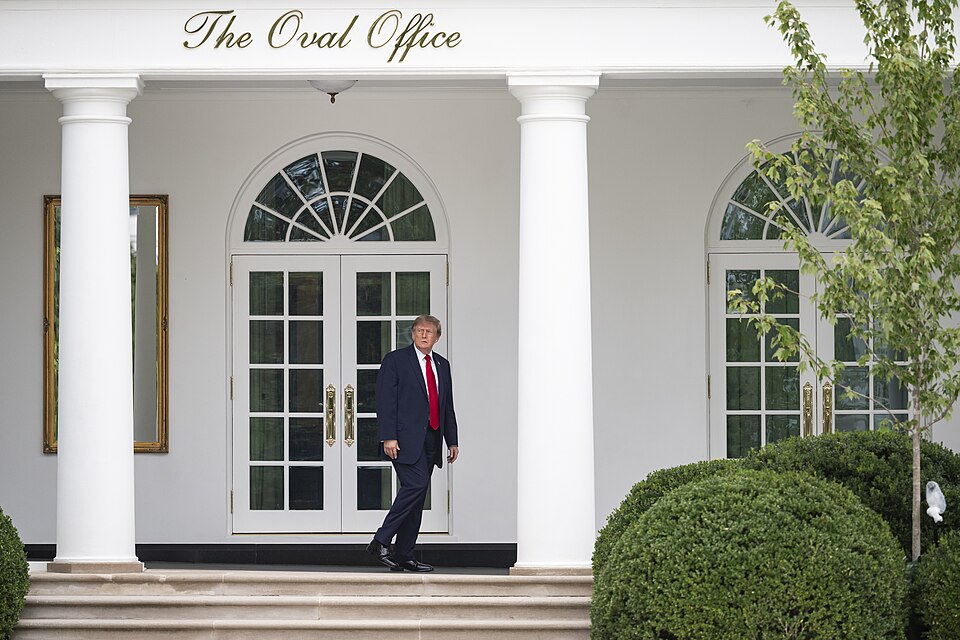
Here’s what Trump is thinking.
President Donald Trump is leaving the door open to one potentially significant move before his second term comes to an end: pardoning members of his administration.
During a wide-ranging interview with TIME published Thursday, Trump was asked whether he would consider granting pardons to administration officials before leaving the White House.
“Yeah, sure I’d do that,” Trump said.
The president then pointed directly to former President Joe Biden’s use of presidential pardons during his final days in office, arguing that his predecessor had already exercised the same sweeping constitutional authority.
Trump specifically mentioned former White House medical adviser Dr. Anthony Fauci, who was among several high-profile figures granted preemptive pardons by Biden before he left office.
The exchange immediately raised questions about whether Trump could eventually extend similar protection to members of his own administration.
Trump Points To Biden’s Pardons
Trump has long criticized Biden’s final round of clemency decisions.
Before leaving office in January 2025, Biden issued preemptive pardons to several people who had faced intense criticism from Trump and his allies, including Fauci, retired Gen. Mark Milley and members of the House committee that investigated the events surrounding Jan. 6, 2021.
Biden also pardoned members of his family and issued a broad pardon to his son, Hunter Biden, following his federal gun and tax cases.
Trump referenced Biden’s actions while defending his own ability to consider pardons in the future.
His argument was straightforward: if Biden could use presidential clemency to protect people who could potentially face future legal action, Trump believes he has the same constitutional authority.
Could Trump Officials Receive Pardons?
Trump did not identify anyone he is currently planning to pardon.
He also did not say that any decision has already been made.
However, the president’s willingness to publicly entertain the idea could take on greater importance as his administration approaches its final years.
Democratic lawmakers have already sought investigations involving some Trump administration officials, and additional congressional inquiries could emerge depending on the balance of power in Washington after the midterm elections.
An investigation, however, does not establish criminal wrongdoing, and any future prosecution would depend on evidence and decisions made by federal prosecutors.
That distinction could become increasingly important as political battles over Trump administration officials intensify.
Corey Lewandowski Has Previously Been Mentioned
Longtime Trump ally Corey Lewandowski has previously surfaced in discussions involving the possibility of a future pardon.
The New York Post reported that an unnamed source claimed Lewandowski had said he was unconcerned about possible prosecution because he believed Trump would pardon him.
Lewandowski denied making the statement.
He also said he had never requested a pardon and had no reason to receive one.
No pardon for Lewandowski has been announced.
Trump Has Already Used His Clemency Power
Trump has already made extensive use of presidential clemency during his second term.
On Jan. 20, 2025, he issued pardons to people convicted of federal offenses related to the events at the U.S. Capitol on Jan. 6, 2021. He also commuted the sentences of 14 individuals and directed the Justice Department to seek dismissal of pending cases related to Jan. 6.
The White House characterized those actions as an attempt to correct what Trump viewed as unjust prosecutions.
Critics strongly disputed that characterization and argued that the pardons removed accountability for crimes committed at the Capitol.
The disagreement illustrated how controversial presidential pardon power can become when it intersects with partisan political disputes.
Presidents Have Broad Pardon Authority
The Constitution gives presidents broad authority to pardon federal offenses.
That authority has been used by presidents of both parties and has repeatedly generated controversy.
A president can also issue a pardon before a person has been convicted — or, in some circumstances, before criminal charges have even been filed.
That is why Trump’s latest comments matter.
He would not necessarily have to wait for one of his officials to be prosecuted before considering clemency.
What Trump Has — And Has Not — Said
For now, Trump has made no formal pardon announcement involving members of his administration.
There is no publicly released list of possible recipients, no announced timetable and no indication of how many people might ultimately receive clemency.
What Trump has made clear is that he does not view the idea as off limits.
His comments to TIME show that he is willing to consider using one of the presidency’s broadest constitutional powers before eventually leaving the White House.
That could make presidential pardons an increasingly important issue as Trump moves through the remainder of his second term.
For supporters, the issue may become part of a broader debate over whether administration officials could face politically motivated investigations after Trump leaves office.
Critics, meanwhile, are likely to argue that preemptive pardons could prevent legitimate investigations from producing accountability.
Either way, Trump has now put the possibility firmly into the public conversation — and Washington will be watching closely to see whether he ultimately follows through.