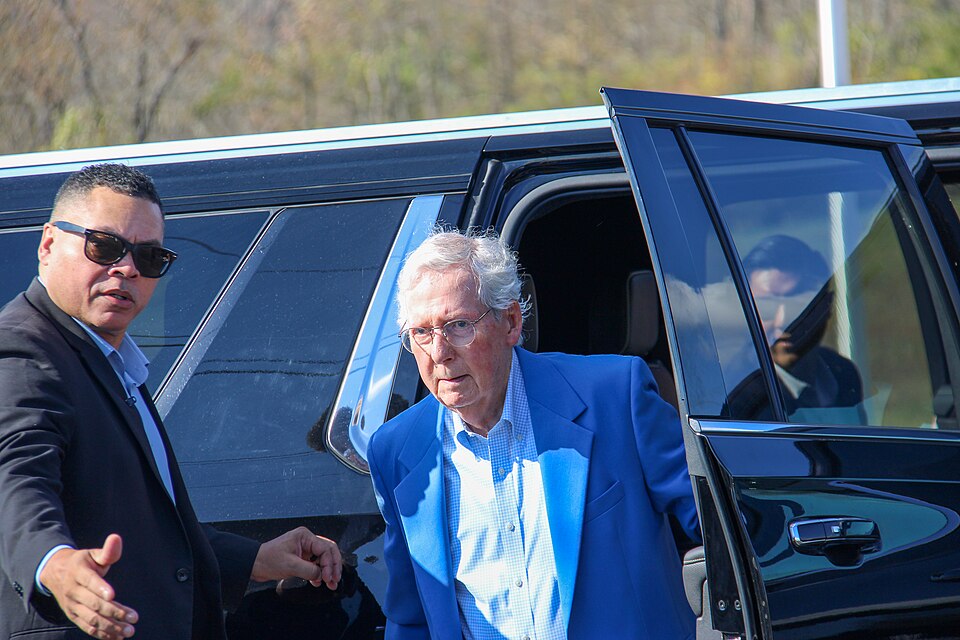
This was surprising to hear from McConnell.
Sen. Mitch McConnell (R-Ky.) is making a troubling prediction about President Donald Trump’s efforts to end the war between Russia and Ukraine, warning that the president’s strategy is headed for failure.
The longtime Republican senator claims Trump’s approach to Russian President Vladimir Putin could actually prolong the fighting instead of bringing the conflict to an end.
McConnell’s warning comes as the Trump administration pursues a diplomatic solution to the war while attempting to address rising energy costs in the United States.
But McConnell believes the president is making a serious mistake, and he is now warning that the disagreement could have consequences for Trump’s agenda in Congress.
McConnell Predicts Trump’s Peace Strategy Will Fail
In an opinion article published Sunday in The Wall Street Journal, McConnell sharply criticized the administration’s handling of Russia and Ukraine.
The Kentucky Republican argued that offering economic concessions to Putin while placing additional pressure on Ukraine would not produce lasting peace.
Instead, McConnell suggested the strategy could encourage Russia to continue its military campaign.
He described Trump’s approach as “factually wrong, strategically naive and morally bankrupt.”
McConnell specifically objected to Trump’s assertion that Russia had behaved acceptably regarding Ukraine, pointing to continued Russian military activity despite American efforts to negotiate an energy ceasefire.
The senator believes Moscow is unlikely to change its behavior unless it faces stronger economic and military pressure.
His assessment represents one of the more direct public challenges to Trump’s foreign policy from a prominent Republican senator.
Trump and McConnell Clash Over Russia Sanctions
Another major disagreement involves Trump’s decision to allow Russian diesel shipments into the United States.
The administration has promoted the arrangement as part of its effort to ease fuel costs for American consumers and businesses.
However, McConnell questioned whether importing Russian diesel would provide meaningful relief at the pump.
He also argued that easing sanctions could strengthen Russia financially while the conflict in Ukraine continues.
The diesel agreement has already attracted criticism from lawmakers in both political parties.
Earlier this month, McConnell joined a bipartisan group of senators calling on the administration to reverse the authorization allowing certain Russian diesel transactions.
The dispute highlights a difficult balancing act for the White House.
Trump is attempting to lower energy prices while pursuing a negotiated settlement with Russia. McConnell believes those objectives should not come at the expense of maintaining economic pressure on Putin.
McConnell Raises Concerns About American Military Assistance
McConnell also criticized the possibility of further restrictions on American intelligence sharing, military support and satellite communications assistance to Ukraine.
According to the senator, reducing that support could provide Russian forces with additional opportunities on the battlefield.
He warned that weakening Ukraine’s military capabilities might make a settlement more difficult to achieve.
The disagreement reflects broader divisions over America’s role in the conflict.
Trump has emphasized diplomacy and negotiations as the means to bring the war to an end.
McConnell, meanwhile, maintains that a successful agreement requires continued pressure on Russia and sufficient support for Ukraine to defend itself.
Both approaches are being debated as Washington considers the financial, military and diplomatic consequences of continued involvement.
McConnell Warns Trump About His Agenda in Congress
Perhaps the most significant part of McConnell’s warning involves what could happen next on Capitol Hill.
As chairman of the Senate Appropriations Subcommittee on Defense, McConnell holds an influential role in decisions involving American military spending.
He suggested that disagreements over Russia could complicate efforts to pass important defense legislation during the congressional session following the November midterm elections.
McConnell indicated that Republicans who support a tougher approach toward Moscow could demand changes before backing the administration’s year-end legislative priorities.
That creates another potential challenge for Trump as he works with congressional Republicans on defense spending and national security matters.
McConnell’s comments do not mean the president’s agenda is certain to be blocked.
However, they suggest the Russia dispute could become an important factor in negotiations between the White House and Senate Republicans.
What Does This Mean for Trump’s Ukraine Peace Deal?
The disagreement comes down to two competing assessments of how to persuade Russia to end the fighting.
Trump’s administration is pursuing diplomatic engagement and economic measures intended to encourage negotiations while addressing financial pressures at home.
McConnell argues that offering concessions without sufficient pressure risks encouraging Putin to demand even more.
The Kentucky Republican has also warned that a Russian victory could create broader national security problems for the United States and its European allies.
He pointed to Moscow’s relationships with China, Iran and North Korea as additional reasons for maintaining a firm American position.
Still, McConnell’s prediction remains an assessment of the president’s strategy, not a certainty about the outcome.
A negotiated agreement would depend on several factors, including the positions of Russia and Ukraine and the terms both sides are willing to accept.
A Major Foreign Policy Test for Trump
The public disagreement between Trump and McConnell underscores an important debate within the Republican Party over America’s foreign policy priorities.
Some Republican lawmakers favor maintaining stronger pressure on Russia, while the administration has emphasized diplomacy and the possibility of ending the conflict through negotiations.
At the same time, Americans are dealing with elevated energy prices and questions about the costs of continued overseas commitments.
Trump faces the difficult task of balancing those domestic concerns with the national security implications of any agreement.
McConnell believes the administration’s current approach risks undermining that objective.
For now, the president’s ability to secure a lasting peace agreement remains uncertain, and McConnell’s warning adds another layer of political pressure as Congress prepares for major defense spending decisions.
Whether Trump’s negotiations ultimately succeed or fail will depend on developments in the coming months.