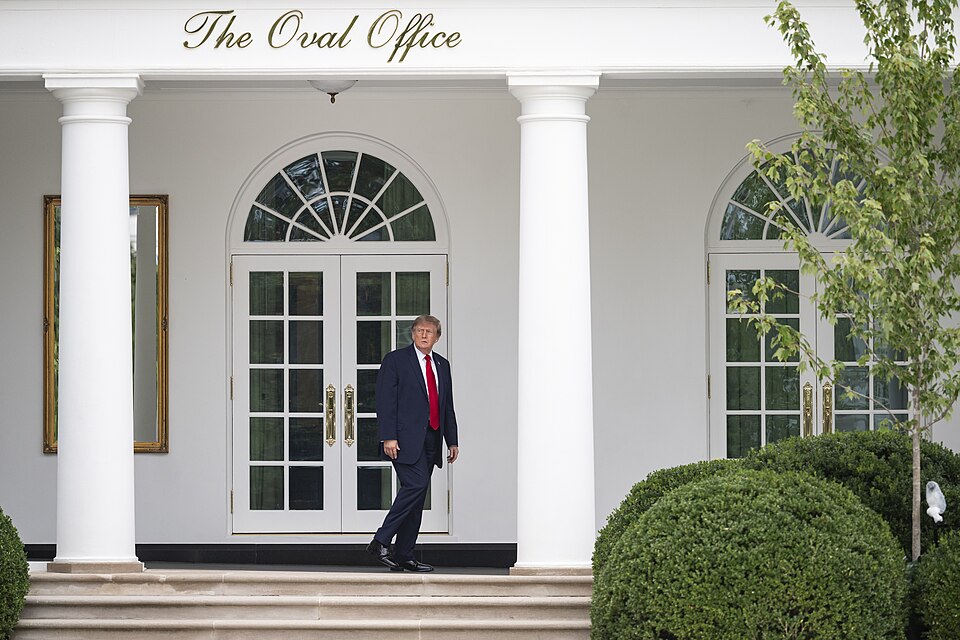
This was shocking to see.
President Donald Trump is making headlines after delivering a blistering public rebuke of one of his most loyal former attorneys, Alina Habba, over a controversial financial agreement reportedly worth more than $50 million.
The unexpected criticism came after reports revealed that Habba, who previously served as Trump’s personal lawyer and held a senior Justice Department position, secured a lucrative contract with a company connected to the family of a Venezuelan banker.
Trump made it clear that he was not pleased with the arrangement, describing the reported payments as excessive and unacceptable.
The president’s comments have attracted considerable attention, particularly because Habba spent years defending Trump during some of his most difficult legal battles.
Trump Publicly Criticizes Alina Habba Over $50 Million Deal
Speaking to reporters at his Mar-a-Lago resort in Palm Beach, Florida, on October 31, Trump was asked about the financial agreement involving his former attorney.
His response was unusually direct.
“I thought it was terrible,” Trump said.
The president explained that he had personally communicated his displeasure with Habba and believed the reported compensation went far beyond ordinary legal fees.
“I thought it was totally obnoxious and outrageous, and it’s not acceptable,” Trump told reporters.
He added that the arrangement was unacceptable under the circumstances.
The remarks represented a surprising development in Trump’s relationship with Habba, who became nationally recognized for her outspoken defense of the president.
Rather than protecting his former legal representative from criticism, Trump publicly questioned the appropriateness of the reported agreement.
What Is Behind the Controversial $50 Million Agreement?
According to reporting from The New York Times, Habba entered into a four-year agreement with Concord Partners, a company connected to the family of Venezuelan banker Julio Herrera Velutini.
According to reports, Habba’s four-year agreement was valued at more than $50 million.
The arrangement included approximately $10 million in annual compensation, along with additional bonuses.
Habba reportedly signed the agreement in October 2025 while serving as acting U.S. attorney for New Jersey.
The agreement has attracted attention due to its timing, as Herrera had previously faced federal charges before eventually getting a presidential pardon.
The agreement also raised questions about the financial opportunities available to individuals with close connections to powerful government officials.
Trump’s public criticism suggests that he considered the amount of compensation unreasonable, even though Habba had previously worked closely with him.
Presidential Pardon Adds Another Layer of Scrutiny
The controversy became more complicated because of Herrera’s legal history.
The Venezuelan banker previously faced federal bribery-related charges stemming from allegations involving government officials in Puerto Rico.
In August 2025, Herrera reached a plea agreement involving a misdemeanor campaign finance violation.
Several months later, on January 15, 2026, Trump granted Herrera a presidential pardon.
By that point, Habba had reportedly begun working for Concord Partners.
According to published reports, she started her position with the company on January 1, 2026.
The close timing between her new employment and Herrera’s pardon has generated questions about the relationship between the financial agreement and the presidential decision.
However, the reported contract and pardon do not, by themselves, establish that Habba engaged in wrongdoing or improperly influenced the president.
Habba Denies Any Connection to the Pardon
Habba has firmly denied suggestions that her compensation was connected to securing a presidential pardon.
She maintained that she neither received compensation for arranging a pardon nor took any steps to help obtain one.
Habba also denied meeting with White House or Justice Department officials to discuss a pardon for Herrera or anyone else.
She has maintained that her employment arrangement was properly disclosed and reviewed.
The White House has similarly denied that Habba played a role in obtaining Herrera’s pardon.
The denials are important because the controversy centers on possible conflicts of interest, with no criminal wrongdoing established.
Nevertheless, Trump’s public remarks indicate that the financial arrangement troubled him.
Trump Responds to Questions About Presidential Library Donations
The controversy has also included reports about whether some of the money should be directed toward Trump’s future presidential library.
According to The New York Times, Trump privately discussed the possibility of Habba contributing a portion of her reported compensation to his presidential library or another Trump-associated organization.
When reporters questioned the president about those reports, he did not say that he expected Habba personally to make such a donation.
Instead, Trump reiterated his dissatisfaction with the arrangement.
The exchange highlighted the broader disagreement surrounding the reported contract and the substantial amount of money involved.
It remains unclear whether the reported discussions will result in any changes to Habba’s financial agreement.
Why Trump’s Criticism Is So Surprising
Habba has been one of the most recognizable figures associated with Trump’s legal defense.
She frequently appeared on national television, defended his positions during major legal controversies, and challenged criticism from his political opponents.
Her willingness to stand beside Trump during difficult moments helped establish her reputation as a trusted member of his legal team.
She subsequently moved into public service, serving as acting U.S. attorney for New Jersey before transitioning to a senior advisory role at the Justice Department.
That professional history makes Trump’s latest statements particularly noteworthy.
The president has long emphasized the importance of loyalty among members of his political and professional circle.
Yet his criticism of Habba demonstrates that longstanding personal relationships do not necessarily prevent public disagreements.
The situation has also placed renewed attention on the boundaries between government responsibilities, private business arrangements, and political influence.
Questions About Government Ethics and Accountability
Beyond the dispute between Trump and Habba, the controversy raises broader questions about ethics and transparency in Washington.
Americans expect government officials and their advisers to avoid financial arrangements that could create conflicts of interest.
Large private-sector compensation packages involving individuals with recent government experience can attract scrutiny, particularly when connected to people seeking official government action.
At the same time, attorneys and former public officials generally retain the right to pursue lawful private employment, subject to applicable ethics and conflict-of-interest rules.
The central issue is whether the reported agreement complied with those requirements and whether any improper influence occurred.
No finding of wrongdoing has been established in the reporting discussed here.
Trump’s response underscores how even the appearance of a questionable financial arrangement can become a major political controversy.
What Happens Next for Trump and Habba?
For now, several important questions remain unanswered.
It is unclear whether Habba will continue receiving payments under the reported agreement, whether the contract will be modified, or whether Trump’s criticism will permanently affect their professional relationship.
Habba continues to deny that she participated in obtaining Herrera’s presidential pardon.
Trump, meanwhile, has made his dissatisfaction unmistakable.
The situation has attracted attention because it involves a multimillion-dollar financial agreement, a presidential pardon, and a former attorney who once played a prominent role in defending the president.
As more information emerges, the controversy may renew discussion about the responsibilities of government officials and the financial relationships of individuals connected to Washington’s political establishment.
For now, the most striking development remains Trump’s willingness to publicly criticize a longtime ally over a reported $50 million arrangement.
The dispute serves as a reminder that even those closest to the president can find themselves facing sharp criticism when questions about money, influence, and government accountability enter the spotlight.