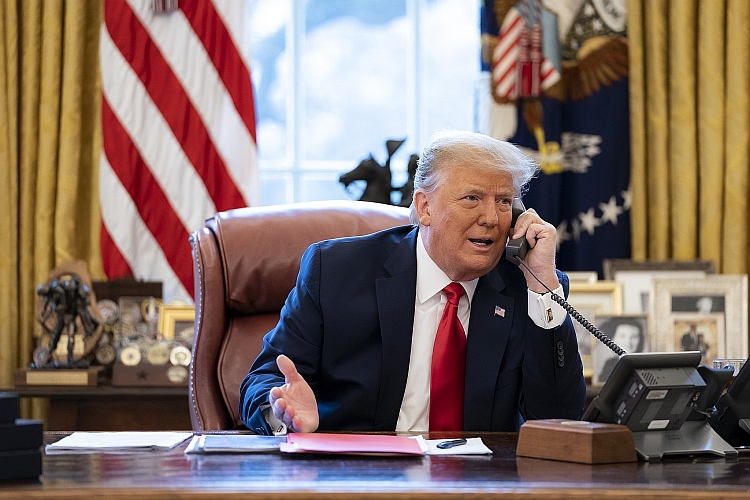
Here’s what Trump has offered to do.
President Donald Trump has made an unexpected offer to Democrats following the 2026 midterm elections, suggesting he would be willing to change one of his most recognizable political habits if it helped secure important agreements in Washington.
The president, known for his sharp criticism of political opponents, indicated that he could refrain from insulting Democrats for six months if that was necessary to reach a bipartisan deal.
His remarks come at a critical moment, with Democrats preparing to take control of both the House of Representatives and the Senate in January 2027.
The shift in congressional power could force both parties to reconsider how they approach negotiations over immigration, government spending, healthcare, and other major national issues.
Trump Makes Unexpected Admission About Working With Democrats
During a preview of an upcoming interview on CBS’s 60 Minutes, Trump was questioned about his willingness to cooperate with Democratic lawmakers following their election victories.
Correspondent Ross Douthat asked whether the president believed he could work with Democrats without repeatedly directing personal insults at them.
Trump indicated that he could adjust his approach.
Douthat then presented a more specific scenario, asking whether Trump could avoid insulting Democrats for six months if doing so would help finalize an agreement.
The president responded, “Very easily.”
The brief answer stood out because Trump’s direct and often confrontational communication style has been a defining feature of his political career.
From presidential campaigns to congressional disputes, Trump has regularly used pointed criticism and memorable nicknames when challenging his opponents.
However, the latest exchange suggests that the president sees a distinction between fighting Democrats over policy and negotiating with them to accomplish legislative goals.
Democrats Prepare To Take Control Of Congress
Trump’s comments arrive just days after Democrats secured major victories in the November 3 midterm elections.
Those results will give Democrats control of both chambers of Congress when the new legislative session begins in January.
For the remaining two years of Trump’s presidency, the administration will face a political environment considerably different from the one Republicans had previously enjoyed.
Democratic leaders will gain increased influence over legislation, congressional investigations, and federal spending negotiations.
Nevertheless, Trump will retain significant presidential authority, including the power to veto legislation passed by Congress.
That constitutional authority could become one of the most important factors shaping negotiations between the White House and Democratic lawmakers.
Trump has previously indicated that he would use his veto power to block legislation he considers harmful while remaining willing to negotiate agreements that advance his priorities.
The president’s latest comments suggest he could be prepared to combine that approach with a less confrontational tone during certain negotiations.
Newly Elected Democrats Express Interest In Cooperation
Some newly elected Democratic senators have already indicated that they would consider working with the Trump administration on selected policy issues.
Among them is Texas Senator-elect James Talarico, who defeated Republican Ken Paxton in a closely watched Senate race.
Despite their political differences, Talarico has expressed interest in bipartisan discussions involving immigration reform, border security, and healthcare.
The Texas Democrat has suggested that lawmakers should look for opportunities to address problems affecting Americans rather than reject cooperation simply because they belong to opposing parties.
However, serious disagreements remain between the two sides, particularly regarding immigration enforcement and the federal government’s responsibilities along the southern border.
Trump previously criticized Talarico during the campaign and used an unflattering nickname to refer to him.
The subject came up during the 60 Minutes interview, highlighting the challenge of moving from heated election rhetoric to practical negotiations.
Another newly elected Democrat, South Carolina Senator-elect Annie Andrews, has also expressed openness to working with the president on issues where common ground might be possible.
Those statements do not guarantee future agreements, but they suggest that some Democrats are at least willing to consider negotiations with the White House.
Border Security And Government Spending Could Become Major Issues
With divided government approaching, several important policy debates could dominate the next congressional session.
Immigration and border security remain major concerns in Washington, particularly as Republicans and Democrats continue to disagree over enforcement measures and immigration reform.
Trump has consistently emphasized border enforcement as a central administration priority.
Democratic lawmakers have generally supported different approaches to immigration policy, although individual members differ on specific enforcement proposals.
Any bipartisan agreement would likely require substantial negotiations over both security measures and broader immigration policies.
Federal spending could present another challenge.
Congress will continue to face decisions involving government funding, federal programs, and competing budget priorities.
Healthcare could also become an important area of discussion as lawmakers consider questions involving Medicaid, healthcare costs, and access to medical services.
These issues affect millions of Americans, including retirees, working families, and people living on fixed incomes.
Whether either party is willing to compromise on major policy differences remains an open question.
Trump Signals He Will Not Abandon His Political Priorities
Although Trump has indicated that he could soften his language toward Democrats, that does not mean he intends to abandon his administration’s policy agenda.
The president has already emphasized that he is prepared to reject Democratic legislation when he believes it conflicts with his priorities.
In an earlier CBS News interview, Trump discussed the importance of presidential veto authority and suggested that blocking unacceptable legislation could eventually encourage Democrats to negotiate.
That position reflects a strategy built around maintaining leverage while leaving room for potential agreements.
The difference now is Trump’s acknowledgment that his public language toward political opponents could also become part of that negotiating strategy.
Rather than treating every disagreement as a personal confrontation, the president appears willing to consider whether a temporary change in tone could make legislative negotiations more productive.
Still, his willingness to avoid insults should not be confused with a commitment to support Democratic proposals.
Any agreement would ultimately depend on the policies involved and the concessions each side is prepared to make.
What Trump’s Offer Could Mean For Washington
The president’s remarks raise an important question about the next two years of divided government.
Can Republicans and Democrats put aside some of their political disagreements long enough to address issues affecting the country?
Previous administrations have demonstrated that divided government can produce both significant bipartisan legislation and prolonged political gridlock.
The outcome often depends on whether congressional leaders and the president can identify priorities where compromise is possible.
For Trump, reaching agreements with Democrats could provide opportunities to advance selected policies despite the loss of Republican congressional majorities.
For Democrats, negotiations could offer a chance to influence federal policy while demonstrating their ability to govern.
However, both parties will face pressure from supporters who expect them to defend their political principles.
Those competing demands could make even limited agreements difficult.
A Major Test Awaits Trump And Democratic Leaders
Trump’s comments offer an early indication of how he may approach negotiations with the incoming Democratic-controlled Congress.
While the president has built much of his political identity around direct confrontation, he has also repeatedly emphasized his willingness to make deals.
His latest remarks suggest that he believes cooperation and political competition can exist at the same time.
The full 60 Minutes interview is scheduled to air Sunday, November 8, and could provide additional insight into the president’s plans for dealing with congressional Democrats.
With the next Congress preparing to take office, attention will increasingly turn toward whether Washington can reach agreements on the economy, immigration, healthcare, and federal spending.
For Americans concerned about the direction of the country, the results of those negotiations could have consequences well beyond the political arguments dominating Washington.
Trump has now signaled that he is willing to set aside personal insults if doing so helps secure a deal. The bigger question is whether Democrats and Republicans can find enough common ground to turn that willingness into meaningful legislative action.