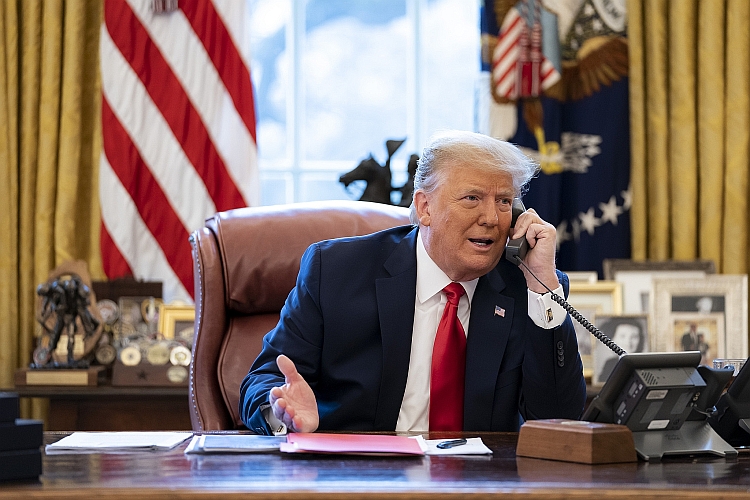
Here’s what Trump is facing.
President Donald Trump is facing growing pressure over an issue that affects millions of Americans every single day: the struggle to afford basic necessities.
Across the country, families are confronting expensive groceries, housing payments, utility bills, insurance premiums, and health care costs. For Americans already living on tight budgets, these expenses can make financial stability increasingly difficult to maintain.
The frustration is especially significant for retirees, working families, and individuals who depend on Social Security or other fixed sources of income.
While Washington debates economic policies and political priorities, many Americans are focused on a much simpler concern: having enough money to pay their bills.
For Trump, addressing these financial pressures could become one of the most important challenges of his second term, particularly as the November 2026 midterm elections approach.
Americans Struggle To Keep Up With Everyday Expenses
The cost of living remains a central concern for households throughout the United States.
For many families, groceries, housing, transportation, and health care account for most of their monthly spending. When these essential expenses rise faster than household income, consumers have fewer opportunities to save money or prepare for unexpected emergencies.
A trip to the grocery store can become a difficult budgeting decision. Families may compare prices more carefully, switch to less expensive brands, or eliminate purchases they previously considered routine.
Housing presents another major challenge.
Homeowners must account for mortgage payments, property taxes, maintenance costs, and insurance premiums. Renters face their own financial pressures, particularly in areas where affordable housing remains difficult to find.
Electricity, natural gas, gasoline, and transportation expenses can further strain household finances.
For many Americans, the problem is not necessarily irresponsible spending. It is that ordinary expenses consume an increasingly large share of their available income.
That reality has placed affordability near the center of the national economic conversation.
Social Security Recipients Face Financial Uncertainty
Older Americans have particular reasons to pay attention to the cost-of-living debate.
Millions of retirees rely on Social Security benefits to help cover housing, food, utilities, transportation, and medical expenses.
Although Social Security benefits generally receive annual cost-of-living adjustments designed to reflect inflation, those increases may not fully offset the specific expenses facing individual retirees.
Health care expenses can be particularly challenging.
Prescription medications, insurance premiums, medical appointments, and unexpected treatments can consume a significant portion of a retiree’s monthly income.
At the same time, homeowners insurance, property taxes, and maintenance expenses may increase even when a retiree’s income remains relatively stable.
For older Americans who have spent decades working and saving, the possibility of having to reduce their standard of living during retirement is a serious concern.
These pressures help explain why Social Security, Medicare, inflation, and retirement security remain important subjects in discussions about the nation’s economic future.
Trump Faces Questions About His Economic Agenda
President Trump has made economic growth, American manufacturing, domestic energy production, and job creation major priorities of his administration.
His approach has emphasized strengthening American industries, encouraging investment within the United States, and protecting domestic economic interests.
Supporters of these policies argue that expanding American production and strengthening domestic businesses can support employment opportunities and improve long-term economic stability.
However, the effects of economic policies on consumer prices can be complicated.
Changes involving tariffs, taxes, regulations, government spending, and energy production may affect different industries and households in different ways.
Some measures may encourage domestic investment, while others can create additional costs for businesses or consumers.
For the Trump administration, the challenge is not simply demonstrating economic activity or investment.
It is showing how those developments can improve purchasing power for Americans struggling with their everyday expenses.
Why Americans Still Feel Inflation’s Impact
One reason the affordability debate remains so important is that lower inflation does not necessarily mean lower prices.
Inflation measures how quickly prices are changing.
When the inflation rate falls, prices may still continue rising, just at a slower pace.
For example, if a household’s grocery expenses increased substantially over several years, slower inflation would not automatically restore those costs to their previous levels.
Consumers may therefore continue experiencing financial pressure even when economic reports show that inflation has moderated.
Wages and retirement benefits also play an important role.
If household income increases more slowly than essential expenses, families can lose purchasing power.
On the other hand, when incomes consistently grow faster than prices, households generally gain more financial flexibility.
This distinction is particularly important for retirees and individuals living on fixed incomes.
For these Americans, the most meaningful economic improvement is often the ability to cover monthly expenses without drawing down savings or accumulating debt.
Health Care and Housing Add to the Financial Burden
Grocery prices attract considerable attention, but several other expenses can have an even greater impact on long-term household finances.
Housing is one of them.
Homeowners may face higher insurance premiums, property taxes, maintenance bills, and repair costs. Prospective buyers must also consider mortgage rates and the limited availability of affordable homes in certain markets.
For retirees hoping to remain in their homes, increasing ownership costs can complicate financial planning.
Health care presents another concern.
Even Americans with insurance may face deductibles, copayments, prescription expenses, and services that are not fully covered by their plans.
Medicare provides important health coverage for eligible Americans, but it does not eliminate every potential medical expense.
These financial obligations can be difficult to predict, making it important for households to maintain emergency savings whenever possible.
The combination of housing and medical expenses illustrates why improving affordability involves more than reducing the price of groceries or gasoline.
Small Businesses Also Feel the Pressure
Households are not the only ones affected by expensive everyday necessities.
Small businesses must also manage the cost of rent, utilities, insurance, inventory, supplies, transportation, and employee compensation.
When operating expenses increase, business owners may face difficult choices.
Some may raise prices to cover higher costs. Others may reduce spending, postpone expansion, or accept smaller profit margins.
These decisions can affect local communities.
Higher business expenses can contribute to higher consumer prices, while financially strained households may reduce spending at restaurants, shops, and other neighborhood establishments.
This creates a connection between household affordability and the health of small businesses.
Policies that improve productivity, encourage investment, and support stable economic conditions can play an important role in both areas.
What Can Washington Do About the Cost of Living?
Addressing America’s affordability concerns involves several different policy areas.
Energy production and infrastructure can influence transportation, electricity, and business operating costs.
Housing construction and local development policies can affect the supply of available homes.
Trade policies can influence the cost of imported products, domestic manufacturing, and business supply chains.
Health care policies can affect insurance coverage and out-of-pocket medical expenses.
Tax policies may also influence how much income households retain after meeting their obligations.
However, these issues do not have simple solutions, and many involve responsibilities shared by federal, state, and local governments.
Some economic policies may produce benefits over time rather than immediate reductions in household expenses.
Others can involve trade-offs between economic growth, government spending, and consumer costs.
For Americans looking for financial relief, the effectiveness of these policies will ultimately matter more than their political labels.
The Economy Could Influence the 2026 Midterm Elections
The affordability debate carries important political implications as voters prepare for the November 2026 midterm elections.
Republicans are expected to emphasize the administration’s economic agenda, including its efforts to strengthen domestic industries and promote investment.
Democrats, meanwhile, have opportunities to criticize the administration’s handling of household expenses and present their own proposals for improving affordability.
Both parties face a public that is closely examining the cost of everyday life.
Economic growth, employment figures, and financial market performance may influence the national conversation, but individual experiences can be just as important.
A voter whose retirement account has increased in value may view the economy differently from a household struggling to pay for groceries and medical care.
Likewise, a small-business owner benefiting from stronger demand may have a different perspective from someone facing increased housing expenses.
These contrasting experiences make the economy a complicated political issue.
For Trump and congressional Republicans, demonstrating measurable improvements in affordability could be an important part of their case to voters.
For Democrats, continuing financial pressures provide an opportunity to question whether the administration’s policies are delivering the results Americans need.
Financial Security Remains a Priority for Older Americans
For Americans approaching retirement or already receiving retirement benefits, financial stability is about more than monthly expenses.
It also involves protecting years of savings and maintaining independence.
Many older households must consider how long their retirement funds will last, whether future medical expenses will be manageable, and how inflation could affect their purchasing power.
Unexpected costs can complicate those calculations.
A major home repair, an increase in insurance premiums, or an extended period of medical treatment can quickly change a household’s financial outlook.
That is why discussions about the economy frequently overlap with concerns about Social Security, Medicare, retirement savings, and the cost of long-term care.
Policies affecting these programs can have important consequences for older Americans.
As lawmakers consider economic legislation, retirees will have reasons to examine how proposed changes could affect their benefits, taxes, medical expenses, and overall financial security.
Americans Want More Than Positive Economic Headlines
Economic statistics help explain the nation’s financial condition, but they do not always capture the experience of individual households.
A strong jobs report may indicate that employers are hiring.
Improved business investment may suggest confidence in future economic activity.
Slower inflation may signal that price increases are becoming more manageable.
All of these developments can be important.
However, families also measure economic progress through their everyday experiences.
Can they afford their groceries without cutting back on other necessities?
Are their wages or retirement benefits keeping pace with expenses?
Can they set aside money for emergencies?
Are they confident they can afford their homes and medical care in the years ahead?
These practical questions often shape how Americans evaluate economic leadership.
Trump’s Affordability Challenge Is Far From Over
President Trump has made strengthening the American economy a central promise of his presidency.
But the continuing pressure of household expenses demonstrates that economic confidence depends on more than government announcements or financial market performance.
Americans want lasting improvements in their ability to afford basic necessities.
For working families, that means having more room in their budgets after paying the bills.
For retirees, it means protecting purchasing power and maintaining financial independence.
For small-business owners, it means operating in an environment where expenses are manageable and customers have sufficient income to support local businesses.
The causes of high living costs are complex, and no president controls every factor influencing prices.
Nevertheless, the White House and Congress play important roles in shaping the policies that affect economic growth, household income, and consumer expenses.
As the 2026 midterm elections draw closer, affordability is likely to remain an important measure of the administration’s performance.
For millions of Americans, the biggest economic question is not whether Washington can produce encouraging statistics. It is whether the money they earn, save, or receive in retirement will be enough to maintain a secure and comfortable life.
And that is the financial challenge President Trump must continue to address.