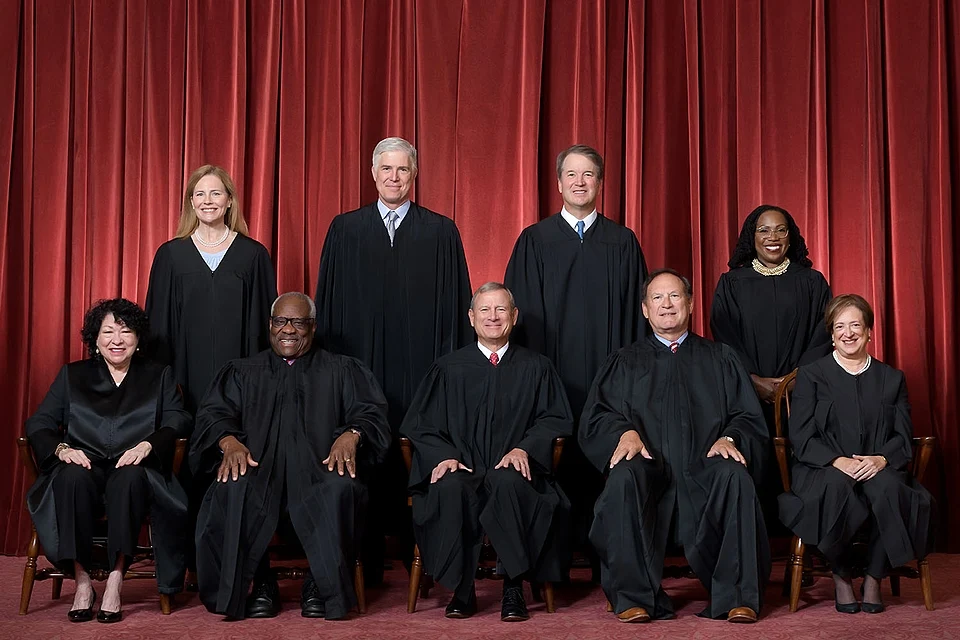
Some Justices are already speaking out.
Supreme Court Justice Samuel Alito delivered a sharp dissent Tuesday after the nation’s highest court rejected President Donald Trump’s effort to limit birthright citizenship, calling the decision one of the most significant—and most troubling—constitutional rulings in recent memory.
The Supreme Court voted 6-3 to strike down an executive order signed by President Trump on the first day of his second term. The order sought to end automatic U.S. citizenship for many children born to parents who are in the country illegally or only temporarily.
The court’s majority concluded that the Citizenship Clause of the Fourteenth Amendment guarantees citizenship to nearly everyone born on American soil, regardless of their parents’ immigration status.
Alito Says Court Misread the Constitution
In a strongly worded dissent, Alito argued that the majority adopted an interpretation of the Constitution that goes far beyond its original meaning.
According to Alito, the ruling could reshape America’s immigration system for generations and create consequences the Constitution never intended.
He wrote that if the Fourteenth Amendment truly required such a broad definition of citizenship, the American people would have to accept that result or amend the Constitution. However, he maintained that the amendment does not support the rule the court adopted.
Alito warned that the decision represents a serious legal error that could have lasting effects on the nation’s future.
Debate Centers on the Fourteenth Amendment
At the heart of the dispute is the phrase in the Fourteenth Amendment stating that citizenship applies to people “subject to the jurisdiction” of the United States.
Alito argued the majority failed to fully examine the meaning of that language. He contended that many children born to parents who are in the United States illegally automatically acquire citizenship or legal obligations through their parents’ home countries.
Because those children may owe allegiance to another nation at birth, Alito argued they do not necessarily meet the Constitution’s jurisdiction requirement as originally understood.
He also criticized the majority for relying heavily on previous court decisions instead of closely analyzing the actual wording of the Constitution.
Concerns Over Birth Tourism
Alito also highlighted the practice known as “birth tourism,” where expectant mothers from other countries travel to the United States so their babies will be born with U.S. citizenship.
Supporters of stricter immigration enforcement have argued for years that the practice encourages abuse of America’s immigration laws and creates incentives for people to enter the country solely to secure citizenship benefits for their children.
Republican lawmakers, including House leaders, have frequently cited birth tourism as one reason they believe Congress should revisit current birthright citizenship policies.
According to Alito, a careful reading of the Fourteenth Amendment shows that citizenship should be reserved for children whose allegiance belongs exclusively to the United States at the time of birth.
Trump Administration’s Position
The Trump administration argued that automatic citizenship should apply only when at least one parent is either a U.S. citizen or a lawful permanent resident.
Supporters of the executive order said the policy would help discourage illegal immigration, reduce incentives for birth tourism, and reinforce the original meaning of the Constitution.
Opponents argued that the Citizenship Clause has long guaranteed birthright citizenship regardless of a parent’s immigration status.
Supreme Court Divides
Chief Justice John Roberts wrote the majority opinion, joined by Justice Amy Coney Barrett and the court’s three liberal justices.
Justices Clarence Thomas, Neil Gorsuch, and Samuel Alito dissented.
Justice Brett Kavanaugh disagreed with much of the majority’s constitutional reasoning but ultimately voted to block the executive order based on separate federal statutory grounds.
A Debate Far From Over
The Supreme Court’s decision marks a major setback for one of President Trump’s signature immigration initiatives. At the same time, Alito’s dissent ensures that the constitutional debate over birthright citizenship is unlikely to disappear anytime soon.
With immigration expected to remain one of the defining issues of the upcoming election cycle, the court’s ruling—and Alito’s warning—will almost certainly continue to shape the national conversation over the meaning of American citizenship and the future of U.S. immigration policy.