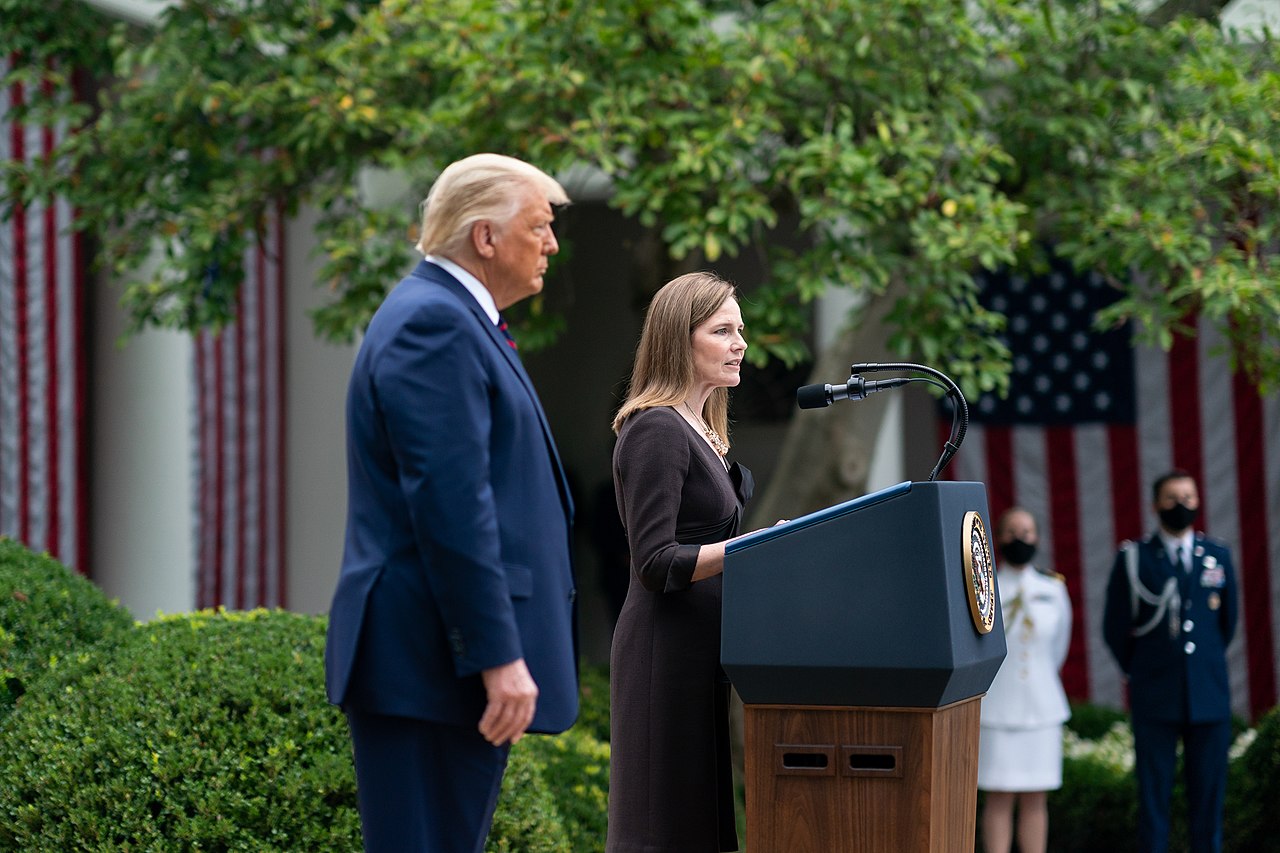
This was surprising to hear from Barrett.
In a dramatic Supreme Court showdown that could reshape America’s immigration system, President Donald Trump’s plan to end birthright citizenship is facing unexpected resistance—even from within the Court’s conservative ranks.
During heated oral arguments Wednesday, Justice Amy Coney Barrett delivered a notable warning, suggesting the administration’s legal argument could create what she called “an entirely new kind of citizenship.”
The moment immediately raised eyebrows, signaling that this landmark case may not be a guaranteed win—even with a conservative-leaning Court.
Conservative Justices Push Back on Key Arguments
President Trump’s executive order—signed on Day One of his return to office in January 2025—aims to stop automatic citizenship for children born in the U.S. to illegal immigrants and certain foreign nationals.
While the policy aligns with long-standing concerns among conservatives about border security and immigration loopholes, several justices pressed the administration hard on its constitutional reasoning.
Chief Justice John Roberts openly challenged the argument that modern issues justify rewriting long-standing interpretations of the Constitution.
“It’s a new world—but it’s still the same Constitution,” Roberts said.
Justice Barrett also questioned why, if this interpretation were correct, it was never clearly debated when the 14th Amendment was originally ratified.
The 14th Amendment Battle: What It Really Means
At the center of the case is the Constitution’s Citizenship Clause, which grants citizenship to those born in the United States and “subject to the jurisdiction thereof.”
For over a century, that clause has been interpreted to guarantee birthright citizenship in nearly all cases—except for very limited exceptions like children of foreign diplomats.
Lower courts have already blocked Trump’s order, claiming it conflicts with both federal law and long-established Supreme Court precedent.
Now, the highest court in the land must decide:
👉 Should that interpretation stand—or be fundamentally changed?
Liberal Justices Focus on Real-World Consequences
While conservative justices focused on constitutional limits, liberal justices raised concerns about how such a policy would actually work.
Justice Ketanji Brown Jackson questioned whether the government would need intrusive procedures to verify a newborn’s citizenship status.
Critics argue the policy could:
- Impact hundreds of thousands of births each year
- Create bureaucratic confusion nationwide
- Increase pressure on hospitals and state agencies
- Lead to legal disputes over citizenship status
Trump Makes History With Supreme Court Appearance
Adding to the historic nature of the case, President Trump attended the arguments in person—becoming the first sitting U.S. president ever to watch Supreme Court proceedings from inside the courtroom.
The move highlights just how critical this issue is—not only for immigration policy, but for the future definition of American citizenship itself.
A Decision That Could Change America Forever
The Supreme Court is expected to issue its ruling by early summer, and the stakes could not be higher.
A victory for Trump could:
- Redefine birthright citizenship
- Strengthen executive authority on immigration
- Mark a major shift in constitutional interpretation
A loss could push Republicans to pursue changes through Congress instead.
Bottom Line
This case is about more than immigration—it’s about the meaning of citizenship, the limits of presidential power, and the future direction of the country.
And as Wednesday’s arguments showed, even within a conservative Court, the outcome is far from certain.