This was totally uncalled for.
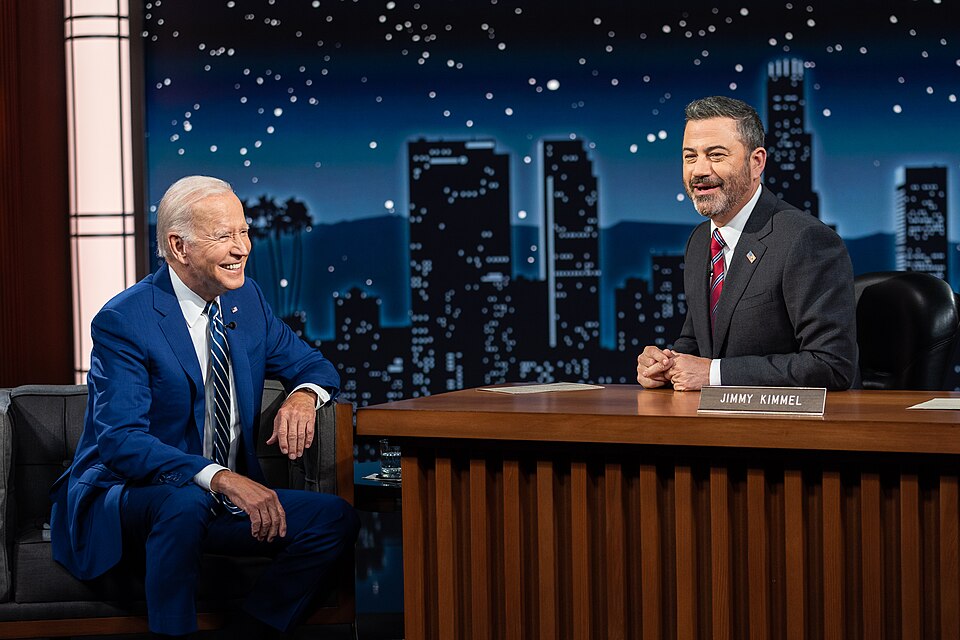
Jimmy Kimmel escalated his criticism of President Donald Trump this week, taking his late-night commentary beyond politics and directly targeting Trump’s marriage to first lady Melania Trump.
The remarks came during another politically charged monologue in which Kimmel criticized Trump’s personality, public statements and leadership style before turning his attention to the president’s personal life.
Kimmel began by mocking Trump after the president referred to himself as the “GOAT,” meaning the “greatest of all time,” during a recent rally.
The late-night host claimed Trump’s confidence appears to grow even as his approval ratings face political pressure.
Kimmel then attacked Trump personally, portraying the president as insecure and ridiculing the way he speaks about his own record and accomplishments.
The segment soon shifted to Trump’s recent comments involving Los Angeles and San Diego.
Trump had discussed the possibility of major American cities facing threats from Iran, remarks that quickly generated controversy among his political critics.
Some opponents interpreted Trump’s comments as suggesting that Los Angeles and San Diego could be attacked.
The White House disputed that characterization.
Administration officials argued that Trump was describing a potential threat to American cities and emphasizing his desire to prevent such an attack, rather than suggesting that Iran should target the United States.
Kimmel rejected that explanation and strongly criticized the president’s remarks during his monologue.
But the segment became considerably more personal when Kimmel brought first lady Melania Trump into the discussion.
Kimmel aired footage showing California Democratic Gov. Gavin Newsom greeting Melania Trump with a kiss during a previous public appearance.
He then used the footage to make a joke about President Trump’s marriage.
Kimmel suggested that Newsom had shown more physical affection toward the first lady than Trump had in years.
He followed the comment with another joke implying that Melania Trump had been thinking about California since the encounter.
WATCH:
For many conservative viewers, the remarks are likely to raise a familiar question: How far should political comedy go before satire becomes a personal attack?
Criticism of presidents has always been part of American comedy and political culture.
Republican and Democratic presidents alike have faced jokes, impersonations and harsh criticism from entertainers.
However, bringing a president’s spouse and marriage into a political monologue can be viewed differently, especially when the spouse is not directly involved in the controversy being discussed.
Melania Trump has generally maintained a lower political profile than many previous first ladies and has often avoided the daily partisan battles surrounding Washington.
Despite that, she has repeatedly become the subject of jokes and commentary aimed at her husband.
The latest Kimmel segment could strengthen concerns among conservatives who believe late-night television has moved far beyond traditional comedy and increasingly serves as a platform for partisan political commentary.
Kimmel has become one of Trump’s most outspoken critics in entertainment.
His program frequently features jokes and commentary targeting Trump, Republican leaders and conservative political positions.
Trump, in turn, has repeatedly criticized Kimmel and other late-night hosts.
The president has argued that late-night television has become heavily political and has accused several major programs of routinely promoting anti-Trump viewpoints.
The conflict reflects a broader shift in American entertainment.
Decades ago, late-night hosts often joked about politicians from both parties while trying to appeal to a broad national audience.
Today, political commentary has become a central part of many late-night programs, particularly during major elections and periods of intense political division.
For older viewers who remember entertainers such as Johnny Carson, the difference can be especially noticeable.
Carson was certainly willing to joke about presidents and political scandals, but he was also known for trying to keep his program accessible to Americans across the political spectrum.
Modern late-night television operates in a very different media environment.
Cable news, social media and partisan political commentary have increasingly blurred the traditional boundaries between entertainment and political advocacy.
That shift has left many Americans wondering whether late-night television is still primarily about comedy or whether it has become another front in the country’s political battles.
Kimmel’s latest remarks are likely to add to that debate.
Supporters of the comedian may argue that presidents and their families are legitimate subjects for satire because of their enormous public visibility.
Others will argue that mocking a president’s marriage crosses a line that political commentary does not need to cross.
For Trump supporters, the episode may reinforce the belief that certain entertainment figures are willing to make almost any aspect of Trump’s life part of their political criticism.
There is also a larger political question.
Trump remains one of the most dominant figures in American politics, and criticism of him continues to generate attention across television, social media and online news.
That means clashes between Trump and entertainment personalities such as Kimmel are unlikely to disappear anytime soon.
With the 2026 midterm elections approaching, political tensions are only likely to increase.
Immigration, the economy, inflation, foreign policy, national security and control of Congress are all expected to play major roles in the campaign.
Yet Kimmel’s latest monologue demonstrates how quickly political discussion can move away from policy and become intensely personal.
Whether viewers consider the comments legitimate satire or an unnecessary attack on the president’s family will largely depend on their perspective.
But the episode highlights a broader cultural divide that has been growing for years.
Millions of Americans increasingly consume entertainment, news and political commentary through completely different media ecosystems.
And when even a president’s marriage becomes material for partisan late-night comedy, that divide becomes difficult to ignore.