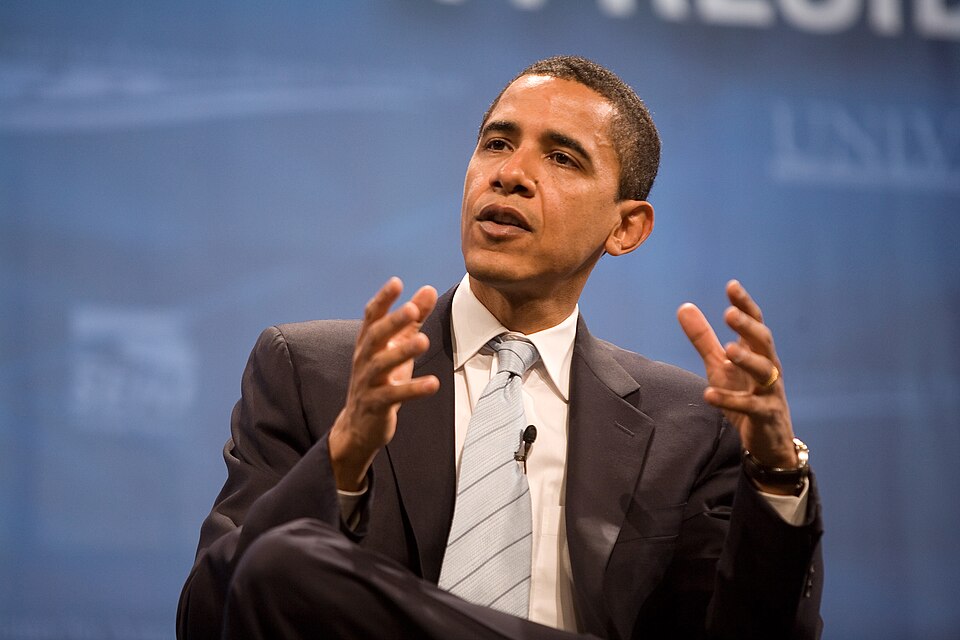
If the mainstream media is supposed to be unbiased why are they defending Obama?
Former President Barack Obama is facing criticism over his remarks about President Donald Trump’s White House renovations, but one prominent television host is making it clear whose side he’s on.
MS NOW host Joe Scarborough came to Obama’s defense after Republicans questioned the former president’s joke comparing Trump’s White House decorations to the Cheesecake Factory restaurant chain.
What started as a political joke has now sparked a national disagreement involving Trump, Obama, conservative commentators, and the news media.
And with the November 3 midterm elections approaching, the controversy has become another example of how political and cultural disagreements can dominate headlines.
Joe Scarborough Defends Obama After Republican Backlash
During Monday’s broadcast of Morning Joe, Scarborough sharply criticized Republicans who took issue with Obama’s remarks.
The television host dismissed the conservative backlash, suggesting that Republican leaders were exaggerating the significance of the former president’s joke.
“Can you believe how stupid the reaction is and how stupid they think Americans are?” Scarborough asked.
He went further, accusing Trump and his allies of making statements that underestimate the intelligence of the American public.
Scarborough’s comments followed criticism from conservative figures who argued that Obama’s comparison reflected an attitude of superiority toward businesses and experiences familiar to ordinary Americans.
The disagreement quickly expanded beyond the original joke, bringing renewed attention to how major television networks cover political controversies.
While Scarborough viewed the Republican reaction as excessive, conservative commentators argued that Obama’s remarks deserved scrutiny.
Obama’s White House Joke Sparks Controversy
The controversy began Saturday as Obama campaigned for Democratic candidates ahead of the midterm elections.
During his appearance, Obama criticized Trump’s attention to White House construction and decorating projects, including the proposed ballroom and the president’s preference for gold-colored decorations.
The former president suggested Trump was spending too much time thinking about renovations rather than concentrating on the concerns of American voters.
Obama also joked that Trump might be better suited to hosting a home improvement program on HGTV.
Then came the comparison that captured national attention.
“He’s got the White House looking like Saddam Hussein opened a Cheesecake Factory,” Obama said.
The remark drew laughter from Democratic supporters, but conservative commentators soon questioned the choice of comparison.
For some Republicans, the reference to a popular American restaurant chain raised questions about whether Obama was mocking Trump’s decorating style or expressing disdain for a business enjoyed by millions of Americans.
Obama’s defenders rejected that interpretation, arguing that the joke was directed at Trump’s use of gold decorations rather than restaurant customers.
Nevertheless, the exchange quickly became another political flashpoint.
Conservative Commentator Scott Jennings Responds
CNN political commentator Scott Jennings was among the most prominent conservatives to criticize Obama’s remarks.
Jennings challenged the former president’s connection to the everyday experiences of Americans, pointing to Obama’s wealth and lucrative speaking engagements.
In a social media post, Jennings accused Obama of being disconnected from ordinary Americans and questioned whether the former president had ever visited a Cheesecake Factory.
He also argued that Obama’s presidency helped create the political conditions that contributed to Trump’s election in 2016.
The criticism reflected a longstanding disagreement between Republicans and Democrats over wealth, political influence, and the attitudes of Washington’s most prominent figures.
Conservatives have frequently accused wealthy political leaders of lecturing Americans while enjoying lifestyles far removed from those of average households.
However, Jennings’s claims about Obama’s restaurant visits and personal dining habits were assertions made by the commentator, not independently established facts.
The broader question was whether Obama’s comparison amounted to harmless political humor or revealed an attitude that critics considered dismissive.
Trump Fires Back At Obama
President Trump wasn’t willing to let the former president’s comments go unanswered.
During a campaign rally in Mississippi on Monday, Trump defended his White House renovation efforts and explained why he believes maintaining the historic residence is an important presidential responsibility.
“The White House represents our country, and has to be pristine,” Trump told supporters.
Trump argued that the building should be kept in excellent condition because it represents the United States to visiting foreign leaders and the American people.
He also questioned Obama’s understanding of the renovations, maintaining that improvements to the White House were necessary.
The president then addressed the Cheesecake Factory comparison directly.
Rather than criticizing the restaurant chain, Trump described it as a successful American business.
He suggested that Obama’s decision to invoke the company’s name negatively was misplaced.
Trump has repeatedly defended his renovation plans, describing them as improvements to one of America’s most important historic properties.
Critics, meanwhile, have questioned the scope, cost, and priorities of some of the projects.
The president maintains that the work is intended to improve and preserve the White House.
The Media Debate Takes Center Stage
Scarborough’s response introduced another dimension to the controversy: the role of television commentators in political disagreements.
His defense of Obama highlighted the different ways commentators interpreted the former president’s remarks.
Some conservative critics considered the Cheesecake Factory comparison an example of political elitism, while Scarborough argued that Republicans were manufacturing outrage over a joke.
Supporters of Obama’s remarks maintained that the former president was criticizing Trump’s decorative preferences rather than attacking customers of the restaurant chain.
That distinction matters because the controversy involves two separate questions.
The first is whether Obama’s comments about Trump’s renovations were appropriate.
The second is whether Republicans were justified in interpreting the restaurant reference as disrespectful toward ordinary Americans.
Both arguments have received considerable attention, even as voters continue facing questions about economic conditions, government spending, and the direction of the country.
The episode also illustrates how political commentary can transform a brief campaign remark into a national news story.
White House Renovations Remain A Political Issue
Trump’s renovation projects have become a recurring subject of political debate.
The president has promoted improvements to the White House, including changes to decorative features and plans for an expanded ballroom.
He argues that maintaining the presidential residence is part of preserving America’s history and presenting the country favorably to international visitors.
Democrats have questioned the administration’s priorities, particularly as Americans continue to debate economic affordability and federal spending.
Obama’s joke was part of that broader criticism.
However, the Republican response shifted some of the attention toward questions of class and whether political leaders understand the preferences of everyday Americans.
The Cheesecake Factory, a nationally recognized restaurant chain, unexpectedly found itself at the center of the argument despite having no direct role in the political dispute.
The company’s popularity made the comparison especially recognizable, allowing the controversy to spread quickly beyond the original campaign event.
Political Tensions Rise Ahead Of November Midterms
The exchange comes at a consequential moment for both major political parties.
Americans are preparing to vote in the November 3 midterm elections, which will determine control of Congress and numerous state offices.
Obama has returned to the campaign trail to help Democratic candidates, while Trump has been appearing at events supporting Republicans.
Both parties are attempting to motivate supporters and persuade undecided voters during the campaign’s final days.
For Republicans, the controversy provides an opportunity to question Obama’s remarks and highlight concerns about political elitism.
For Democrats, the exchange offers another opening to criticize Trump’s spending priorities and focus on White House renovations.
Meanwhile, Scarborough’s involvement ensures that the dispute extends beyond the two presidents and into the national media conversation.
It remains unclear whether the argument will have any meaningful influence on the election.
Nevertheless, it demonstrates how quickly a political joke can become a larger debate about leadership, public perception, and cultural differences.
What The Controversy Reveals About Washington
The disagreement between Obama, Trump, and their respective supporters has attracted considerable attention, but the underlying issues extend well beyond restaurant jokes and interior decorating.
Americans continue to expect elected officials to address economic pressures, healthcare expenses, retirement concerns, and government accountability.
Political leaders also face scrutiny over how they communicate with voters and whether their public statements reflect an understanding of everyday experiences.
Obama’s joke, Jennings’s criticism, Trump’s response, and Scarborough’s defense show how differently the same remarks can be interpreted.
For some, the dispute is an example of political humor being taken too seriously.
For others, it raises legitimate questions about the attitudes of influential figures in Washington.
With Election Day approaching, voters will have the opportunity to decide which arguments matter most.
For now, Obama’s remarks about Trump’s White House have generated a debate that extends from the campaign trail to the nation’s television studios.
And Scarborough’s public defense of the former president has ensured that the media itself remains part of the story.