Here’s what was said.
Vice President JD Vance is making headlines after launching serious accusations against a Democratic Senate candidate, raising questions about the candidate’s political views and associations just one week before the November midterm elections.
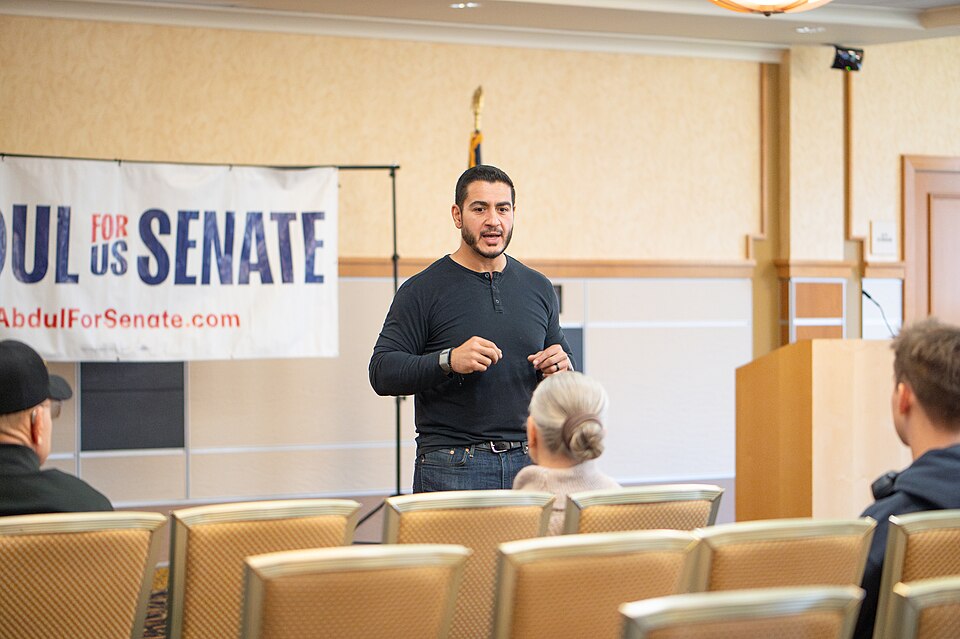
The controversy centers on Michigan Democrat Abdul El-Sayed, who is running against Republican Mike Rogers in a closely watched U.S. Senate race.
During a trip to Michigan on Tuesday, October 27, Vance accused El-Sayed of promoting racial hostility and questioned his judgment.
The vice president’s remarks have intensified an already contentious campaign as both parties compete for control of Congress.
JD Vance Makes Serious Accusations Against Michigan Democrat
Speaking to reporters before traveling to a campaign rally in Howell, Michigan, Vance accused El-Sayed of engaging in what he described as “explicitly anti-white racial hatred.”
The vice president also questioned the Democrat’s political associations and criticized his approach to American identity and national unity.
Vance even described El-Sayed as a “little bit of a psychopath” while discussing his support for Republican Senate candidate Mike Rogers.
The unusually personal criticism comes during the final days of an election that has attracted national attention.
However, Vance’s statements represent political accusations. They do not establish that El-Sayed has engaged in racial discrimination.
Controversial Political Connections Draw Attention
A major point of disagreement involves El-Sayed’s association with progressive political commentator Hasan Piker.
Piker has attracted criticism for controversial statements about American foreign policy and other political issues.
Republicans have questioned why El-Sayed has maintained ties with the commentator, arguing that candidates should be prepared to explain their political associations.
El-Sayed has previously dismissed questions about Piker as distractions from issues affecting Michigan families.
The disagreement has become a recurring theme in the Senate race, with Republicans focusing on political ideology and Democrats emphasizing economic concerns.
Trump Previously Raised Questions About El-Sayed
Vance’s latest criticism follows remarks from President Donald Trump during a Michigan campaign rally on Sunday, October 25.
Trump accused El-Sayed of having extremist associations and questioned whether he should represent Michigan in the United States Senate.
El-Sayed, a Michigan-born physician and former Detroit health director, has rejected accusations of extremist involvement.
No evidence has been established that El-Sayed belongs to the Muslim Brotherhood or supports terrorism.
The competing accusations have generated considerable attention, placing the Democratic candidate’s political background under increased scrutiny just days before voters head to the polls.
Michigan Senate Race Could Have National Consequences
The disagreement comes as former Republican Congressman Mike Rogers attempts to win Michigan’s open Senate seat.
Rogers previously chaired the House Intelligence Committee and has emphasized his experience with national security and government oversight.
El-Sayed, meanwhile, has campaigned on healthcare affordability, economic issues, and proposals intended to help working families.
The Senate contest is especially important because Republicans and Democrats are competing for control of Congress in the November 3 elections.
Vance’s appearance in Michigan reflects the attention Republican leaders are giving the race.
Former President Barack Obama has also campaigned in the state on behalf of Democrats, underscoring the importance both parties place on the outcome.
Vance Connects Senate Race to Larger National Debate
During his Michigan appearances, Vance has repeatedly criticized political movements he believes promote division rather than national unity.
He has raised concerns about public safety, law enforcement, immigration, and the responsibilities of elected officials.
At Tuesday’s rally, Vance also referenced recent unrest in France, suggesting that political extremism and civil disorder should concern American voters.
He attempted to connect those developments to El-Sayed’s political associations.
That comparison was speculative, however. There is no established evidence that El-Sayed would support or participate in violent unrest.
The exchange illustrates how Michigan’s Senate campaign has become part of a broader national debate over public safety, political rhetoric, and the role of government.
Democrats Respond to Republican Criticism
El-Sayed and his Democratic allies have pushed back against the Trump administration’s attacks.
The Democratic candidate has argued that Republicans are attempting to shift attention away from issues such as healthcare costs, groceries, and household expenses.
Democrats have also criticized the increasingly personal nature of the Republican campaign.
Republicans maintain that a candidate’s public statements, policy positions, and political associations are legitimate subjects of scrutiny.
The disagreement has produced two very different campaign messages as Election Day approaches.
Final Week of Midterms Brings Growing Political Tensions
With the November 3 midterm elections approaching, Michigan’s Senate contest remains a major focus for national political leaders.
Vance’s accusations have placed renewed attention on El-Sayed, while the Democratic candidate continues to challenge the administration’s record and campaign messaging.
The outcome could affect the balance of power in Washington and determine who represents Michigan in the U.S. Senate.
For now, the confrontation between Vance and El-Sayed demonstrates how intensely contested the final week of the 2026 midterm campaign has become.
Whether the vice president’s criticism will change the minds of undecided voters remains to be seen.