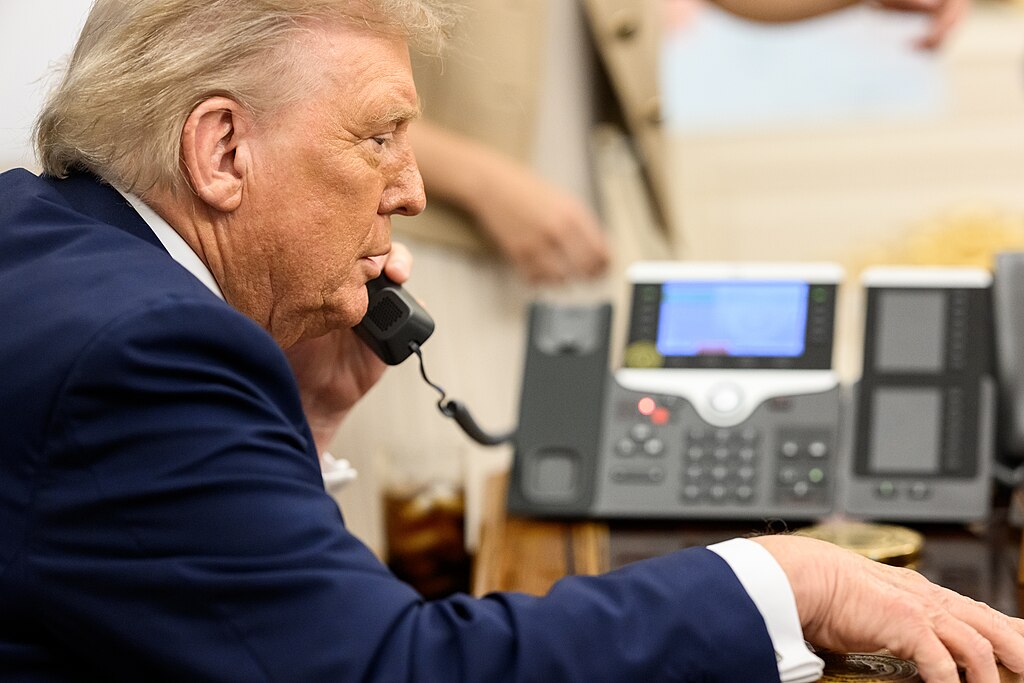
This was hilarious.
A surprising moment unfolded on live television Friday when a caller phoned into C-SPAN using the name “John Barron” — a pseudonym long associated with President Donald Trump.
The call came just hours after the Supreme Court issued a major ruling limiting the president’s use of emergency powers to impose tariffs, and it immediately sparked buzz across political media.
A Familiar Name Resurfaces
Viewers watching the live C-SPAN segment heard a man introduce himself as a Republican from Virginia. Speaking in a voice many described as remarkably similar to President Trump’s well-known Queens accent, the caller criticized the Supreme Court’s decision blocking the use of the International Emergency Economic Powers Act (IEEPA) for broad tariff enforcement.
The caller expressed frustration with the ruling and suggested that while Democratic leaders might welcome the outcome, many Americans who support strong trade enforcement would not.
Before the comments could continue, host Greta Brawner cut the line and moved on to other callers.
The White House did not immediately issue a comment regarding the call.
Why “John Barron” Matters
Longtime Trump observers will remember that “John Barron” was a name reportedly used decades ago when speaking to journalists, particularly during discussions about business matters. Archived recordings from those years fueled speculation because the voice sounded strikingly similar to Trump’s own.
Whether Friday’s call was a prank, satire, or political commentary remains unclear. But it added an unexpected twist to an already dramatic news cycle.
WATCH:
🚨 NO WAY 😭
— Brian Allen (@allenanalysis) February 22, 2026
“John Barron” just called @CSPAN to complain about the Supreme Court nuking Trump’s tariffs.
Yes — that John Barron.
The fake name Trump used for decades.
They cut him off mid-call.
💀You cannot make this up. 😂🥴 pic.twitter.com/iOPLRebnYa
The Supreme Court’s 6–3 Tariff Decision
The unusual call followed a 6–3 Supreme Court ruling stating that the president cannot use IEEPA to impose sweeping tariffs.
IEEPA, originally designed to address national emergencies involving foreign threats, does not specifically mention tariffs. The Court determined that using the statute to impose broad trade duties exceeded its intended scope.
For supporters of President Trump’s trade agenda, the ruling represents a setback. Many argue that tariffs strengthened America’s negotiating leverage, protected domestic manufacturing, and generated significant federal revenue — estimated at over $130 billion during implementation.
Critics, however, contend that Congress — not the executive branch — holds primary authority over trade policy.
What Powers Does the President Still Have?
Despite the ruling, the administration is not without options.
President Trump has already turned to Section 122 of the Trade Act of 1974, which allows temporary tariffs of up to 150 days. A baseline tariff was reintroduced under this authority and later adjusted.
However, extending tariffs beyond the 150-day window would require congressional approval — a more complex and politically challenging process.
This shift raises broader questions about executive authority, separation of powers, and America’s trade future.
Trump Responds From the White House
Later that same day, President Trump addressed the ruling during a White House press briefing. He sharply criticized the Court’s decision, arguing that it limits the executive branch’s ability to act decisively in defense of American economic interests.
The ruling marks one of the most significant Supreme Court defeats of Trump’s presidency — particularly notable given that he appointed several of the justices currently serving.
Why This Moment Matters
For many Americans — especially those concerned about trade deficits, American manufacturing, and economic sovereignty — tariffs have been a central pillar of Trump’s policy platform.
Friday’s events highlight the ongoing tension between the executive branch and the judiciary over the limits of presidential authority.
And in typical Washington fashion, even a mysterious phone call can quickly become part of a larger national debate.
One thing is certain: when it comes to President Trump, trade policy, and Supreme Court battles, the political drama shows no signs of slowing down.