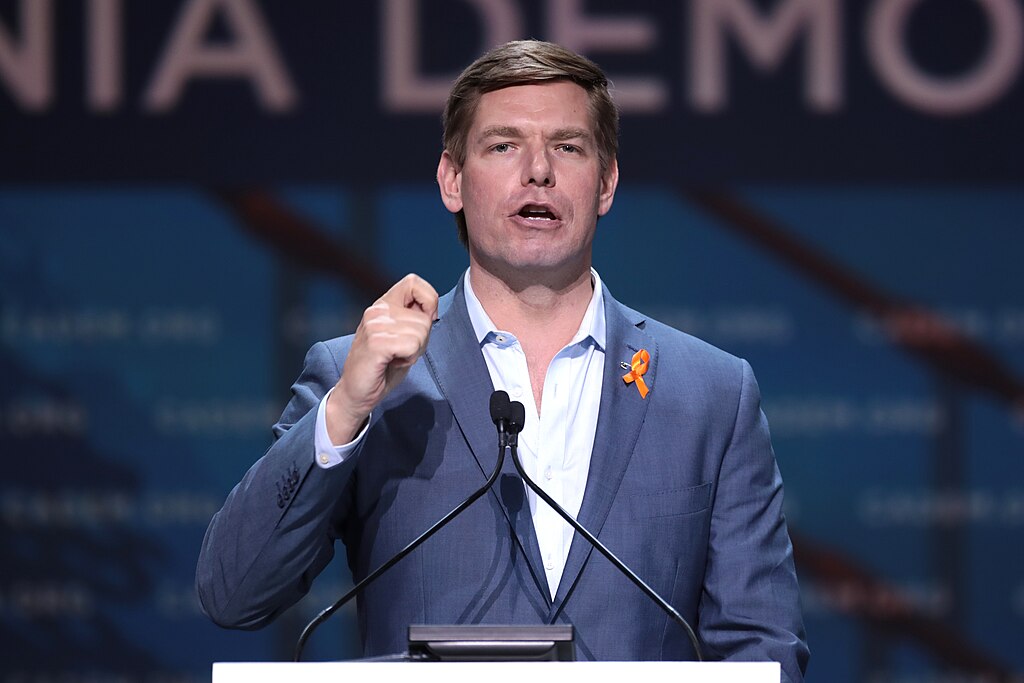
Here’s what Democrats are claiming now but Republican voters have their doubts.
A new political rumor is circulating in Washington after a prominent Democrat claimed that some Republican lawmakers privately criticize President Trump behind closed doors — despite publicly supporting him.
Rep. Eric Swalwell (D-Calif.) made the allegation during a brief interview with TMZ, suggesting that candid conversations often take place in an unexpected setting: the congressional gym.
According to Swalwell, lawmakers from both parties regularly work out together, and he claims that environment leads to more honest discussions. He alleged that some Republicans express frustration with President Trump in private and are even “s‑‑‑ talking” him, even while backing him in public.
Swalwell also suggested that fear plays a major role in why GOP lawmakers remain silent. He claimed some Republicans worry about political backlash, personal threats, and the safety of their families if they openly criticize the former president. According to Swalwell, this concern has kept many lawmakers from speaking out.
The California Democrat has made similar assertions in the past. During a House hearing last month that included former special counsel Jack Smith, Swalwell claimed that if Republican lawmakers were placed under oath, their private opinions about President Trump would be very different from their public statements. He alleged that he has personally heard Republicans use harsh language to describe the president in private conversations.
Swalwell, who has steadily built a national profile over the past decade, is currently campaigning to succeed Gavin Newsom as California’s next governor.
The Trump White House strongly rejected Swalwell’s claims. In a statement to The Hill, spokesperson Abigail Jackson dismissed the allegation outright, calling it untrue and questioning the credibility of the congressman’s remarks.
Among conservatives, the story has been met with skepticism. Critics argue that the claims rely on anonymous conversations and unverifiable anecdotes, rather than facts or policy debates. Many see the comments as yet another example of Washington insiders attempting to fuel political narratives without evidence — especially as the 2024 election aftermath and future political battles continue to dominate the national conversation.