Here’s what happened.
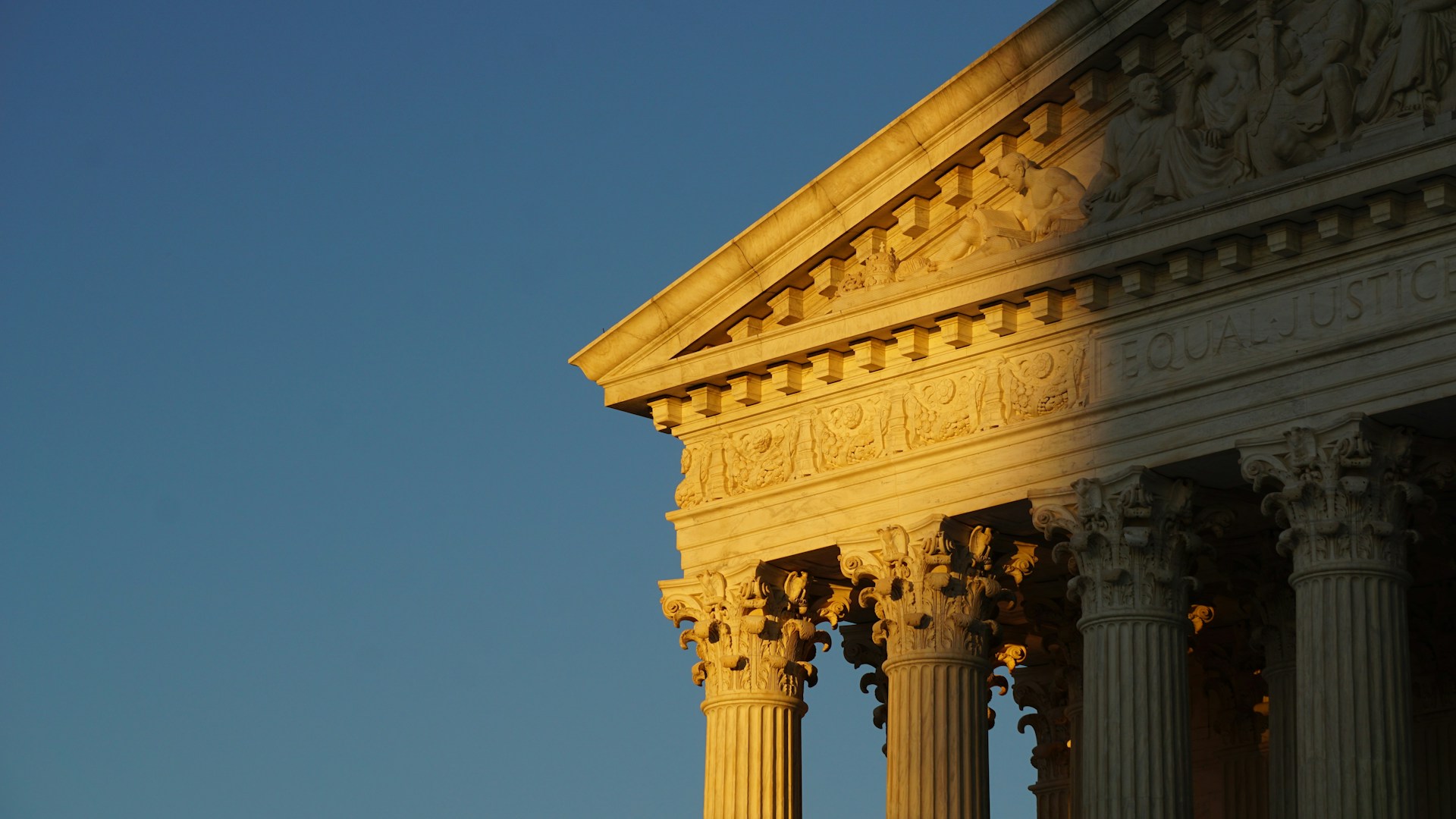
A major battle over the Ten Commandments in public schools is being pushed toward the Supreme Court, potentially setting up another consequential fight over religious liberty, parental rights and the First Amendment.
The American Civil Liberties Union and other groups representing Texas families asked the Supreme Court Monday to review a Texas law requiring public schools to display the Ten Commandments in classrooms.
The challenge comes after a closely divided federal appeals court handed Texas a significant victory earlier this year.
Now the nation’s highest court could have the final word.
Ten Commandments Battle Reaches Supreme Court
At the center of the dispute is Texas Senate Bill 10, which requires public schools to prominently display a state-specified version of the Ten Commandments in classrooms.
The law was approved by Texas lawmakers in 2025 and signed by Republican Gov. Greg Abbott.
Supporters have argued that the Ten Commandments hold an important place in America’s historical and legal tradition.
Opponents argue that requiring the displays in public schools amounts to government endorsement of religion and violates constitutional protections.
More than two dozen Texas families from a variety of religious and nonreligious backgrounds are involved in the Supreme Court challenge.
The families are being represented by several civil liberties and advocacy groups, including the ACLU, its Texas chapter, Americans United for Separation of Church and State, and the Freedom From Religion Foundation.
Parents Challenge Texas Law
The parents challenging the law say government officials should not determine what religious messages children encounter in public school classrooms.
Rabbi Joshua Fixler, a Houston parent involved in the litigation, said he objects to Texas requiring a version of the Ten Commandments that differs from his own religious tradition.
That argument highlights one of the central questions facing the courts: Does displaying the Ten Commandments recognize an important part of American history, or does a mandatory classroom display cross the constitutional line separating government and religion?
Texas has defended the law.
And earlier this year, the state scored an important victory.
Texas Wins Major Appeals Court Decision
In April, the full U.S. Court of Appeals for the 5th Circuit upheld the Texas law in a remarkably close 9-8 decision.
The appeals court concluded that the classroom requirement does not violate the First Amendment’s Establishment or Free Exercise Clauses.
That ruling reversed lower-court setbacks for the state and cleared the way for the displays in the schools involved in the lawsuits.
But the narrow margin also demonstrated how deeply divided the judiciary remains over the issue.
The challengers now want the Supreme Court to overturn that decision.
They argue that the 5th Circuit departed from longstanding Supreme Court precedent involving religious displays in public schools.
Nearly 50-Year-Old Supreme Court Case Takes Center Stage
One of the biggest issues is a Supreme Court decision dating back nearly half a century.
In Stone v. Graham, decided in 1980, the Supreme Court struck down a Kentucky law requiring copies of the Ten Commandments to be posted in public school classrooms.
But the Supreme Court’s approach to religious-liberty cases has changed significantly since then.
That could make the Texas dispute especially important.
The 5th Circuit concluded that subsequent Supreme Court decisions—including the court’s abandonment of an older legal framework commonly known as the Lemon test—changed the constitutional landscape surrounding religious expression.
The Texas families challenging the law strongly disagree.
They argue that only the Supreme Court can overturn its own precedents and that the 1980 Ten Commandments decision remains binding.
That disagreement could give the justices a reason to step in.
Conservative Supreme Court Has Changed Religious-Liberty Landscape
The case would arrive before a Supreme Court with a 6-3 conservative majority that has issued several major decisions protecting religious exercise and parental rights.
In 2022, the court sided with a Washington state high school football coach who had been disciplined following prayers on the field after games.
That ruling was particularly significant because the court moved away from the Lemon test, which had influenced church-state disputes for decades.
More recently, the Supreme Court sided with Maryland parents seeking the ability to remove their children from certain classroom instruction involving books with LGBTQ themes.
Those decisions have strengthened religious-liberty protections and reshaped the legal environment surrounding religion in public institutions.
The Texas Ten Commandments case could test how far that shift extends.
Texas Isn’t Alone
Texas is part of a broader movement among Republican-led states seeking to restore Ten Commandments displays in public schools.
Louisiana and Arkansas have also faced major court battles over similar laws.
The results have not always been consistent.
A federal court permanently blocked enforcement of Arkansas’ classroom Ten Commandments requirement earlier this year, while the 5th Circuit has allowed Texas’ law to stand.
Those competing decisions add to the uncertainty surrounding what states may constitutionally require.
A definitive Supreme Court ruling could therefore affect far more than Texas.
Supreme Court Could Set Nationwide Standard
The justices have not yet agreed to hear the case.
That distinction matters.
Filing a Supreme Court petition does not mean the court will automatically take the dispute. The justices reject the overwhelming majority of cases presented to them.
The court is expected to consider whether to accept the Texas challenge after its new term begins.
If four justices vote to hear the case, it could become one of the most closely watched religious-liberty battles before the court.
And the stakes extend well beyond whether a framed copy of the Ten Commandments can hang on a classroom wall.
The eventual decision could help determine how states may recognize America’s religious heritage inside public schools—and where the Constitution requires government officials to draw the line.
For parents, educators and religious-liberty advocates across the country, the Supreme Court’s next move could have consequences for years to come.