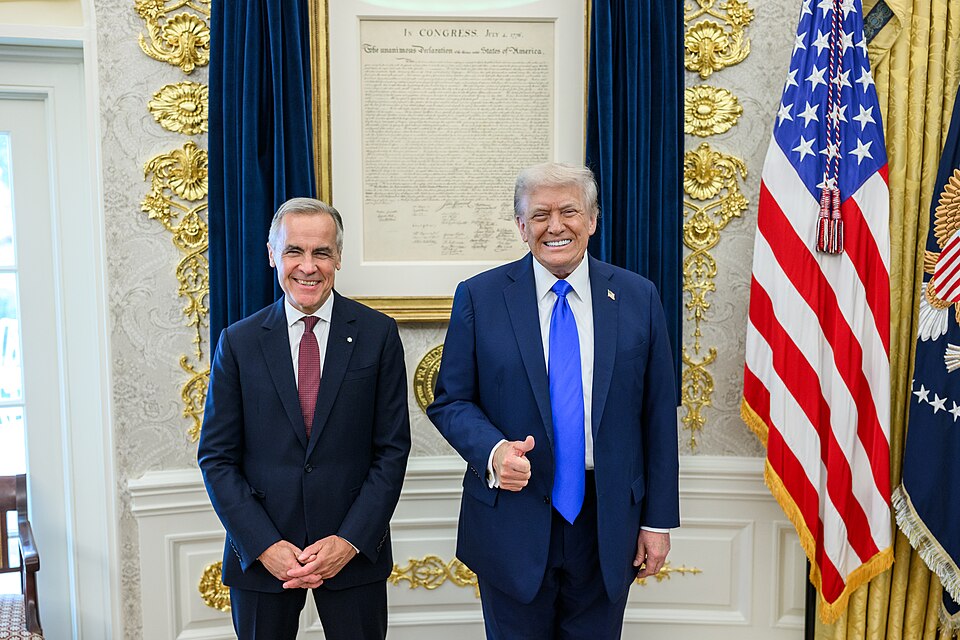
Trump is not happy.
President Donald Trump is putting Canada on notice after another wave of wildfire smoke drifted into the United States, leaving millions of Americans under air quality alerts and raising fresh questions about whether America’s northern neighbor is doing enough to prevent the crisis.
On Friday, Trump suggested Canada could face additional tariffs, arguing that repeated wildfire smoke has become an expensive and avoidable problem for the United States.
In a Truth Social post, Trump accused Canadian officials of failing to properly manage forests and remove combustible debris, saying Americans should not have to breathe unhealthy air because of what he described as poor government stewardship.
Trump said Canada should be held accountable for what he described as inadequate forest management, arguing that smoke drifting into the United States is creating dangerous and unacceptable air pollution.
Millions Of Americans Feel The Impact
Trump’s comments come as wildfire smoke continues spreading across large sections of the Midwest and East Coast.
Air quality alerts have been issued in more than a dozen states, with health officials warning residents—including those in Chicago and Washington, D.C.—to limit outdoor activity or wear protective masks when pollution levels become hazardous.
Canadian wildfire officials report nearly 900 active wildfires, with the largest outbreaks burning across Ontario, Quebec, and the Northwest Territories. Fewer than 100 fires have been fully contained.
Forecasters say shifting winds may temporarily improve conditions, but smoke is expected to return periodically until the fires are extinguished.
Trump Says Canada Should Be Held Accountable
Trump said he planned to speak directly with Canadian Prime Minister Mark Carney about the growing problem.
The president argued that repeated smoke events have become an annual burden on the United States, costing billions of dollars while disrupting travel, outdoor activities, businesses, and public health.
He said those costs should be considered when determining tariffs on Canadian imports.
Trump called Canada’s approach “willful negligence,” arguing that stronger forest management and brush removal could reduce the severity of future wildfire seasons.
For many supporters, the remarks reflect Trump’s long-standing belief that foreign governments should bear responsibility when their actions—or inaction—impose costs on American taxpayers.
Canada Rejects Trump’s Criticism
Prime Minister Mark Carney dismissed Trump’s accusations during a news conference, saying climate change is a global issue that requires cooperation from every nation.
Carney also suggested the United States shares responsibility for addressing environmental challenges, a response that did little to satisfy Republican lawmakers already demanding tougher action.
Republicans Join The Pressure Campaign
Several Republican members of Congress say Canada has failed to solve a problem that continues affecting millions of Americans year after year.
Michigan Representatives Jack Bergman, John James, Lisa McClain and John Moolenaar recently sent a letter to Canadian officials, arguing this is now the third consecutive year Americans have been forced to deal with dangerous smoke from Canadian wildfires.
The lawmakers said Canada possesses the resources needed to better manage its forests and warned that if meaningful action is not taken, the United States may need to protect its own interests.
Ohio Senator Bernie Moreno echoed that message, announcing plans to introduce legislation that would impose sanctions on Canada and Canadian officials over what he described as the country’s failure to prevent the recurring wildfire crisis.
Health Experts Warn Smoke Can Be Dangerous
Medical experts say wildfire smoke contains microscopic particles capable of traveling deep into the lungs.
Exposure can trigger coughing, breathing problems, eye irritation, and worsen conditions such as asthma, COPD, and heart disease. Older adults, young children, and people with underlying health conditions face the greatest risks.
Public health officials continue urging residents in affected areas to monitor local air quality reports and reduce outdoor activity whenever smoke reaches unhealthy levels.
A Growing Political Issue
With another summer bringing widespread smoke into the United States, pressure is mounting on both governments to address the problem before it becomes an even more costly annual event.
Trump’s proposal to tie the issue to tariffs adds a new political dimension to an ongoing dispute, ensuring that wildfire management—and who should pay for its consequences—will likely remain a point of tension between Washington and Ottawa.