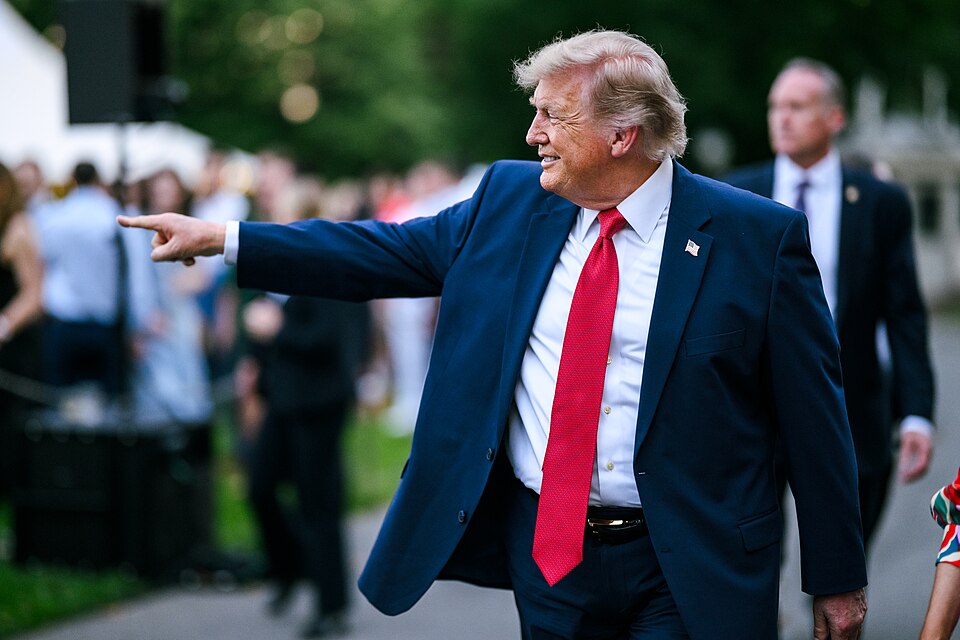
Trump sadly stuck out in one state.
President Donald Trump suffered an unexpected political setback Tuesday night when one of his endorsed candidates narrowly lost a key Republican gubernatorial primary in Iowa.
Representative Randy Feenstra, who entered the race with Trump’s full backing, conceded defeat to businessman and farmer Zach Lahn in a closely contested battle to become Iowa’s next governor. The outcome marks the first primary loss of the 2026 election cycle for a candidate publicly endorsed by President Trump.
For many political observers, the race offered an early glimpse into how Republican voters are weighing endorsements, policy priorities, and grassroots movements as the midterm elections continue to take shape.
Trump-Endorsed Candidate Falls Short
Feenstra was widely viewed as the establishment favorite in the race and enjoyed strong support from Republican leadership circles. President Trump repeatedly praised Feenstra during the campaign, calling him “MAGA all the way” and giving him his “complete and total endorsement.”
Despite that support, voters ultimately delivered a razor-thin victory to Lahn, a farmer and businessman who built his campaign around an “Iowa First” message focused on agriculture, rural communities, and health-related concerns.
The result surprised many political analysts, particularly because Feenstra had entered the contest as the favorite on several election prediction platforms.
What Makes This Loss Significant?
Trump remains the dominant figure in Republican politics, and his endorsements continue to carry enormous influence across the country. However, Iowa’s gubernatorial primary demonstrated that local issues and grassroots enthusiasm can still play a major role in determining election outcomes.
Political strategist Brittany Martinez told Newsweek that the result does not necessarily indicate a major split within the Republican Party. Instead, she suggested it may show that voters are evaluating candidates on a broader range of issues rather than relying solely on endorsements.
The Iowa race represents the first major statewide primary of the 2026 cycle in which a Trump-backed candidate failed to secure victory.
The Growing Influence of MAHA
Lahn’s campaign received support from the Make America Healthy Again (MAHA) movement, a coalition that has gained momentum since Health and Human Services Secretary Robert F. Kennedy Jr. joined forces with President Trump during the 2024 election.
The movement focuses heavily on public health, food quality, agricultural practices, and reducing chronic disease. Supporters argue that America’s food and healthcare systems need major reforms, while critics question some of the movement’s positions and proposals.
Although MAHA and MAGA often share many voters and policy goals, disagreements have emerged in recent months over issues involving agriculture, food regulation, and federal policy.
Those differences became increasingly visible during the Iowa governor’s race.
How Lahn Built a Winning Coalition
Lahn campaigned aggressively on issues that resonated with many rural Iowa voters. His platform emphasized support for regenerative farming, opposition to corporate monopolies, and concerns about the influence of large agricultural and pharmaceutical companies.
During the campaign, Lahn argued that Iowa farmers and families had been disadvantaged by powerful interests for decades and pledged to challenge what he described as unfair business practices.
His message earned strong support from several MAHA-affiliated organizations, which viewed him as a champion of personal freedom, family values, and agricultural reform.
The endorsement proved valuable as Lahn successfully energized voters looking for a different direction while still embracing many conservative principles.
Iowa’s New MAHA Law Adds Momentum
Lahn’s victory comes shortly after Iowa enacted one of the nation’s most closely watched health and nutrition reform measures.
Governor Kim Reynolds recently signed legislation aimed at reshaping nutrition standards and limiting certain food additives. The law also includes restrictions on using government food assistance benefits for some sugary products.
The legislation received strong backing from Robert F. Kennedy Jr. and many MAHA supporters, helping keep health and nutrition issues at the center of Iowa politics throughout the campaign.
Conservative Leaders See a New Political Trend
Some conservative commentators believe the Iowa result may signal an evolving coalition within the Republican Party.
Conservative radio host Steve Deace argued before Election Day that growing support among faith-based voters, parents, and health-conscious conservatives could reshape future Republican primaries.
Whether Iowa represents an isolated result or the beginning of a larger trend remains to be seen.
What Happens Next?
According to final projections, Lahn defeated Feenstra by a margin of 37.8% to 37.0%, one of the closest statewide Republican contests of the year.
With the primary behind him, Lahn now turns his attention to the general election, where he will face Democrat Rob Sand in November.
Sand advanced without opposition and is seeking to become the first Democrat elected governor of Iowa in two decades.
As the 2026 midterm season intensifies, Republicans nationwide will be watching Iowa closely to see whether this race was a unique local contest—or an early sign of shifting priorities among conservative voters.