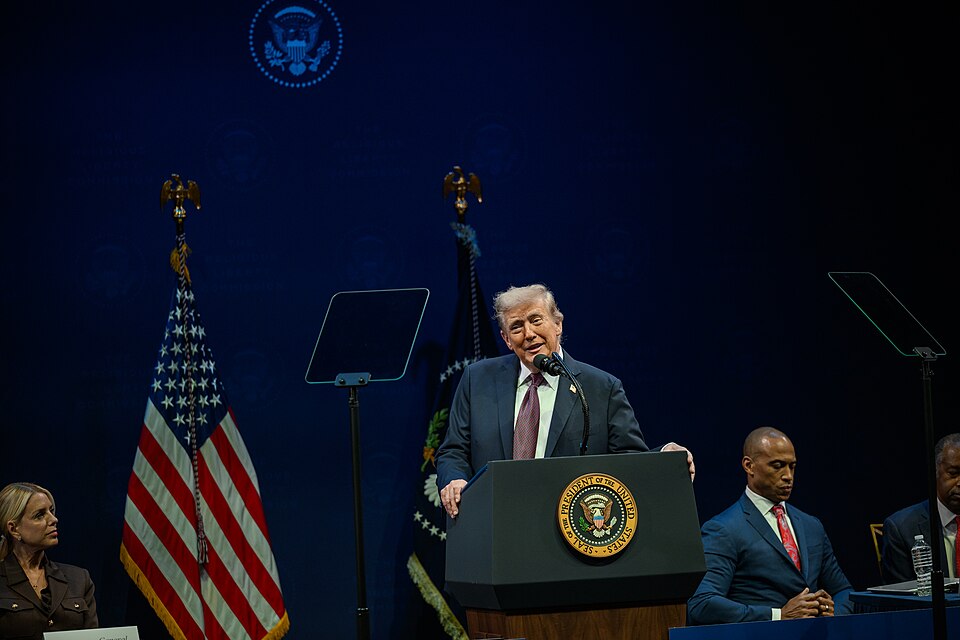
President Donald Trump is once again calling out what millions of Americans see as a familiar pattern—mainstream media downplaying U.S. strength while elevating doubt and criticism.
In a forceful Truth Social post Monday, Trump took direct aim at CNN and other major outlets, accusing them of spreading what he described as a new round of misleading coverage surrounding a major U.S. military operation targeting Iran’s nuclear capabilities.
“Total Obliteration” — But Media Pushes Back
Trump made it clear: the mission—referred to as “Operation Midnight Hammer”—was, in his words, a complete and total success.
He stated that key Iranian nuclear sites were effectively wiped out, making any recovery of materials extremely difficult and time-consuming.
But instead of highlighting what many would consider a major American victory, Trump argued the media once again shifted the narrative.
“Fake News CNN… fail to give our great aviators the credit they deserve,” Trump wrote, blasting what he sees as a consistent effort to undermine U.S. military achievements.
For many Americans, especially those who have watched media coverage for decades, this criticism rings familiar.
Experts Admit: Recovery Would Be Extremely Difficult
Even as media outlets questioned the long-term impact, some of their own expert guests appeared to confirm just how complex the situation really is.
On CNN, anchor Anderson Cooper spoke with national security analyst Alex Plitsas and former Pentagon official Andrew Weber.
Their takeaway? Any attempt to recover highly enriched uranium inside Iran would be massive, dangerous, and far from simple.
Plitsas explained that U.S. forces would likely need to secure large areas, navigate damaged underground tunnels, and operate in highly uncertain conditions.
That’s not a quick mission—that’s a major military undertaking.
Thousands of Troops? Experts Say It’s Possible
Weber reinforced that point during an appearance on 60 Minutes, drawing from past experience dealing with nuclear materials after the fall of the Soviet Union.
But he made one thing clear: Iran is not Kazakhstan.
According to Weber, a similar operation today could require thousands of U.S. troops just to secure the site while specialists attempt to recover nuclear material buried deep underground.
That reality directly challenges the idea—pushed in some media coverage—that the situation is easily reversible.
Military Leaders Warn of Serious Risks
The warnings didn’t stop there.
Retired General David Petraeus, speaking on Jesse Watters Primetime, described such an operation as:
“A very, very tall order… exceedingly risky.”
He also cautioned that potential casualties could be significant—underscoring just how serious any follow-up mission would be.
A Bigger Pattern Americans Recognize
For Trump supporters and many older Americans, this moment fits into a broader, long-running concern:
When America acts decisively, the media often focuses on doubt instead of results.
Whether it’s border security, foreign policy, or military strength, critics argue that legacy outlets like CNN too often frame success as uncertainty.
Trump’s latest remarks tap directly into that frustration—raising a question that continues to resonate:
Is the media reporting the facts… or shaping the narrative?
Why This Story Matters Now
With tensions in the Middle East still high and national security front and center, how these events are reported could shape public opinion in a major way heading into upcoming elections.
And for millions of Americans, one thing is clear:
They’re paying closer attention than ever to who they trust—and who they don’t.