Why would the Supreme Court do this?
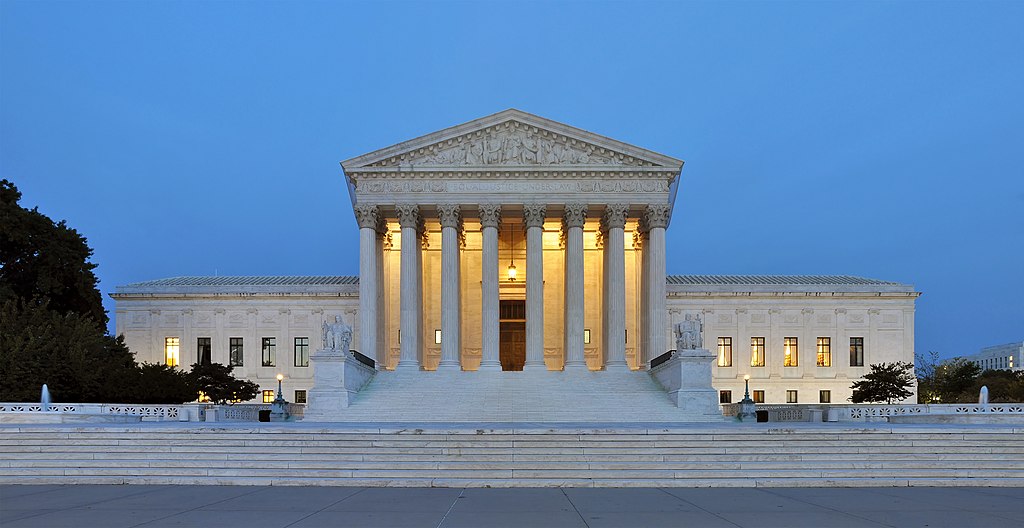
President Donald Trump suffered a surprise setback at the Supreme Court on Tuesday after the justices blocked, for now, his effort to deploy the National Guard to the Chicago area.
The ruling temporarily halts the administration’s push to place military personnel in several Democratic-led cities, marking a rare judicial rebuke of Trump’s aggressive law-and-order strategy.
After more than two months of review, the high court declined to pause a lower court’s decision that prevents hundreds of National Guard troops from being federalized and deployed across Illinois. The administration had requested emergency intervention, but the justices rejected that appeal in what appeared to be a 6–3 decision.
“At this preliminary stage, the Government has failed to identify a source of authority that would allow the military to execute the laws in Illinois,” the unsigned order stated.
Supreme Court Weighs In for First Time
This decision represents the Supreme Court’s first direct involvement in the legal battle over President Trump’s use of the National Guard on U.S. soil, as multiple lawsuits continue to challenge those deployments nationwide.
The justices explained that federal law allows a president to call up the National Guard only when normal law enforcement mechanisms are insufficient. Because of longstanding legal restrictions on military involvement in civilian affairs, such actions must meet a high threshold.
The administration argued that the president has inherent constitutional authority to use the military to protect federal personnel and government property. The court, however, said that argument was not sufficiently supported under existing law.
Administration Defends Presidential Authority
Solicitor General D. John Sauer strongly defended Trump’s position, arguing that the authority to call up the National Guard rests with the president — not state governments or federal judges.
Sauer cited historical precedent dating back to George Washington, maintaining that presidents have long used military resources to protect federal interests during periods of unrest.
Trump has ordered National Guard deployments to several major cities, including Chicago, Portland, Los Angeles, and Washington, D.C., moves that immediately triggered legal challenges from state and local leaders.
Divided Justices Signal Bigger Debate Ahead
Justice Brett Kavanaugh sided with the majority but said he would have ruled more narrowly, focusing only on whether the administration had made a formal determination that civilian law enforcement was insufficient.
In dissent, Justice Samuel Alito — joined by Justice Clarence Thomas — warned that the court unnecessarily departed from standard practice by offering detailed reasoning at such an early stage of the case.
Justice Neil Gorsuch also dissented separately, saying the case raises serious constitutional questions about the role of the military in domestic law enforcement. While he suggested the administration may ultimately prevail, he argued the issues deserve full briefing and argument in a future case.
Origins of the Legal Fight
Illinois and Chicago officials filed suit in October, citing concerns over expanded federal control of National Guard units. The dispute began after the Department of Homeland Security requested Guard assistance to protect Immigration and Customs Enforcement facilities.
President Trump invoked federal authority to place the Illinois National Guard under federal control, a move later approved by Defense Secretary Pete Hegseth. Additional troops from Texas were also authorized for deployment to multiple locations.
The administration has argued that federal officers faced organized resistance while enforcing immigration law, pointing to vandalism, threats, and escalating tensions around federal facilities.
Local officials, however, disputed those claims, telling the court that demonstrations were limited in size and scope. They argued there was no credible evidence to justify large-scale military involvement.
What Happens Next
For now, the Supreme Court’s decision keeps the lower court’s block in place, delaying Trump’s deployment plans while the legal fight continues.
The ruling sets the stage for a broader constitutional showdown over presidential power, federal authority, and the limits of military involvement inside the United States — an issue likely to return to the high court in the months ahead.