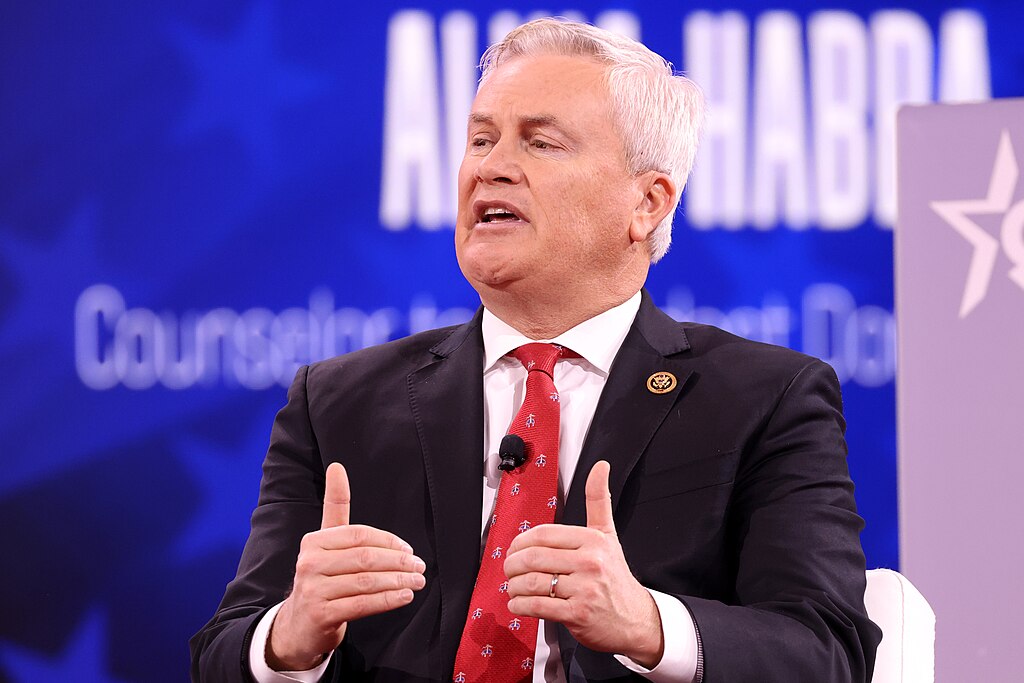
Here’s what some Republicans said.
Bill Clinton’s Historic Deposition Sparks New Questions — And a Possible New Standard for President Trump
In a dramatic and unprecedented move, former President Bill Clinton sat for a closed-door deposition before the House Oversight Committee — marking what many lawmakers are calling a historic moment in congressional oversight.
For millions of Americans who lived through the scandals of the 1990s, this testimony reopens old questions — but it also raises new ones.
A Historic Deposition Before the House Oversight Committee
House Oversight Committee Chairman James Comer (R-KY) described the deposition as one of the most significant in congressional history.
According to Comer, Bill Clinton answered questions for hours regarding his past association with Jeffrey Epstein — the disgraced financier convicted of heinous crimes.
“This was historical,” Comer said after the session, noting that both Bill Clinton and former Secretary of State Hillary Clinton have now been deposed by Congress.
Comer stated Clinton attempted to answer virtually every question, even when advised by his attorney to remain silent.
For many conservative voters over age 50, the symbolism is powerful: a former president compelled to answer under oath before Congress.
Clinton Denies Knowledge of Epstein’s Crimes
Bill Clinton acknowledged flying on Epstein’s private aircraft in the late 1990s and early 2000s. However, he firmly denied any knowledge of Epstein’s criminal behavior.
Clinton told investigators he “did nothing wrong” and had “no idea” about Epstein’s crimes at the time. He emphasized that he was no longer associated with Epstein by the time Epstein was convicted in 2008.
Still, many Republicans expressed skepticism.
Rep. Lauren Boebert (R-CO) publicly questioned Clinton’s credibility, while other GOP members stressed that powerful elites must face serious scrutiny when tied to individuals like Epstein.
The central issue for the committee appears to be this: What did prominent public figures know — and when did they know it?
Investigation Expands: More Witnesses Expected
Chairman Comer made it clear the Epstein investigation is ongoing.
“We’re not finished,” Comer said, signaling that additional witnesses will be called before the House Oversight Committee.
Republicans indicated they are particularly interested in individuals who maintained contact with Epstein after his 2008 conviction — a period many Americans view as an unmistakable warning sign.
Rep. Anna Paulina Luna (R-FL) suggested Epstein may have operated as part of a broader intelligence-linked “honey pot” scheme — a claim not universally echoed but reflective of widespread public suspicion about how Epstein maintained connections among global elites.
Bipartisan Tensions Erupt
While members of both parties described Clinton’s tone as cooperative, partisan divisions quickly surfaced.
Rep. Nancy Mace (R-SC) praised Democrat Rep. Melanie Stansbury (D-NM) for asking what she called “courageous questions.”
However, Democratic Rep. Wesley Bell (D-MO) accused Republicans of entering the deposition with predetermined conclusions.
The full transcript and video recording are expected to be released once both parties approve the record. Democrats are pushing for immediate public disclosure.
The “Clinton Rule” vs. The “Trump Rule”
Perhaps the biggest political ripple from the deposition is the debate over precedent.
Democratic lawmakers argue that Clinton’s testimony establishes a new standard — that former presidents must comply with congressional subpoenas.
Some Democrats are now calling for President Donald Trump to testify before the committee regarding what he may have known about Epstein.
Before departing the White House for Texas, President Trump acknowledged the unusual nature of Clinton’s deposition but noted that congressional investigators pursued him far more aggressively during prior investigations.
Chairman Comer later revealed that Clinton was directly asked whether President Trump should testify. Clinton reportedly responded that the decision rests with the committee — and added that President Trump never said anything to him suggesting involvement in wrongdoing.
That statement may prove politically significant.
Why This Matters for 2026 and Beyond
For Americans who have watched Washington politics for decades, this moment could signal a turning point in congressional oversight.
If Congress establishes that former presidents can be compelled to testify under subpoena, it changes the balance of power between the executive branch and lawmakers.
It also raises serious questions about consistency:
- Will the same scrutiny apply across party lines?
- Will transparency extend to all administrations?
- Will Americans finally see full disclosure of Epstein-related documents?
For conservative voters — particularly those who prioritize accountability and equal application of the law — the release of the full deposition transcript could be critical.
What Happens Next?
The House Oversight Committee has confirmed that more witnesses will be called. Lawmakers say they are pursuing “new facts” uncovered during the deposition.
The Epstein investigation remains active, and both parties understand the political stakes.
One thing is clear:
This isn’t just about Bill Clinton.
It’s about precedent.
It’s about power.
And it’s about whether Congress will apply equal standards to every president — past and present.
As transcripts and video footage are released, the national debate over elite accountability and presidential testimony is likely to intensify.
Stay tuned.