Here’s what happened.
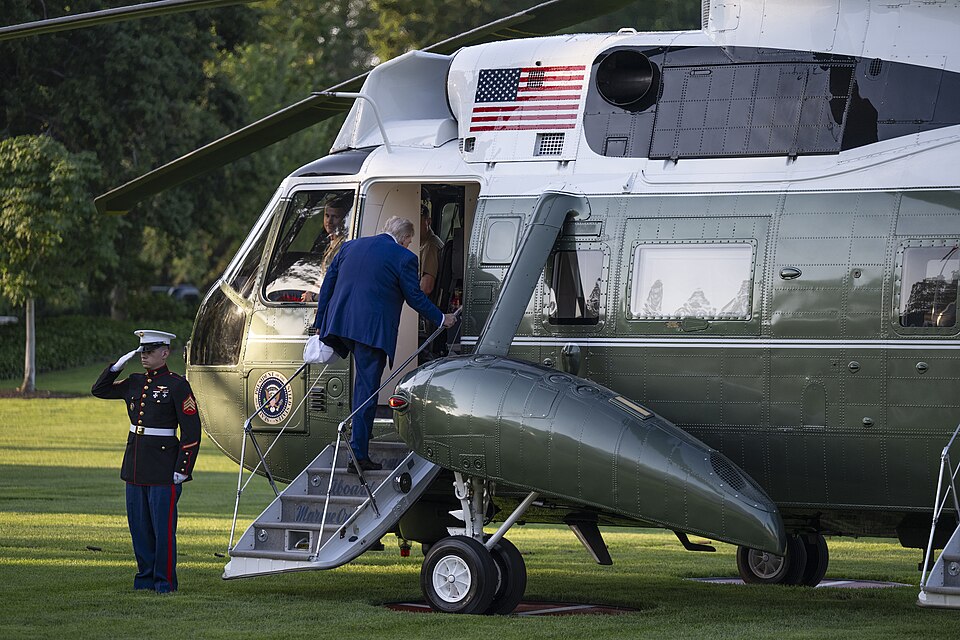
President Donald Trump’s Marine One helicopter experienced another troubling communication breakdown with air traffic controllers near Washington, D.C., raising fresh questions about aviation safety surrounding presidential travel.
The incident unfolded Thursday as Trump prepared to leave Washington for a trip to Texas. Air traffic controllers at Ronald Reagan Washington National Airport had difficulty communicating directly with Marine One, forcing other helicopters operating nearby to help relay messages between the tower and the presidential aircraft.
It was the second time this month that communication problems have affected Marine One operations near one of the nation’s busiest and most closely watched airports.
The latest episode is attracting particular attention because federal officials had already taken steps intended to correct the radio problems following an earlier incident involving Marine One and a departing passenger jet.
Controllers Could Not Hear Marine One
Newly released air traffic control recordings reveal how the unusual situation unfolded.
Marine One’s pilots attempted multiple times to establish reliable communication with the Reagan National tower as the presidential helicopter prepared to depart.
At one point, a controller acknowledged that she could not hear Marine One and asked another helicopter in the area to help.
“Do me a favor. I can’t hear Marine One,” the controller said, before asking the other aircraft to notify her if it could communicate with the presidential helicopter.
The nearby aircraft confirmed that it had established contact with Marine One.
That allowed information to be relayed between the presidential helicopter and air traffic control until normal communications could be established.
Marine One ultimately departed safely and transported Trump to Joint Base Andrews, where the president continued his trip aboard Air Force One.
FAA Says Alternate Communication Was Used
The Federal Aviation Administration acknowledged that officials used another method to deliver Marine One’s customary notification before departure.
The presidential helicopter generally provides air traffic controllers with a three-minute warning before liftoff. That advance notice allows controllers to coordinate surrounding air traffic during the highly controlled presidential movement.
According to the FAA, Thursday’s notification was “communicated by alternate means.”
Officials said positive contact with Marine One was established before the helicopter took off.
There was no reported collision or emergency involving the president’s helicopter during Thursday’s incident.
But the recurrence of communication trouble is receiving scrutiny because of what happened earlier in August.
Earlier Marine One Incident Raised Safety Concerns
On Aug. 4, Marine One encountered similar radio difficulties while Trump was aboard.
According to a preliminary investigation by the National Transportation Safety Board, controllers did not properly receive Marine One’s standard warning before the helicopter departed.
Commercial air traffic therefore continued operating from Reagan National Airport.
Marine One subsequently experienced what the FAA described as a momentary “loss of separation” with an Envoy Air passenger jet departing the airport.
The two aircraft came within approximately 0.82 nautical miles of each other horizontally while maintaining about 700 feet of vertical separation.
Marine One’s pilots spotted the commercial aircraft and briefly delayed their movement.
Officials said Trump was not in danger during the encounter.
Nevertheless, the incident prompted federal investigators to examine why communications between the presidential helicopter and air traffic controllers had broken down.
White House Construction May Be Part of the Problem
Investigators identified an unusual factor that may have contributed to the difficulties: Marine One has been operating from a different location because of construction at the White House.
Presidential helicopter operations were moved from their traditional location on the White House South Lawn to the nearby Ellipse.
Federal investigators determined that the temporary location did not provide an adequate direct line of sight with the radio equipment being used for communications with Reagan National Airport.
That potentially weakened radio reception.
Following the Aug. 4 incident, the FAA relocated communications equipment in an effort to improve the connection.
Testing conducted afterward reportedly indicated that the changes had corrected the problem.
Thursday’s communication difficulties, however, have renewed questions about whether additional improvements are necessary.
Why Marine One Communications Matter
The airspace surrounding Washington, D.C., is among the most complicated and restricted in the United States.
Military helicopters, government aircraft, commercial passenger planes and presidential flights can all operate within the broader region.
Marine One movements require particularly careful coordination because the helicopter is carrying the president of the United States.
Reliable communication allows air traffic controllers to know exactly when the presidential helicopter will depart and gives them time to manage surrounding aircraft accordingly.
That makes repeated radio problems more than a simple inconvenience.
The latest incident could increase pressure on federal aviation officials to determine why the communication difficulties apparently resurfaced despite efforts to address the problem earlier this month.
Aviation Safety Already Under Scrutiny
The situation also comes as aviation safety around Reagan National Airport remains under intense scrutiny.
Federal authorities imposed tighter restrictions on helicopter and commercial aircraft operations around the airport following the deadly January 2025 midair collision involving an Army Black Hawk helicopter and a passenger aircraft.
Those changes made coordination between helicopters and commercial air traffic an even greater priority.
The Marine One incidents are separate from that crash, but they underscore the importance of dependable communications in Washington’s congested airspace.
White House Responds
The White House has emphasized that presidential safety remains the priority.
Following the latest incident, the administration said it would continue working with the appropriate federal agencies to protect Trump during presidential travel.
The White House said it “will work with all agencies to make sure the president is safe.”
For now, there is no indication that Thursday’s communication breakdown placed Trump in immediate danger.
But two episodes involving communication difficulties in the same month are likely to keep attention focused on the FAA, the National Transportation Safety Board and the procedures governing Marine One flights.
Federal officials had already made changes following the Aug. 4 incident. The latest episode now raises a straightforward question: Why did controllers once again have trouble hearing Marine One?
With the president regularly traveling aboard the helicopter and commercial aircraft operating nearby, investigators and aviation officials will likely face pressure to ensure the communications system works reliably every time Marine One takes to the air.