Here’s what happened.
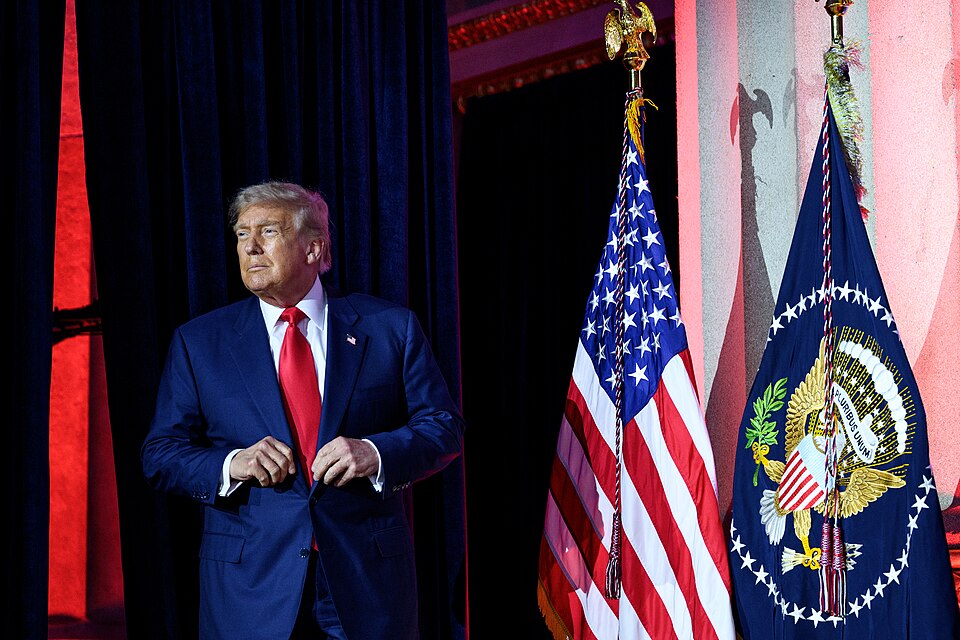
President Donald Trump delivered an unexpected moment during a campaign rally in Alaska on Tuesday when he interrupted his speech to grant presidential pardons to two diesel mechanics who had been prosecuted for violating federal environmental laws.
The surprise announcement came on October 13 in Wasilla, Alaska, where Trump was campaigning for Republican candidates ahead of the November midterm elections.
Rather than simply announcing his decision, Trump invited the two men onto the stage and signed their pardons in front of the crowd.
The president argued that the mechanics had been treated unfairly by federal prosecutors during the Biden administration, turning an otherwise routine campaign appearance into a public demonstration of his presidential clemency powers.
The moment drew attention not only because of its unusual setting, but also because of the larger questions it raised about federal regulations, small businesses, and the government’s treatment of working Americans.
Trump Surprises Alaska Crowd With Presidential Pardons
The two men receiving pardons were Zachary Czubak and Patrick Fleming, co-owners of an Anchorage diesel repair business known as Arm Rippin Toys.
Both had pleaded guilty in 2022 to conspiracy to violate the Clean Air Act following a federal investigation involving modifications to diesel-powered vehicles.
During his remarks, Trump criticized the prosecution and defended the mechanics, arguing that they had been punished for attempting to keep vehicles running in Alaska’s demanding conditions.
He then summoned the men to join him onstage.
With the mechanics standing nearby, Trump directed an aide to bring forward the pardon documents.
The president signed the paperwork at the podium and presented the pardons to the men as the crowd cheered.
Trump described the cases as examples of what he considered excessive federal enforcement under former President Joe Biden.
Although the mechanics had already pleaded guilty, Trump maintained that they deserved relief from the consequences of their convictions.
Why Were the Diesel Mechanics Prosecuted?
The federal case centered on modifications made to diesel vehicles at Arm Rippin Toys.
According to prosecutors, the business removed or disabled emissions-control equipment designed to reduce pollution from diesel engines.
Federal investigators alleged that the shop modified at least 37 vehicles between July 2019 and September 2020.
The work included alterations to federally required pollution-control components and monitoring systems.
Prosecutors also alleged that customers paid substantial amounts for those modifications, with individual jobs costing thousands of dollars.
Under the Clean Air Act, removing or disabling certain emissions-control systems is prohibited because doing so can significantly increase pollution.
Czubak and Fleming, along with fellow business owner Michael Hanzuk, pleaded guilty to conspiracy charges in 2022.
The resulting penalties included fines of $66,000 for each man, along with probation and community-service requirements.
The prosecution became an example of the debate over whether criminal penalties are appropriate for certain environmental violations involving vehicle repairs.
Supporters of stricter enforcement argue that these laws protect public health and ensure businesses follow the same standards.
Critics argue that criminal prosecution can impose severe consequences on smaller businesses, particularly in regions where reliable diesel transportation is essential.
Trump Criticizes Biden Administration Over the Charges
Trump used the public pardon ceremony to criticize the federal government’s handling of the mechanics’ cases.
He suggested that the prosecution reflected an overly aggressive approach toward individuals working in the diesel repair industry.
The president also claimed the men had faced the possibility of 10 years in prison for their actions.
However, reporting on the federal conspiracy charge indicates that the maximum prison sentence associated with that offense was five years.
Neither mechanic was sentenced to prison.
Trump nevertheless argued that the legal consequences were excessive and portrayed the pardons as a way to correct what he viewed as unfair treatment.
His comments reflected a broader disagreement between the Trump and Biden administrations over how environmental laws should be enforced.
During Biden’s presidency, federal authorities emphasized that removing emissions-control equipment could substantially increase vehicle pollution.
The Trump administration has since adopted a different approach toward certain diesel-related enforcement cases.
Pardoned Mechanics Describe the Impact on Their Lives
The announcement carried considerable personal significance for the two men.
After Trump signed the documents, the mechanics were given an opportunity to address the audience.
Fleming spoke about the hardships associated with the federal prosecution, explaining that the case had affected personal relationships and created substantial difficulties.
He maintained that the business had been trying to assist customers who depended on diesel vehicles.
The mechanics’ work took place in a state where harsh winters, long distances, and isolated communities can make dependable transportation especially important.
For many Alaska residents, diesel-powered trucks and equipment are necessary for employment, transportation, and business operations.
Extremely cold temperatures can also create mechanical challenges that drivers in warmer states rarely encounter.
Those circumstances formed a central part of Trump’s argument that federal officials should have considered the realities of life in Alaska when pursuing the cases.
The president presented the pardons as recognition of those challenges and of the personal toll the prosecutions had taken.
A Third Mechanic Had Already Received a Pardon
The two onstage pardons were not Trump’s first actions involving diesel mechanics charged with emissions violations.
Another co-owner of Arm Rippin Toys, Michael Hanzuk, had received a presidential pardon in September.
Trump had also previously granted clemency to Mackenzie “Mac” Spurlock, a Wasilla diesel mechanic whose case involved similar environmental enforcement issues.
Spurlock’s supporters argued that the modifications involved in his case were intended to address vehicle reliability problems in Alaska’s severe climate.
Republican Sen. Dan Sullivan publicly supported clemency for Spurlock and criticized what he regarded as overly aggressive federal prosecution.
These earlier decisions demonstrate that Tuesday’s pardons were part of a broader pattern rather than an isolated action.
Trump has increasingly used his clemency authority to address certain federal cases involving environmental and regulatory offenses.
The Alaska rally provided an especially visible setting for that approach.
Trump Administration Changes Its Approach to Diesel Regulations
The pardons also come amid significant changes in federal enforcement policy.
In January 2026, the Justice Department announced that it would stop pursuing criminal charges under the Clean Air Act based on certain allegations involving tampering with vehicle diagnostic devices.
The policy change marked a departure from the federal government’s previous approach to these cases.
Under the revised policy, civil enforcement remains available, meaning businesses and individuals can still face legal penalties for violating applicable regulations.
The distinction is important.
Trump’s pardons do not eliminate the Clean Air Act or automatically make the removal of emissions-control equipment lawful.
Instead, the president exercised his constitutional authority to grant clemency to specific individuals convicted of federal offenses.
The policy shift and the pardons nevertheless illustrate the administration’s broader emphasis on reducing certain regulatory and criminal-enforcement burdens.
For small businesses operating in heavily regulated industries, those changes could affect how future violations are investigated and prosecuted.
Environmental organizations, meanwhile, have continued to emphasize the importance of emissions standards in limiting harmful air pollution.
Why Trump Was Campaigning in Alaska
The dramatic pardon ceremony occurred during a politically important visit.
Trump traveled to Wasilla to support Republican Sen. Dan Sullivan, who is seeking reelection in the November 3 midterm elections.
Sullivan faces a challenge from former Democratic Rep. Mary Peltola in a race that could have implications for control of the U.S. Senate.
Trump also used the event to support other Republican candidates, including Rep. Nick Begich.
Although Alaska has historically favored Republicans in presidential elections, its statewide contests have sometimes produced competitive results.
The president’s visit underscored the importance Republicans are placing on the state as Election Day approaches.
During the rally, Trump discussed energy development, infrastructure, government regulation, and Alaska’s election system.
He criticized ranked-choice voting and promoted Republican priorities involving domestic energy production.
However, the surprise pardons quickly became one of the most widely discussed moments from his appearance.
Can a President Issue Pardons During a Campaign Rally?
The public setting of the announcement raised an interesting constitutional question.
Under Article II of the U.S. Constitution, presidents have broad authority to grant pardons for federal offenses, except in cases of impeachment.
There is no general constitutional requirement that presidential pardons be announced at the White House or during an official government ceremony.
A president can therefore announce a pardon during a public appearance, provided the clemency decision is properly made and documented.
Presidential pardons have historically been used in a wide variety of circumstances, including cases involving individuals whose punishment a president considers excessive.
However, a pardon does not automatically establish that a conviction was improper or that the recipient was innocent.
In the Alaska mechanics’ cases, the men had pleaded guilty before receiving clemency.
Trump’s decision reflected his judgment that they should no longer face the legal consequences of those federal offenses.
The unusual campaign-rally setting made the exercise of that authority particularly visible to the public.
What the Surprise Pardons Mean Going Forward
Trump’s decision to pardon two Alaska mechanics demonstrated how questions about environmental enforcement, federal authority, and the treatment of small businesses continue to intersect with national politics.
For Czubak and Fleming, the president’s action provided relief after years of legal proceedings and financial penalties.
For the Trump administration, the decision reinforced its opposition to certain regulatory enforcement practices associated with the previous administration.
The case also highlights an ongoing national disagreement about how environmental laws should be enforced and when criminal prosecution is justified.
As Republicans and Democrats prepare for the November elections, those disagreements remain part of a larger debate over the federal government’s role in American economic life.
What began as an ordinary campaign speech in Alaska ultimately became a highly unusual public pardon ceremony.
And while the president’s decision was welcomed by the two mechanics and supporters in attendance, it also renewed discussion about presidential clemency, environmental regulation, and the limits of federal enforcement.