Here’s what top Republicans are saying.
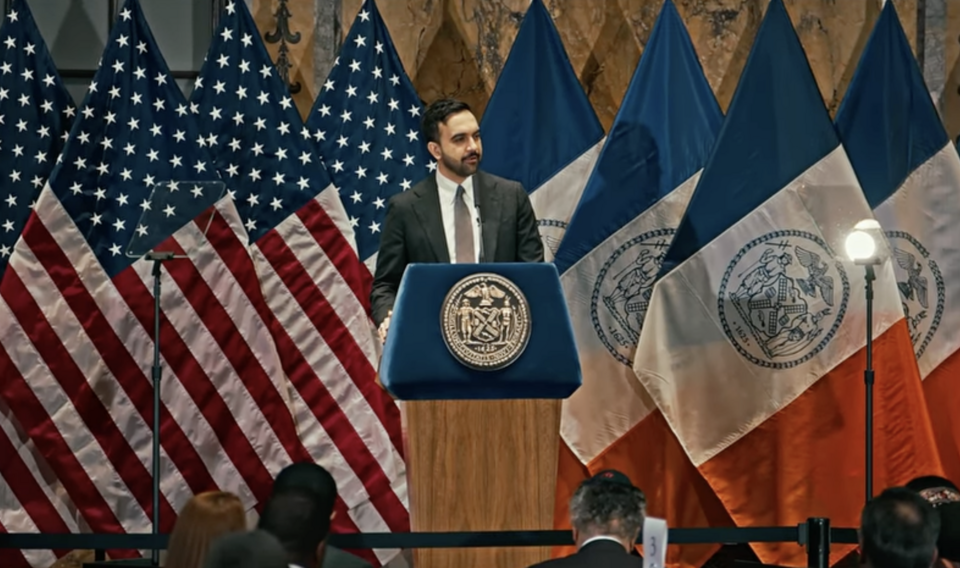
New York City Mayor Zohran Mamdani’s growing national profile is becoming a major talking point in Washington, with Sen. Ted Cruz warning that the socialist mayor represents a broader progressive movement that he believes is reshaping the Democratic Party.
Cruz, R-Texas, made the remarks while discussing something that directly affects millions of American households: the future of U.S. energy production and the possibility of lowering regulatory barriers to new projects.
Speaking at an energy affordability summit, Cruz argued that pressure from progressive activists is making Democratic lawmakers increasingly reluctant to compromise with Republicans — even on issues where the two parties have found areas of agreement.
His most striking assessment involved Mamdani.
“I think Mamdani is the single most powerful Democrat in the country,” Cruz said.
That is Cruz’s political assessment, not an objective measurement of Mamdani’s influence. But the statement illustrates just how much attention the New York mayor and the Democratic Party’s progressive wing are receiving ahead of the 2026 midterm elections.
Cruz Warns of a Democratic Party Shift
Cruz believes Democrats are facing an internal struggle between the party’s established leadership and a growing progressive movement.
“They’re in the middle of a revolution,” Cruz said during the summit.
He argued that Democratic lawmakers are increasingly influenced by activists and interest groups, making bipartisan agreements more difficult as Election Day approaches.
Cruz specifically pointed to Senate Minority Leader Chuck Schumer, D-N.Y., claiming the veteran Democratic leader is feeling intense pressure from the party’s left flank.
“Schumer is truly terrified right now,” Cruz said.
The comments came as Washington continues debating whether Congress can overcome partisan divisions and reach an agreement on federal permitting reform.
That debate could ultimately affect how quickly new power plants, transmission lines and other major infrastructure projects can be built across the United States.
Why Permitting Reform Matters to Americans
Federal permitting may sound like an issue confined to Washington, but supporters of reform argue that its consequences can eventually reach household budgets.
Energy projects frequently require approval from multiple government agencies before construction can begin. Depending on the project, that process can become lengthy, expensive and uncertain.
Supporters of reform want to shorten those timelines and provide companies with greater certainty before they commit billions of dollars to new infrastructure.
Critics of sweeping changes, meanwhile, argue that environmental reviews and protections for affected communities should not be sacrificed simply to accelerate construction.
Finding a compromise has therefore become an important test for Congress.
Republicans and Democrats remain divided over how far reforms should go, but lawmakers have identified areas where bipartisan cooperation may be possible.
Nuclear Energy Emerges as Common Ground
Nuclear power was a major part of the discussion.
Energy Secretary Chris Wright argued that America’s regulatory system has contributed to the limited construction of new nuclear reactors during recent decades.
“If it’s so uncertain and so long to permit something, it’s just not worth investing in,” Wright said.
Nuclear power currently provides a significant share of American electricity without producing carbon emissions during electricity generation, making it an increasingly important part of discussions about reliability and future power demand.
The issue has also produced some unusual political alliances.
Republicans frequently support nuclear power as part of an effort to expand domestic energy production, while some Democrats view the technology as a tool for producing electricity while reducing greenhouse gas emissions.
The question is whether that overlap is enough to produce meaningful legislation.
Lower Energy Costs Become Part of the Debate
Sen. Bernie Moreno, R-Ohio, said lawmakers have been discussing the practical details needed to move permitting legislation through Congress.
“There’s a lot of conversations going on not about who’s going to fight with whom or who is going to take credit for it, but rather what is the mechanics of getting it done,” Moreno said.
Moreno argued that successful reform could ultimately help lower energy costs while allowing the United States to expand its domestic infrastructure.
For families dealing with electricity bills and other household expenses, that economic argument could prove more important than the political battle surrounding the legislation.
America’s electricity needs are also changing.
Data centers, artificial intelligence, advanced manufacturing and the increasing electrification of parts of the economy are creating additional demand for power.
Meeting that demand will require both electricity generation and the infrastructure necessary to deliver that power to homes and businesses.
Mamdani’s Rise Changes the Political Conversation
Cruz believes the changing Democratic political landscape could make reaching a deal more difficult.
Mamdani, who describes himself as a democratic socialist, became mayor of New York City after winning the 2025 election.
His political rise has coincided with other progressive candidates challenging established Democrats in congressional primaries.
Some of those challengers have defeated longtime incumbents, adding to the debate over whether the Democratic Party is moving further toward its progressive wing.
Cruz argues those results are having an effect inside Congress.
In his view, Democratic senators who might otherwise negotiate with Republicans must now consider whether compromises could expose them to criticism or primary challenges from their left.
Cruz used sharply ideological language while making that argument, contending that Democratic senators fear more radical elements within their political coalition because that is where he believes much of the party’s activist enthusiasm can currently be found.
Democrats and progressive activists may strongly dispute Cruz’s characterization. His remarks nevertheless demonstrate how Mamdani’s rise is increasingly being incorporated into the national Republican argument about the Democratic Party’s direction.
Schumer Finds Himself in the Spotlight
Schumer occupies a particularly interesting position in that debate.
As Senate minority leader and a longtime fixture in Democratic politics, Schumer represents the party’s established congressional leadership.
Mamdani represents something considerably different: a younger generation of politicians advocating a much more explicitly progressive economic agenda.
Cruz argues that established Democrats are increasingly unwilling to challenge that movement.
Whether that assessment proves accurate will become clearer as Congress considers legislation requiring support from both parties.
Permitting reform could provide one of the first major tests.
Can Congress Still Reach an Energy Deal?
Despite his warnings about Democratic politics, Cruz did not suggest that bipartisan cooperation is impossible.
Other participants at the summit expressed optimism that lawmakers could still reach an agreement.
The challenge is time.
With the November midterm elections approaching, political incentives can change quickly. Members of Congress facing competitive elections or primary pressure may become increasingly reluctant to cast votes that could anger important constituencies.
That makes the coming weeks particularly important for lawmakers hoping to advance permitting legislation.
For supporters, the argument extends well beyond partisan politics.
They contend that making it easier to build power plants, transmission infrastructure and other major projects could increase America’s energy supply, attract private investment and potentially put downward pressure on costs over the longer term.
Opponents of aggressive deregulation will continue pressing lawmakers to maintain environmental and community protections.
That leaves Congress searching for the middle ground Cruz says has become increasingly difficult to find.
A Local Mayor With National Influence
Whatever happens with permitting reform, Mamdani’s political significance is no longer confined to New York City.
A Republican senator from Texas discussing the New York mayor while debating national energy policy illustrates how rapidly Mamdani has become part of Washington’s political conversation.
Cruz believes Mamdani symbolizes a progressive movement capable of influencing Democratic lawmakers far beyond New York.
Whether that movement ultimately changes federal energy policy remains uncertain.
But with the midterm elections approaching and both parties fighting over America’s economic and political direction, Mamdani’s influence — and the Democratic Party’s response to it — is likely to remain part of the national debate.