Wow! Didn’t expect to see the GOP say this.
A key Republican leader in the Senate says President Donald Trump’s push to quickly pass a major election integrity bill faces a harsh political reality: the votes simply aren’t there.
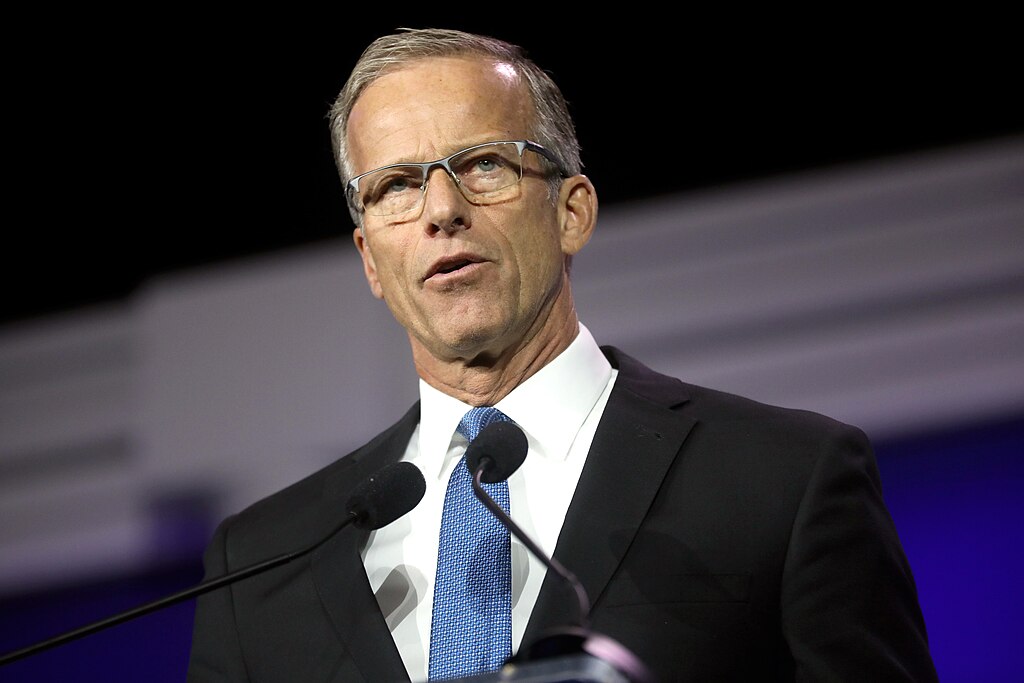
John Thune, the Senate Majority Leader, said Tuesday that Republicans currently lack the support needed to change Senate rules in order to advance the Safeguard American Voter Eligibility Act, a proposal designed to require proof of U.S. citizenship when registering to vote.
The bill has become one of the Trump administration’s top priorities as the country moves closer to the next round of midterm elections.
Senate Reality Check On Trump’s Plan
Thune made it clear that while many Republicans support stronger election safeguards, the procedural votes required to push the legislation forward simply do not exist at the moment.
“The votes aren’t there — not to eliminate the filibuster, and not for a talking filibuster,” Thune said.
He added that as majority leader, part of his job is delivering the political math behind major legislation, even when it may not be what allies want to hear.
“I’m the one who sometimes has to bring the not-so-good news,” Thune explained. “But the numbers are the numbers, and right now they just don’t add up.”
What Republicans Wanted To Try
Some Republicans had floated the idea of forcing Democrats to conduct a “talking filibuster.”
Under that scenario, lawmakers opposing the SAVE Act would have to physically stand on the Senate floor and continue speaking in order to block the legislation — a tactic that would draw national attention to the fight over voter eligibility laws.
Supporters of the strategy believed it could pressure Democrats politically while highlighting Republican efforts to strengthen election security.
However, without enough votes to change Senate procedures, that plan appears unlikely to move forward.
Trump Calls The SAVE Act His Top Priority
Donald Trump has been aggressively promoting the SAVE Act, calling it a crucial measure to protect the integrity of American elections.
Speaking at a Republican policy conference in Florida, Trump warned fellow Republicans that the legislation could have major consequences for upcoming elections.
“It will guarantee the midterms,” Trump said. “If you don’t get it, there could be big trouble.”
The president argued that voters across the country are demanding stronger election protections.
“Everywhere I go, people are saying the same thing — save America,” Trump told supporters.
What The SAVE Act Would Do
The SAVE Act would require individuals to provide documented proof of U.S. citizenship before registering to vote in federal elections.
Supporters say the bill is a straightforward way to ensure that only American citizens participate in U.S. elections — something they argue is essential for maintaining public trust in the democratic process.
Republicans backing the bill say it would strengthen election integrity and restore confidence among voters who remain concerned about election security.
Critics of the legislation claim it could make voter registration more complicated, though supporters argue that basic citizenship verification is a reasonable requirement.
Trump Raises Pressure On Congress
Trump has also signaled he may use his influence to pressure Congress into acting.
The president recently warned that he may refuse to sign most legislation passed by Congress until the Senate approves the SAVE Act. The only possible exception, he suggested, could be funding for the Department of Homeland Security.
That warning underscores just how central election security has become to the administration’s political agenda heading into the next election cycle.
The Battle Over Election Integrity Continues
For now, Senate leadership says the procedural votes needed to advance the bill are not available.
But the issue of voter citizenship requirements is unlikely to disappear anytime soon.
With midterm elections approaching and election integrity remaining a major concern for many voters, the debate over the SAVE Act is expected to remain a key political flashpoint in Washington.