Here’s what Americans need to know.
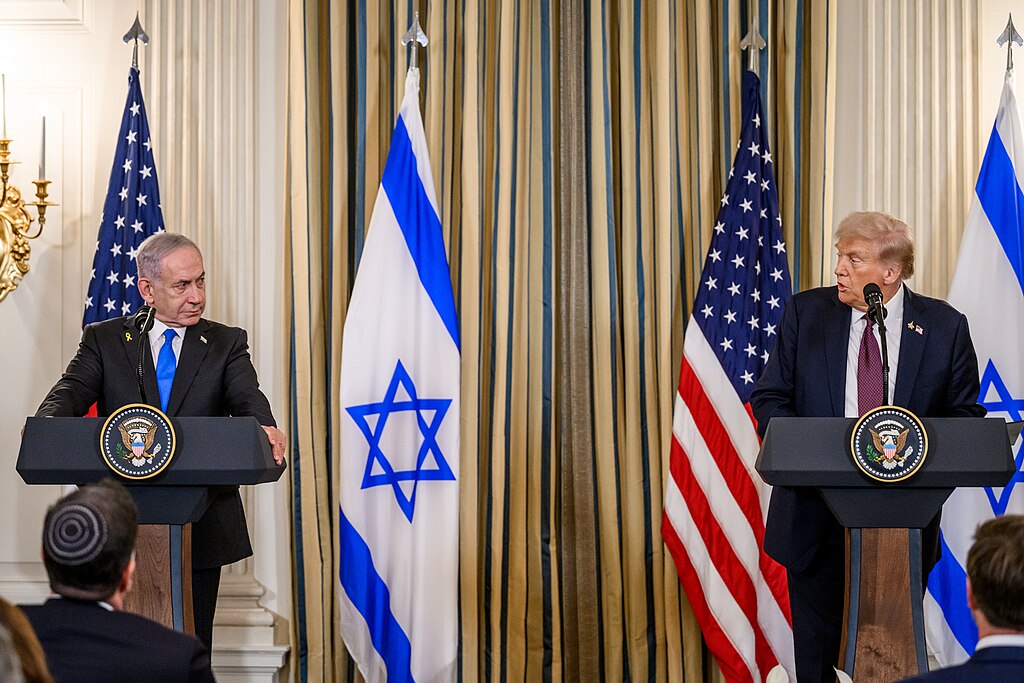
President Donald Trump convened an emergency national security meeting at the White House on Wednesday with Israeli Prime Minister Benjamin Netanyahu, placing Iran’s nuclear program and regional instability at the center of urgent discussions.
The private session lasted nearly two and a half hours and was closed to the press — a clear sign of the seriousness surrounding possible U.S. military options and ongoing diplomatic negotiations with Tehran.
After the meeting, Trump emphasized that diplomacy remains the preferred outcome — but only if Iran’s leadership changes course.
“Negotiations with Iran must continue to see whether a deal can be made,” the president stated. “If it can, that is the preference. If not, we will see what the outcome will be.”
Iran Nuclear Program Back Under Intense Scrutiny
According to reports, Netanyahu presented updated intelligence related to Iran’s ballistic missile stockpiles and nuclear enrichment capabilities — issues that have long concerned both Washington and Jerusalem.
The U.S. position is believed to include three key demands:
- An end to advanced uranium enrichment
- Restrictions on long-range missile development
- A halt to support for regional proxy forces
These conditions come after previous U.S. and Israeli strikes last year targeted Iran’s nuclear infrastructure.
For many Americans — particularly older voters focused on national security and global stability — the question is whether Tehran is prepared to negotiate seriously or risk further consequences.
U.S. Military Posture Signals Strength
While diplomacy continues, the United States has reinforced its military presence in the region. The USS Abraham Lincoln aircraft carrier strike group has been repositioned to the Arabian Sea — a strategic move widely viewed as a deterrent signal.
In a recent interview, Trump stated:
“We have a massive flotilla moving toward the region. I believe they want to make a deal. They would be foolish not to.”
The administration has also warned that economic pressure remains an option. Earlier this month, Trump suggested that countries continuing trade with Iran could face potential 25% tariffs — a powerful leverage tool in ongoing negotiations.
Regional Allies Urge Caution
Middle Eastern allies, including Saudi Arabia and Qatar, have reportedly advised restraint, warning that targeting Iran’s top leadership — including Supreme Leader Ayatollah Ali Khamenei — could destabilize the broader region.
Meanwhile, internal unrest inside Iran earlier this year drew international condemnation after reports of violent crackdowns on protesters.
Although protests have subsided for now, tensions remain high — and the potential for escalation continues to shape U.S. foreign policy decisions.
What This Means for America
This emergency meeting underscores a larger reality: U.S.–Iran relations are at a pivotal moment.
For voters concerned about:
- National defense
- Energy security
- Global stability
- Support for Israel
- Preventing nuclear proliferation
The coming weeks could prove decisive.
Trump has made clear that while negotiations are welcome, the United States is prepared to act if necessary.
Whether Iran chooses diplomacy or confrontation may determine what happens next in one of the world’s most volatile regions.