Liberals are angry at one of the WNBA’s biggest names.
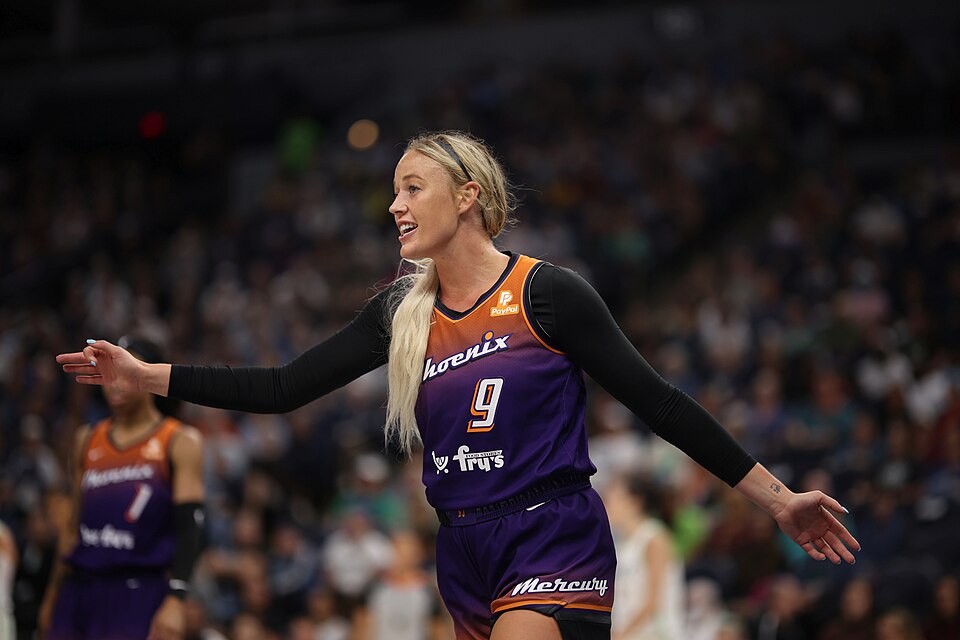
Indiana Fever guard Sophie Cunningham is receiving national attention after defending women’s sports and arguing that biological males should not compete in female athletic competitions. Her comments sparked sharp criticism from progressive activists, while the Trump administration quickly came to her defense.
On Thursday, White House Press Secretary Karoline Leavitt praised Cunningham for speaking openly about an issue that continues to divide the country.
“Biological males do not belong in women’s sports,” Leavitt said during the briefing. “I find it hard to understand why anyone would support that position.”
Leavitt argued that Cunningham’s willingness to express her beliefs despite intense criticism reflects the views of many Americans.
“It’s even more unbelievable that Sophie Cunningham, an accomplished female athlete, is being criticized simply for saying that men shouldn’t compete in women’s sports,” Leavitt said. “The backlash coming from Democrats and left-wing activists shows just how disconnected they are from the American public on this issue.”
The debate surrounding transgender athletes in women’s sports has become one of the nation’s most closely watched cultural issues, with lawmakers, athletic organizations, parents, and athletes continuing to disagree over fairness and competitive balance.
Cunningham first addressed the controversy during an interview with ESPN earlier this week after facing accusations that her position was rooted in hostility toward transgender individuals.
“I’ve received a lot of criticism from people claiming I hate trans people,” Cunningham said. “But I’ve never said that.”
The Indiana Fever star explained that her position is based on protecting opportunities for female athletes while treating everyone with dignity and respect.
“I believe in showing love to people,” Cunningham said. “But I also believe in telling the truth. Young girls shouldn’t have to compete against biological men, and they deserve privacy and fairness in locker rooms and in sports.”
Rather than backing away from her comments, Cunningham reaffirmed her position the following day while speaking with reporters before Indiana’s victory over the Connecticut Sun.
“I stand by what I said,” she stated. “To me, it’s common sense.”
Cunningham also emphasized that her comments are driven by personal convictions rather than politics.
“I’m not a very political person,” she said. “But I do have beliefs and values that matter to me, and I’ll continue standing by them.”
She added that her goal is not to exclude anyone but to preserve fairness for female athletes.
“I don’t dislike anyone,” Cunningham said. “I believe there’s room for everyone. At the same time, I believe it’s important to protect young girls and the integrity of women’s sports.”
The exchange has added fresh attention to the ongoing national conversation over transgender athletes competing in women’s sports. Supporters of Cunningham argue that maintaining separate female athletic divisions protects fairness and opportunities for women and girls, while critics contend that transgender athletes should be allowed to compete according to gender identity.
With prominent public figures, athletes, and elected officials continuing to weigh in, the debate over women’s sports shows little sign of fading anytime soon.