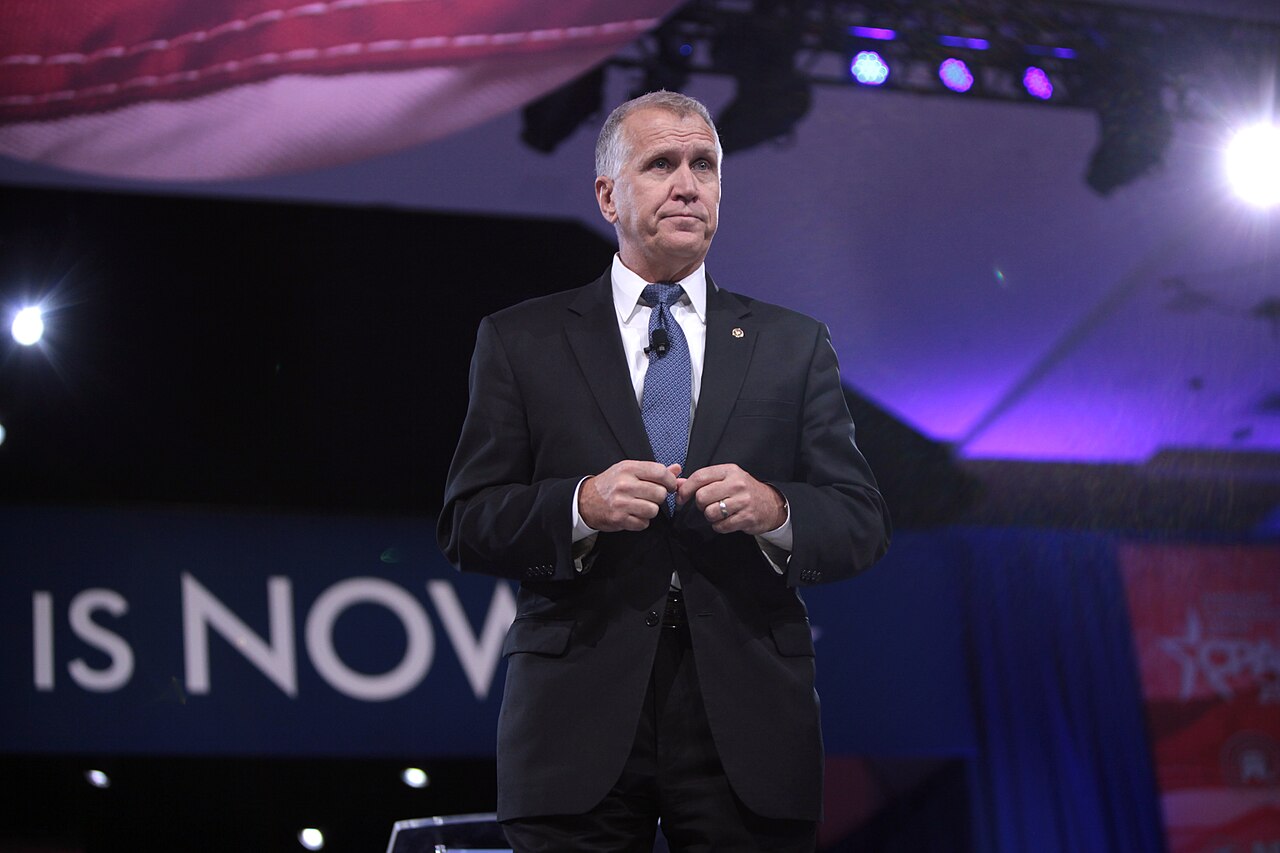
A new crack inside the Republican Party is raising eyebrows—and it could have serious implications for America’s role on the world stage.
Sen. Thom Tillis (R-N.C.), who is preparing to leave office, is now openly pushing back against President Donald Trump’s recent stance on NATO, signaling growing concern among some Republicans over how the alliance is being handled.
Tillis Pushes Back on Trump’s NATO Strategy
In a Sunday interview on ABC’s This Week, Tillis made it clear that while a president cannot unilaterally pull the United States out of NATO, strong words and aggressive pressure can still weaken the alliance in real-world ways.
“The president doesn’t have the authority to simply withdraw from NATO,” Tillis explained. “But he can absolutely damage the relationship if things go too far.”
That warning comes as President Trump has sharply criticized NATO allies for what he sees as a lack of support during the escalating Middle East conflict.
Trump Demands More From U.S. Allies
At the center of the dispute is the Strait of Hormuz—a critical global oil route that has been severely disrupted amid rising tensions with Iran.
President Trump has made it clear: countries that depend heavily on this oil corridor—especially in Europe and Asia—should be doing more to secure it.
He has repeatedly called out NATO nations for hesitating, arguing that the United States should not carry the burden alone. His frustration has sparked a broader debate about whether America’s allies are truly pulling their weight.
NATO Allies Respond—But Not Fast Enough?
Several key allies, including the United Kingdom, Germany, and France, have indicated they are willing to help ensure safe passage through the Strait.
However, their response has been more measured than what the Trump administration appears to be demanding—fueling criticism and tension between the U.S. and its partners.
Growing Concern Inside the GOP
Tillis, a long-time supporter of NATO and a leader in Senate efforts tied to the alliance, warned that weakening these partnerships could come at a steep cost.
He pointed out that America’s military leadership has consistently supported NATO, emphasizing that the alliance has played a major role in protecting U.S. interests and saving American lives.
According to Tillis, even indirectly undermining NATO could create serious national security risks at a time when global instability is already rising.
Not Weak—Just Not Consulted?
Tillis also took issue with the idea that NATO countries are unwilling to act.
Instead, he suggested that many allies may simply feel sidelined—especially if they were not fully included in key military decisions.
From his perspective, any country placed in that position would likely hesitate before jumping into a high-risk conflict.
A Pattern of Disagreement
This isn’t the first time Tillis has broken with President Trump.
He has previously raised concerns about foreign policy moves that could strain relationships with key allies, warning that such tensions could weaken America’s long-term strategic position.
What This Means for America Moving Forward
As tensions in the Middle East continue to rise, the debate over NATO is becoming more than just political—it’s about national security, global influence, and America’s future leadership role.
For many conservatives, the real question isn’t whether allies should contribute more—but how to push for stronger cooperation without risking the alliances that have helped keep America safe for decades.
With the political landscape heating up, moments like this could signal deeper divisions within the GOP—and shape how foreign policy is handled in the years ahead.